
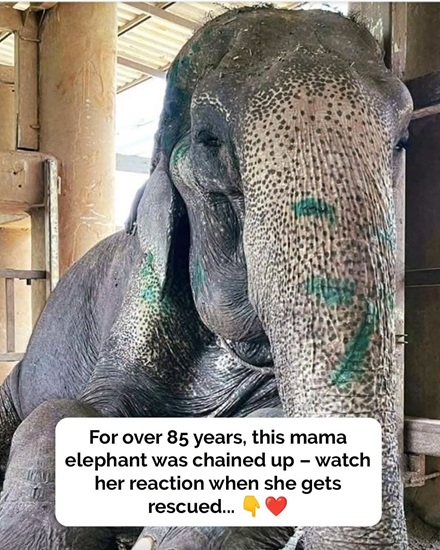
This is an important distinction in rescue stories. Social media sometimes presents rehabilitation as a dramatic before-and-after transformation in which an animal quickly becomes completely healthy. Real veterinary care is usually more complicated. Older animals may improve in some areas while continuing to experience chronic conditions. Progress can mean eating better, walking more comfortably or sleeping safely rather than achieving a complete cure.
Somboon’s difficulty standing after sleep provides a good example. The problem did not disappear simply because she had reached a sanctuary. Staff members sometimes needed to help her rise. Updates described mahouts and veterinary personnel working carefully with elderly elephants that required this assistance. That ongoing work is part of sanctuary care even when it is less visually dramatic than the rescue itself.
Her case also highlighted the specialized needs of aging elephants. Large body size places considerable pressure on legs and joints. Dental wear can affect nutrition. Reduced strength can make it harder to move between standing and lying positions. Older elephants therefore require environments designed with those limitations in mind.
Soft resting areas are one example. Accessible food and water are another. Veterinary observation becomes particularly important because small changes in movement or appetite can signal significant health problems. Experienced caregivers learn individual routines so that unusual behavior can be recognized quickly.
Somboon was not the only elderly elephant receiving this kind of assistance at Elephant Nature Park. Updates from the sanctuary have said that a large percentage of its population consists of older elephants with histories of work. Some struggle with walking, eating or sleeping and occasionally require physical assistance from caregivers. Somboon therefore became a visible example of a much broader challenge faced by elephant sanctuaries.
Pets & Animals
The sanctuary environment also allows rescued elephants to live near others of their species. Social relationships are important for elephants, although every rescued animal adjusts differently. Some elephants quickly form bonds, while others need substantial time because of age, previous isolation or stressful experiences. Caregivers generally allow relationships to develop gradually rather than forcing immediate interaction.
For an animal as old as Somboon, simply having the opportunity to observe and interact within a protected environment can be significant. There is no guarantee that every rescued elephant will become part of a large social group. Personality and history matter. Sanctuary care therefore needs to be individualized.
The same principle applies to human interaction. Caregivers cannot assume that every rescued animal immediately trusts people simply because those people intend to help. Elephants with long histories of human control may initially respond cautiously. Building trust requires consistency and patience.
Somboon’s willingness to lie down shortly after arrival was unusual enough that the organization specifically commented on it. Other rescued elephants may remain standing for long periods in unfamiliar surroundings because lying down can leave such a large animal vulnerable. Her decision to rest so quickly therefore stood out to the people observing her.
It is tempting to say that Somboon somehow understood immediately that she had been rescued. That idea makes a powerful story, but it is impossible to know exactly what an elephant is thinking. A more accurate interpretation is that she encountered an environment with soft bedding and no immediate work demands and chose to lie down. Her behavior indicated that she was able to rest there, even if humans cannot know the precise thoughts behind the decision.
After decades of reported work in logging and tourism, she finally entered a stage where her needs came first.
Her age and health meant that care would never be simple.
But the aim was no longer productivity.
It was comfort, dignity and the chance to spend the remainder of her life without returning to the work that had defined so much of her past.
That is why Somboon’s story continues to resonate.
Not because it provides a perfect ending.
But because it shows the practical difference that can be made when an elderly animal is finally given the opportunity to rest.
