
*Part 1*
**After 10 years of trying, I finally gave birth to twins — but when I woke up after my C-section, my husband was gone, and then the doctor asked, “You really don’t know why he left?”**
For ten years, my husband, Andrew, and I dreamed of the day someone would call us Mom and Dad.
We tried everything: fertility treatments, injections, endless doctor’s appointments.
I still remember sitting on the bathroom floor after yet another negative test, crying so hard I could barely breathe.
But every single time, Andrew was right there beside me. Every time, he held my hand and told me everything would be okay and that one day our dream would finally come true.
I don’t know what I would have done without his support.
And then a miracle happened.
I finally got pregnant.
I was holding that test with two lines on it, and Andrew practically carried me around in his arms for half the day.
God, we were so happy.
A little while later, we found out we were expecting twins. Our baby girls.
Andrew repainted the room, assembled the cribs himself, and picked out the stroller.
And I felt like an absolute queen.
He was constantly taking care of me. He always brought me warm tea, my favorite caramel-filled chocolate bar, and took care of everything around the house.
But toward the end of my pregnancy, I was scheduled for a C-section.
That morning, Andrew drove me to the hospital.
After some tests, the medical team discovered a complication, and I had to be put under general anesthesia.
I was terrified, but all I could think about was that I was finally going to meet my babies.
The last thing I remember was being wheeled into the operating room.
Then everything went dark.
When I opened my eyes, a nurse was standing beside my bed.
“Congratulations, Mom! You have two beautiful baby girls. They’re both doing well.”
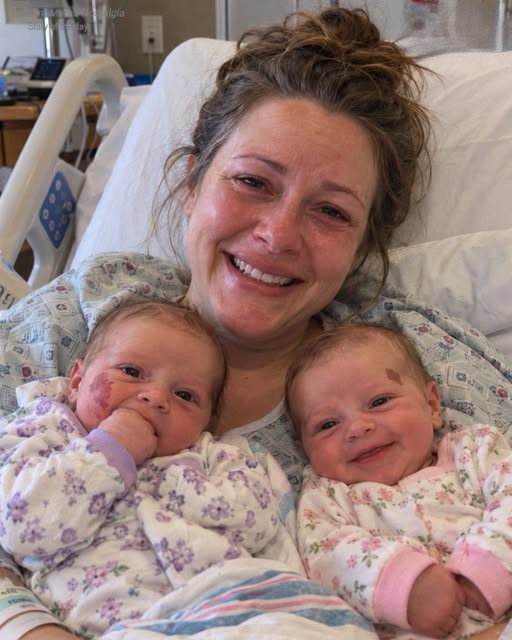
Then very carefully, the nurse helped me hold my babies. I kissed their tiny heads and couldn’t stop smiling.
Then I looked around.
Andrew was nowhere to be seen.
I grabbed my phone from the nightstand and called him several times. He didn’t answer.
Then, in a quiet voice, I asked the nurse:
“Excuse me, have you seen my husband?”
The smile disappeared from her face.
“I’ll get the doctor.”
A few minutes later, my doctor walked in.
I carefully asked him:
“Doctor, I’m sorry, but do you know where my husband is? Has he seen the babies yet?”
The doctor looked at me strangely.
“Yes, your husband saw the babies… You really don’t know why he left?”
My heart started pounding.
“What are you talking about? Where’s Andrew?”
The doctor pulled a chair closer to my bed.
“While you were still asleep after the surgery, Andrew came to talk to me. He told me something I absolutely wasn’t expecting to hear.”
I stared at him.
“What did he say?”
For several seconds, Dr. Patel didn’t answer.
He had always been careful with his expressions. During my pregnancy, whenever I panicked about a blood test or an ultrasound measurement, he had spoken with that calm, steady voice doctors probably practiced after years of giving frightened people complicated news.
But now he looked uncomfortable.
Not alarmed.
Not angry.
Uncomfortable.
“He asked me whether there was any possibility,” Dr. Patel finally said, “that a mistake had been made during your fertility treatment.”
I blinked.
“A mistake?”
“With the embryos.”
I stared at him.
The room seemed to shrink around me.
One of my daughters stirred against my chest. Her tiny mouth opened and closed, searching for something she couldn’t yet name.
“I don’t understand.”
Dr. Patel folded his hands.
“Andrew said something about the babies made him concerned.”
“What?”
He hesitated again.
I hated that hesitation.
Every second of silence seemed to create another terrible possibility.
“What did he see?”
“He didn’t explain fully. He only said he needed to leave the hospital and contact your fertility clinic.”
I almost laughed.
It came out as a broken sound.
“That doesn’t make any sense.”
“I agree that leaving without speaking to you was… unusual.”
“Unusual?”
My voice sharpened.
“My husband disappeared after our children were born.”
The nurse took one of the babies when my hands began trembling.
Dr. Patel leaned forward.
“I’m not telling you this to frighten you. Your daughters are healthy. Their delivery went well considering the circumstances. Nothing about their medical condition suggests an emergency.”
“Then what did Andrew see?”
“I don’t know.”
That answer frightened me more than anything else.
I looked at my phone.
No missed calls.
No messages.
Nothing.
I typed with shaking fingers.
*Andrew, where are you?*
Then:
*Please call me.*
Then:
*You’re scaring me.*
Nothing.
I called again.
Straight to voicemail.
For the first time in eleven years of marriage, I had no idea where my husband was.
Andrew wasn’t impulsive.
He was the kind of person who checked the stove twice before leaving the house. He kept copies of insurance documents in labeled folders. He arrived twenty minutes early for flights and ten minutes early for restaurant reservations.
He didn’t disappear.
Not without a reason.
The babies were moved to the bassinets beside my bed.
I looked at them carefully.
Twin girls.
Our daughters.
For months, we had called them Baby A and Baby B because we couldn’t agree on names.
Andrew loved Nora.
I loved Sophie.
Eventually, we had laughed and decided each of us would name one.
Now the names seemed to belong to another life.
I studied their faces.
One had a tiny crease between her eyebrows.
The other slept peacefully with one hand beside her cheek.
Nothing looked wrong.
Nothing looked impossible.
And yet Andrew had looked at them and walked away.
A cold thought entered my mind.
Maybe he believed they weren’t his.
The idea made me angry almost immediately.
After everything we had survived together, after ten years of doctors and medication and procedures, how could he possibly think that?
But anger quickly gave way to something worse.
Confusion.
Our final fertility treatment had happened nearly a year earlier.
The clinic had transferred two embryos.
We had celebrated when both implanted.
There had never been any question about where they came from.
At least, I had never had one.
My phone buzzed.
My heart leaped.
But it wasn’t Andrew.
It was my sister, Megan.
*How are my nieces? I’m coming tomorrow morning. Tell Andrew to send pictures!*
I stared at the message until the words blurred.
I didn’t answer.
That evening, after the nurses dimmed the lights, I lay awake listening to the strange quiet of the hospital room.
Every few minutes, I looked at the babies.
Every few minutes, I looked at my phone.
At 1:17 a.m., a message appeared.
Andrew.
My breath caught.
I opened it immediately.
*Emma, I’m sorry.*
That was all.
I called him.
No answer.
I typed back.
*Sorry for WHAT?*
Then:
*Come back here.*
Then:
*Andrew, please.*
Three dots appeared on the screen.
Then disappeared.
Then appeared again.
Finally, another message came.
*I need to understand what happened before I talk to you.*
My hands went cold.
*What happened to what?*
No response.
I barely slept.
By morning, my fear had become exhaustion.
Megan arrived just after eight carrying flowers, coffee, and enough excitement for an entire family.
She rushed into the room.
“Oh my God.”
She covered her mouth when she saw the girls.
“They’re perfect.”
I smiled despite myself.
Megan hugged me carefully.
Then she looked around.
“Where’s Andrew?”
My face gave me away.
Her smile vanished.
“What happened?”
I told her.
Not everything.
Only what I knew.
Which wasn’t much.
Megan sat down beside me.
“He wouldn’t just leave.”
“I know.”
“So something happened.”
“I know.”
“What did the clinic say?”
“I haven’t called.”
“Why not?”
I looked toward the bassinets.
“Because I’m afraid they’ll tell me something I can’t unknow.”
Megan reached for my hand.
Before she could speak, someone knocked.
Dr. Patel entered carrying a folder.
His expression told me immediately that my morning was about to get worse.
“I received a call,” he said.
“From Andrew?”
“No.”
He closed the door behind him.
“From your fertility clinic.”
My stomach tightened.
Dr. Patel sat.
“They were responding to Andrew’s inquiry.”
Megan moved closer.
I held my breath.
“The clinic confirmed that Andrew contacted them yesterday afternoon,” Dr. Patel continued. “He asked them to review records from your embryo transfer.”
“And?”
“There may be a discrepancy.”
The word sounded strangely harmless.
Discrepancy.
Like a typo.
Like something misplaced on a spreadsheet.
“What kind of discrepancy?”
“They wouldn’t discuss the details with me because I’m not directly involved in your fertility care. They said they needed to speak with you.”
My heart pounded.
“Give me the number.”
Dr. Patel handed me a card.
I called immediately.
After three transfers and several minutes of hold music, a woman answered.
“Mrs. Carter?”
“Yes.”
“My name is Dr. Helen Morris. I’m the medical director at Lakeside Fertility Center.”
Her voice was careful.
Too careful.
“We received a call from your husband yesterday.”
“I know.”
There was a pause.
“We reviewed archived documentation from your treatment cycle.”
I squeezed Megan’s hand.
“And?”
Another pause.
“We found something that requires further investigation.”
“What does that mean?”
“It means we cannot currently confirm that the embryos transferred to you were labeled correctly throughout every stage of laboratory handling.”
For a moment, I couldn’t breathe.
Megan whispered my name.
I turned away.
“Are you saying these babies aren’t ours?”
“I’m not saying that.”
“Then what are you saying?”
“We found an inconsistency in one electronic record.”
“What inconsistency?”
Dr. Morris exhaled.
“Your embryo identification number appears twice.”
I closed my eyes.
“What does that mean?”
“It means another patient’s record may have been associated with the same identification number during a short period on the day your embryos were thawed.”
The room became silent.
Even the babies seemed impossibly still.
“Who?”
“I can’t disclose another patient’s identity.”
“Did someone else get my embryos?”
“We don’t know.”
“Did I get someone else’s?”
“We don’t know.”
The phrase burned through me.
We don’t know.
After ten years of certainty about almost nothing, the one thing I had believed I finally understood—these were our daughters—had suddenly been placed inside a question mark.
“What do we do?”
“We recommend genetic testing.”
I looked at the girls.
They were asleep.
Completely unaware that adults had already begun trying to define them with paperwork.
“I want the tests.”
“We can arrange them.”
“And Andrew?”
“I spoke with him.”
My grip tightened around the phone.
“When?”
“This morning.”
“What did he say?”
“I’m afraid you’ll need to ask him.”
“I have been asking him.”
Dr. Morris fell silent.
Then she said something I didn’t expect.
“Mrs. Carter… your husband already requested a DNA test for himself.”
The words sank slowly.
“He what?”
“He provided a sample this morning.”
I looked at Megan.
My sister’s face had gone pale.
“Why would he do that before talking to me?”
“I don’t know.”
I almost ended the call.
Then something occurred to me.
“Dr. Morris.”
“Yes?”
“What made Andrew suspicious?”
Silence.
“Did he tell you?”
Another pause.
“Yes.”
My heart hammered.
“What?”
“He said one of the babies has a physical characteristic that reminded him of someone.”
“Who?”
“I don’t think I should—”
“Please.”
Her voice softened.
“He said it reminded him of his brother.”
My breath stopped.
Andrew didn’t have a brother.
At least, not one I had ever known about.
I looked at Megan.
“What brother?”
Dr. Morris sounded surprised.
“I assumed you knew.”
“Knew what?”
She hesitated.
Then quietly said:
“Your husband told me he had an identical twin brother.”
The room went completely still.
For eleven years, Andrew had told me he was an only child.
But somewhere between the delivery room and the fertility clinic, my husband had revealed a brother I had never heard about.
And somehow, one of my newborn daughters had reminded him of that man.
*Part 2*
I called Andrew seventeen times.
On the eighteenth, he answered.
Neither of us spoke.
I could hear traffic behind him.
Then a car door closed.
“Emma.”
His voice nearly broke me.
It sounded exactly the way it always had when he was worried.
That made everything worse.
“Where are you?”
“At my mother’s.”
“Why?”
Silence.
“Andrew, why did you tell me you were an only child?”
He breathed out slowly.
“I knew you’d find out.”
“You knew?”
“I was going to tell you.”
“When?”
“I don’t know.”
“Eleven years wasn’t enough time?”
“That’s not fair.”
I almost shouted.
Instead, I lowered my voice because the babies were sleeping.
“What’s his name?”
Another silence.
“Daniel.”
The name meant nothing to me.
That seemed impossible.
The brother of the man I had loved for more than a decade should not have been a stranger.
“Is he alive?”
“Yes.”
“Where is he?”
“I don’t know.”
I sat very still.
“You don’t know where your identical twin brother is?”
“We haven’t spoken in years.”
“How many?”
“Fourteen.”
Before me.
Before our marriage.
Before almost everything.
“Why?”
Andrew didn’t answer.
“Come to the hospital.”
“I can’t.”
My anger flared.
“Your daughters are here.”
“I know.”
“Do you?”
His breath caught.
I regretted the words immediately, but I didn’t take them back.
Finally, he said, “I saw something yesterday.”
“What?”
“One of the girls has a small mark near her left ear.”
I looked toward the bassinet.
The darker-haired baby slept on her side.
I had noticed the mark earlier.
A tiny crescent-shaped birthmark.
“So?”
“Daniel has the same one.”
I almost laughed from disbelief.
“That could be coincidence.”
“I know.”
“Then why did you leave?”
“Because of something else.”
“What?”
“The clinic.”
I waited.
“A few months before your transfer,” Andrew said, “Daniel contacted me.”
My heart skipped.
“You said you hadn’t spoken in fourteen years.”
“I didn’t answer him.”
“What did he want?”
“He left a voicemail.”
Andrew’s voice sounded distant.
“He said he had been treated at Lakeside Fertility.”
The hospital room seemed suddenly colder.
I stared at my daughters.
“Why would that matter?”
“I didn’t think it did.”
“But now?”
“Now I don’t know.”
I pressed my fingers against my forehead.
“You’re telling me that your identical twin brother—whom you never told me existed—used the same fertility clinic we did?”
“Yes.”
“And when one of our daughters was born with a birthmark like his, you decided to leave me alone in a hospital?”
“I panicked.”
“You don’t get to call it panic like you missed an exit on the highway.”
“I know.”
“Do you?”
My voice cracked.
“Because yesterday was supposed to be the happiest day of our lives.”
“I know.”
“No, Andrew. You left me unconscious.”
“I saw them first.”
The sentence stopped me.
“What?”
His voice softened.
“I saw our daughters before you woke up.”
For the first time, I heard him cry.
“I held Sophie.”
We had never officially decided which baby would be Sophie.
But somehow he had.
“She wrapped her hand around my finger,” he whispered. “And I thought I had never loved anything that quickly.”
My anger loosened just enough for grief to enter.
“And then I saw the mark.”
He continued.
“Everything I had buried came back.”
“What did Daniel do to you?”
Andrew stayed silent for a long time.
“Nothing.”
That answer surprised me.
“Then why haven’t you spoken?”
“Because of our father.”
And slowly, painfully, a family I never knew existed began to emerge.
Andrew and Daniel had grown up in a house where love was unevenly distributed.
Their father, Robert, had favored Daniel.
Not dramatically.
Not obviously.
But consistently.
Daniel was more outgoing.
More athletic.
More willing to challenge him.
Andrew was quieter.
He read books.
He avoided conflict.
By the time they were teenagers, every family argument somehow ended with Andrew being told he needed to be more like his brother.
Their mother, Margaret, tried to compensate.
But resentment grew.
Then, when the twins were twenty-three, their father became seriously ill.
Daniel stayed home to help.
Andrew moved across the country for graduate school.
Their father died two years later.
Daniel blamed Andrew for not being there.
Andrew blamed Daniel for making their father’s final months another contest between them.
One terrible argument ended their relationship.
“And you never told me?”
“I hated that version of myself.”
I swallowed.
“You let me meet your mother.”
“She promised not to say anything.”
Margaret.
My gentle, soft-spoken mother-in-law who sent me birthday cards every year.
She knew.
Everyone knew except me.
“Why would Daniel contact you after all those years?”
“I don’t know.”
“Do you still have the voicemail?”
“Yes.”
“Send it.”
“Emma—”
“Send it.”
A minute later, the audio file arrived.
I pressed play.
Static.
Then a man’s voice.
Andrew’s voice.
Almost.
“Hey, Drew.”
I froze.
“I don’t know if you’ll listen to this. You probably won’t.”
A small laugh.
“I’m not asking for anything. I just thought you should know that Claire and I are trying to have a baby. We ended up at Lakeside. Funny coincidence.”
A pause.
“Anyway… Mom says you’re doing the same thing.”
Another pause.
“I hope it works for you.”
His voice softened.
“Really.”
Then:
“And if you ever want to talk, I’m tired of being angry.”
The message ended.
I stared at the phone.
That didn’t sound like an enemy.
It sounded like someone standing outside a locked door.
“When did he send this?”
“Eight months before your transfer.”
“Did he ever call again?”
“No.”
I closed my eyes.
“Find him.”
“What?”
“Find your brother.”
“Emma—”
“If our daughters are connected to him somehow, we need answers.”
The DNA testing happened the next day.
Samples from me.
Samples from the twins.
Andrew’s sample had already been collected.
The clinic promised expedited results.
Andrew returned to the hospital that afternoon.
I saw him through the doorway before he entered.
He looked terrible.
Unshaven.
Same clothes.
Eyes red.
For several seconds, we simply stared at each other.
Then one of the babies cried.
Andrew moved instinctively.
He stopped beside the bassinet.
“Can I?”
I wanted to say no.
Part of me wanted him to feel the emptiness I had felt when I woke without him.
But another part remembered ten years of injections.
Ten years of waiting rooms.
Ten years of him holding me while I cried.
I nodded.
He picked up the baby carefully.
His face collapsed.
“Hi, Sophie.”
I looked at him.
“That’s Sophie?”
He gave a watery smile.
“I thought you’d choose the other one.”
Despite everything, I laughed.
It hurt.
“Then that one is Nora.”
And just like that, our daughters had names.
For the next hour, we barely discussed the clinic.
We fed them.
Changed them.
Argued quietly about whether Nora looked annoyed or merely thoughtful.
For a little while, we became ourselves again.
