
Sudden confusion or trouble understanding simple conversation, even without obvious slurred speech
Vision changes such as blurriness, double vision, or loss of sight in one or both eyes
Dizziness, loss of balance, or unexplained stumbling that comes on quickly
A severe headache that starts suddenly and feels different from any usual headache
Sudden fatigue, drowsiness, or a strong desire to sleep that doesn’t fit the situation
Numbness or weakness that affects the leg or the whole side of the body
The reality is these symptoms can appear alone or together, and they almost always start abruptly rather than gradually. What many people don’t realize is that even brief episodes deserve the same immediate response, because they can be an early warning of something more serious ahead.
Why Blood Pressure Monitoring Matters So Much After 60
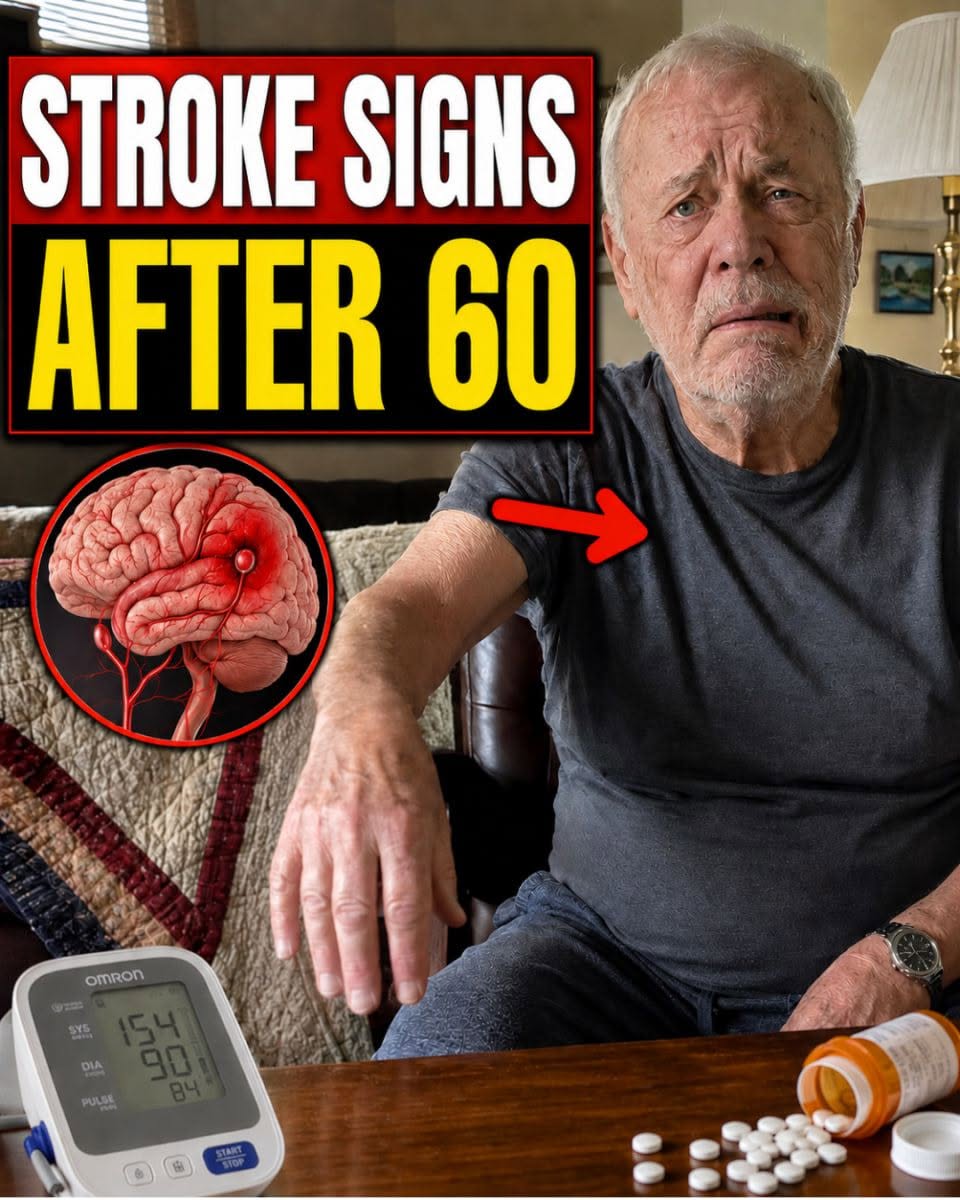
One of the strongest connections to stroke risk in later life is blood pressure that stays higher than ideal. The image accompanying this article shows a reading of 154 over 90 along with medication — a common scene in many homes. When pressure remains elevated, it quietly damages artery walls over time and raises the likelihood of both clot-related and bleeding strokes. The good news is that tracking numbers at home and working with a healthcare provider to keep them in a safer range is one of the most effective steps available. Research consistently links better blood pressure control with lower stroke occurrence in older adults.
What to Do the Moment Any Warning Sign Appears
If you or someone you care for shows any of the changes described above, act without delay. Follow these clear steps:
Call 911 or your local emergency number right away. Tell the dispatcher you suspect a stroke and give the exact time symptoms started.
Help the person sit or lie down in a comfortable position and loosen any tight clothing around the neck or chest.
Stay calm and speak reassuringly. Keep them awake if possible, but do not offer food, drink, or any medication unless a professional instructs you to.
Gather key information for the medical team: a current medication list, known allergies, recent health changes, and the precise time everything began.
If the person has a known history of heart rhythm issues or takes blood-thinning medication, have that information ready — but never start or stop any treatment on your own.
Here’s the important part: even if symptoms seem to improve after a few minutes, still seek emergency care. Brief episodes can be just as serious as longer ones.
Simple Daily Habits That Support Brain Health
While nothing removes risk entirely, consistent habits help manage the factors that contribute to stroke. Consider adding these practical steps:
