
Reaching your sixties and beyond often brings more time for family, hobbies, and the things you enjoy, yet it also brings a higher chance of stroke that can appear without much notice. The real challenge is that the warning signs sometimes show up in subtle ways that get mistaken for ordinary aging, tiredness, or even a side effect of medication, leading families to wait and hope things improve on their own. Every minute that passes without help can affect how much function returns later, and that uncertainty leaves many people feeling helpless when a loved one suddenly seems confused or unsteady. Knowing exactly what to watch for changes everything because it lets you act with confidence instead of fear. But there’s one detail about how these signs often appear in older adults that surprises even careful caregivers — and we’ll cover that important point before the end of this article.
Why Stroke Risk Increases After Age 60
As the years pass, arteries naturally lose some flexibility and can develop more plaque buildup. At the same time, conditions such as high blood pressure, irregular heart rhythms, and diabetes become more common. Research from the Centers for Disease Control and Prevention shows that the chance of stroke roughly doubles with every decade after age 55. The truth is, many people over 60 live with one or more of these factors and still feel fine day to day. What changes everything is when a clot or bleed interrupts blood flow to the brain — and that’s when quick recognition matters most.
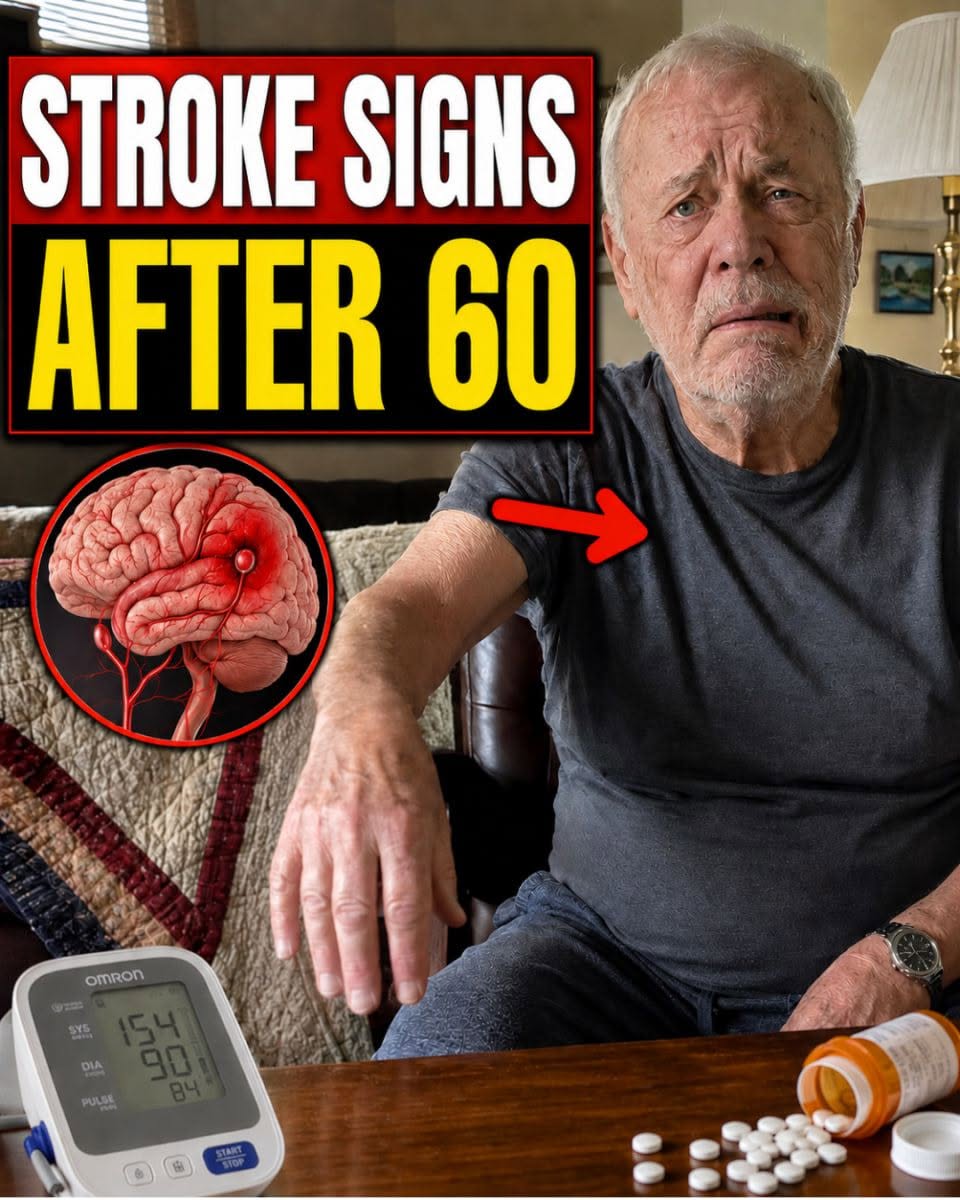
High blood pressure stands out as the leading controllable contributor. Readings that stay elevated over time put extra strain on the vessels that feed the brain. Studies tracking people over many years have found that the longer someone lives with uncontrolled high blood pressure, the greater the added risk. A home monitor showing numbers in the 150s over 90s, like the one pictured with this article, is a signal worth discussing with a doctor rather than brushing aside.
Use the FAST Test to Spot the Most Common Warning Signs
The American Stroke Association promotes a simple four-step check called FAST because it works even when stress is high. Here’s how each part helps after 60:
F — Face: Ask the person to smile. Does one side of the mouth droop or feel numb while the other side moves normally?
A — Arm: Have them raise both arms straight out. Does one arm drift down or feel weak or numb compared with the other?
S — Speech: Listen closely. Are words slurred, or does the person struggle to find the right words or repeat a simple sentence clearly?
T — Time: If any of these changes appear suddenly, call emergency services right away and note the exact time symptoms began.
These classic signs often affect just one side of the body because they reflect the area of the brain that has been interrupted. In the photo that inspired this article, the arrow points toward the arm area — a common place for sudden weakness to show up. The encouraging news is that remembering these four letters gives families a practical tool they can use in seconds.
Other Changes That Can Signal Trouble in Older Adults
Stroke signs don’t always follow the textbook pattern, especially after 60. Sometimes the changes are milder or appear in different combinations, which is exactly why so many families feel caught off guard. Here are additional signals worth treating as urgent:
