
How to Remove Liverworts If You Want To
If the liverwort you found is simply growing on the underside of a pot or on stone surfaces and is not causing any actual problems, the easiest and most sustainable approach is simply to leave it alone. It will not spread aggressively into your garden beds or cause harm to your plants. Many gardeners come to appreciate the naturalistic quality it adds to their outdoor spaces.
However, if you want to remove it — particularly if it is growing on the surface of compost in containers with young or delicate plants — physical removal is the most effective method. Liverworts have no true roots, which means they can be scraped off surfaces easily using a hoe, trowel, or stiff-bristled brush. The debris is safe to add to a garden compost heap. On pot surfaces or hard landscaping, vigorous scrubbing with a stiff brush is usually sufficient. On path and paving surfaces, allowing more light and air circulation to reach the area — by cutting back overhanging plants or sweeping away leaf litter — makes conditions less inviting for future liverwort growth.
For liverworts on the compost surface of container plants, remove the top centimeter or so of compost along with the liverwort and replace it with fresh compost. This also removes any spores that may be present in the upper layer. Improving drainage and reducing overwatering will make the compost surface less hospitable to liverwort re-establishment. Liverworts thrive in moist, compacted, low-light conditions — reducing any or all of these factors is the most effective long-term control strategy.
Why Does Finding Liverwort Tell You Something About Your Garden?
Liverwort presence in a garden, particularly on the soil surface or under containers, is often a useful indicator of growing conditions. Liverworts specifically prefer cool temperatures, low UV light exposure, consistent moisture, and — when growing on soil surfaces — compacted, airless conditions that prevent good drainage. Finding liverwort growing on the soil in your garden beds may be a signal that the soil has become compacted and is retaining moisture at the surface for extended periods. Improving soil structure by adding organic matter, improving drainage, and aerating compacted areas will both directly discourage liverwort growth and improve conditions for the plants you actually want to be growing there.
A Few Fascinating Facts About Liverworts
Since you have now had a personal encounter with one of the most ancient living organisms on the planet, a few additional facts about liverworts are worth knowing:
- Liverworts are among the earliest land plants on earth, with fossil evidence suggesting they have existed for more than 400 million years — predating dinosaurs, flowering plants, and even most insects
- There are approximately 9,000 known species of liverworts worldwide, found on every continent except Antarctica, making them one of the most globally widespread groups of plants
- Liverworts reproduce through spores rather than seeds, in a process that requires water for fertilization — which is one of the reasons they are so closely tied to moist environments
- Some liverwort species also reproduce asexually by producing structures called gemmae inside the tiny cup-shaped organs you can sometimes see on their upper surface; these gemmae are splashed out by raindrops and water irrigation and can germinate to produce entirely new plants
- The globally widespread species Marchantia polymorpha is now a significant model organism in plant biology research, used by scientists to study the earliest stages of plant evolution, gene function, and the development of land plants from aquatic ancestors
- Some species of liverwort have a distinctive spicy or aromatic scent, produced by volatile oils, which may deter grazing animals from eating them
Final Thoughts
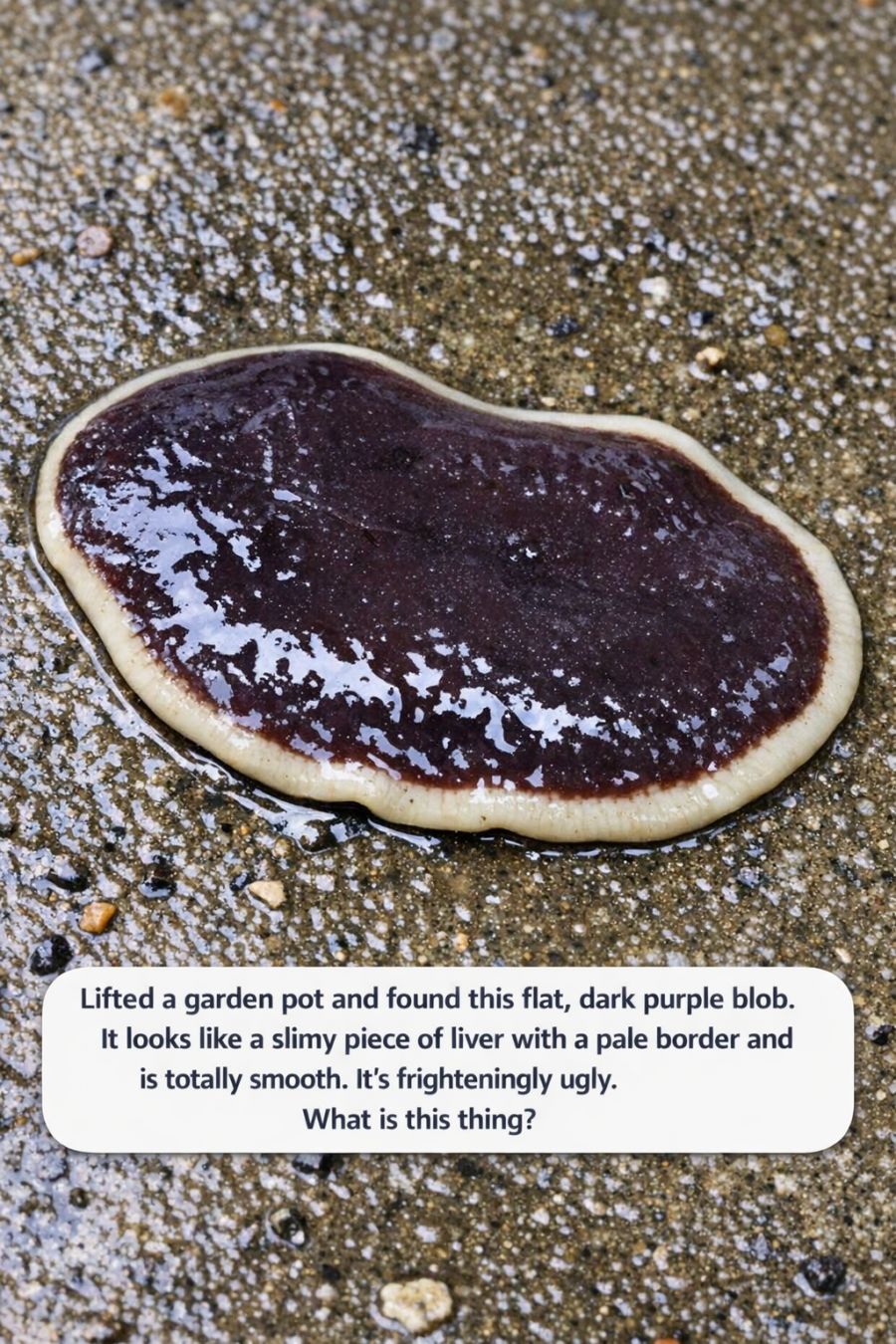
The dark purple, liver-like blob you found under your garden pot is almost certainly a liverwort — one of the oldest and most ecologically remarkable organisms on the planet, an organism so ancient that it watched the first land plants evolve from algae and has barely changed in hundreds of millions of years. It is not dangerous. It is not a sign that your garden is failing. It is not killing your plants. It is simply doing what liverworts have done since long before humans existed: finding a cool, damp, sheltered place and quietly getting on with the business of being alive. Now that you know what it is, you can decide whether to remove it or leave it to continue its 400-million-year-old occupation of your garden — armed with the knowledge that either choice will leave your plants perfectly safe.
