
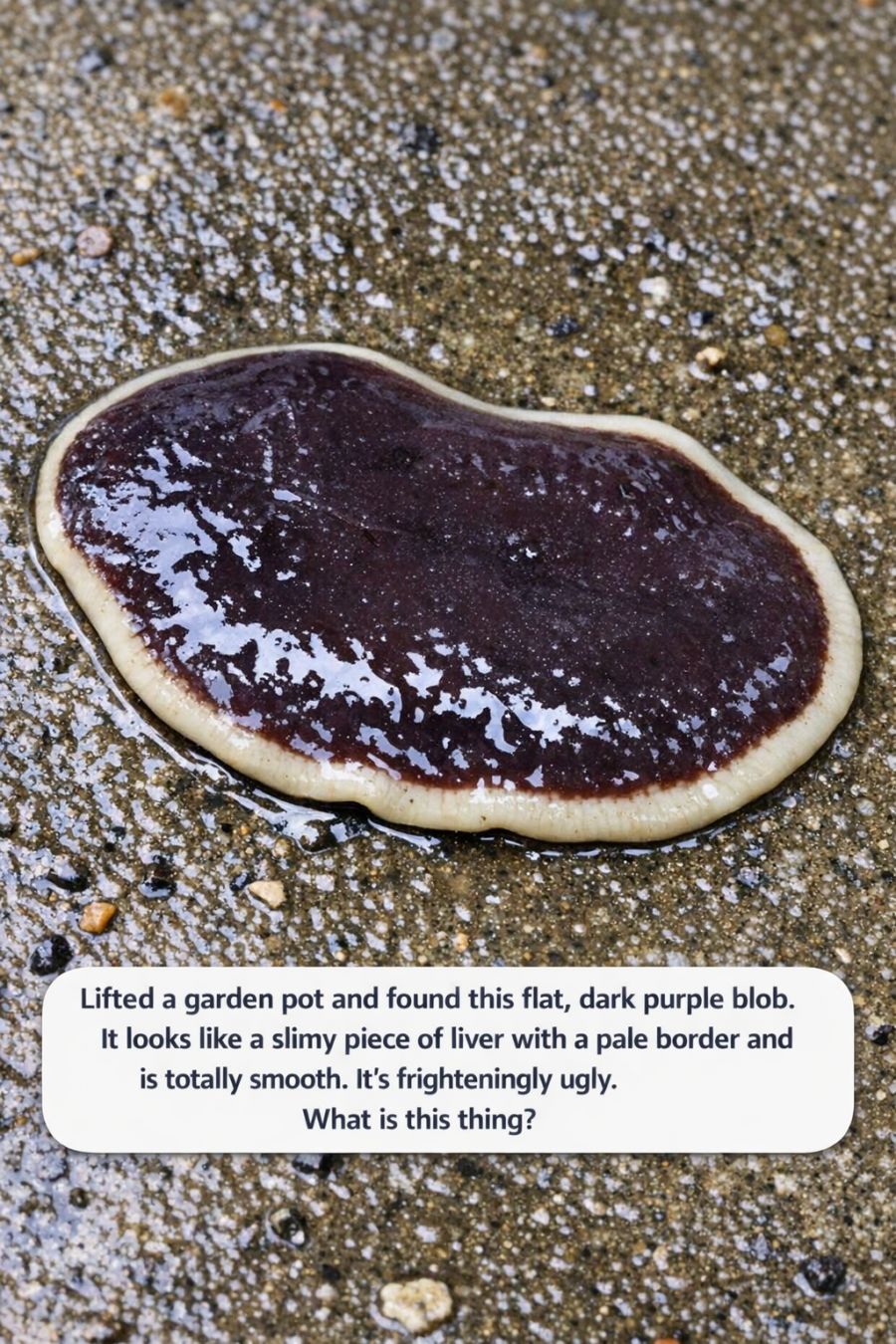
For the vast majority of garden situations, liverworts are essentially harmless. They have no true roots, which means they cannot penetrate soil or compete with garden plants the way rooted weeds do. They do not steal nutrients from your plants in any meaningful way. They do not inject toxins or release chemicals that damage surrounding vegetation. They are not parasitic — they simply grow on top of whatever surface they find suitable, anchoring themselves with those superficial rhizoids rather than boring into or damaging the substrate beneath them.
In fact, liverworts play a genuinely useful ecological role in the garden. They contribute to the breakdown of organic matter, help maintain soil moisture, and provide microhabitats for tiny beneficial organisms. Some gardeners actually appreciate them for the naturalistic, aged appearance they lend to stone paths, garden walls, and terracotta containers — the same way moss on a garden wall is considered attractive rather than problematic.
However, there are specific situations where liverworts can become a genuine problem worth addressing. When they grow in dense mats on the surface of compost in containers holding young, small, or delicate plants — such as alpines, dwarf bulbs, or freshly germinated seedlings — they can form a water-repellent crust when they dry out that prevents irrigation from reaching the root zone, potentially stressing the plant. They can also make paths and hard surfaces noticeably slippery when wet, which creates a genuine safety hazard. In greenhouse and nursery settings, dense liverwort mats on container compost can seriously compete with young ornamental plants for water, nutrients, and space.
How to Identify It With Confidence
If you want to confirm that what you found is indeed a liverwort rather than something else, here are the identifying characteristics to look for:
- Completely flat and plate-like: Thallose liverworts lie pressed against their substrate in a flat, ribbon-like or lobed structure. They do not stand upright and have no visible stems or individual leaves
- Purple or dark coloring on the underside: The lower surface of many thallose liverwort species, particularly Reboulia hemisphaerica, is strongly purple to dark purple-red. This is what gives them the liver-like appearance that initially alarms most gardeners
- Pale or lighter border at the edges: The actively growing margins of the thallus are typically lighter in color — often pale green, cream, or nearly white — creating the pale border you noticed
- Smooth, somewhat rubbery texture: The upper surface of many thallose liverworts feels almost slightly waxy or rubbery to the touch, and is relatively smooth compared to the rougher texture of mosses
- Forking, branching growth pattern: If you look carefully, you can usually see that the thallus forks and branches outward in a roughly symmetrical pattern as it grows
- No roots: If you gently lift the liverwort, you will find it detaches very easily from the surface beneath it, leaving no roots behind — only the faint imprint of its rhizoids
- Small cup-shaped structures on the surface: Some liverwort species, particularly Marchantia polymorpha, produce small, cup-shaped structures on their upper surface called gemma cups, which contain tiny asexual reproductive bodies
What About Other Purple Blobs? When Is It Something Different?
Not every strange blob found under a garden pot is a liverwort, and it is worth knowing the other possibilities so you can identify what you are dealing with accurately.
If the blob is soft, brightly colored (yellow, orange, or white rather than purple), and appears to be spreading or slowly moving — or if it has an irregular, foam-like texture — you may be looking at a slime mold. Slime molds are not plants at all but rather a bizarre category of organism that sits in its own biological kingdom. The most commonly encountered species in gardens is Fuligo septica, sometimes called Dog Vomit Slime Mold, which typically starts as a yellow or cream-colored blob and transitions through orange to dark brown as it matures. Like liverworts, slime molds are essentially harmless to plants and garden soil — they feed on bacteria, fungi, and decaying organic matter rather than on living plant tissue.
If what you found is soft, moves when prodded, and has a slug-like body, you are simply looking at a slug that was sheltering under the pot — which is one of the most common things gardeners find in that location and one that does require attention, as slugs genuinely do damage garden plants by feeding on leaves and stems at night.
