
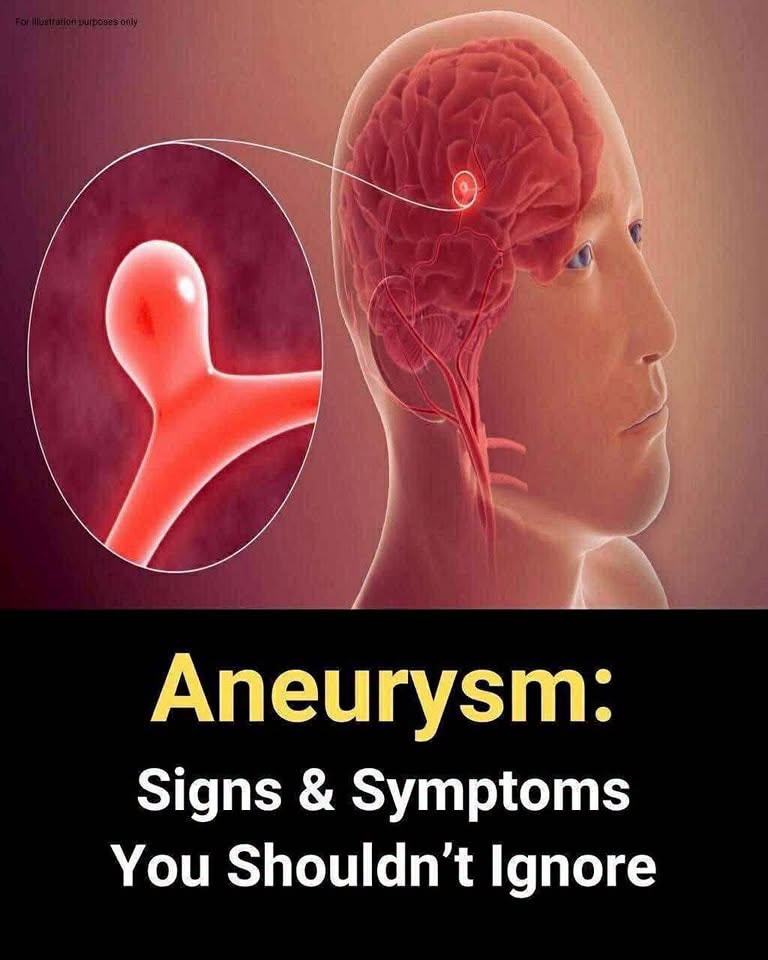
A brain aneurysm is a silent but potentially deadly condition. It occurs when a weakened blood vessel in the brain balloons outward, creating pressure—or, in the worst case, rupturing and causing life-threatening bleeding.
The danger? Most aneurysms cause no symptoms at all until it’s too late.
But medical experts emphasize this crucial truth: When warning signs do appear, recognizing them could save a life.
I learned this the hard way. A friend once dismissed a “weird headache” and blurred vision as stress. Days later, she was in the ER with a ruptured aneurysm. She survived—but not without lasting effects. Her story stays with me.
You don’t need to live in fear. But you do need to know what to watch for.
Here are 12 signs that may signal a brain aneurysm—and exactly what to do if you notice them.
🚨 The 12 Warning Signs (Never Ignore These)
1. Sudden, Severe Headache
Often called “the worst headache of my life,” this explosive pain comes on without warning—like a thunderclap. It’s the most common sign of a ruptured aneurysm.
🆘 Action: Seek emergency care immediately. Do not wait.
2. Nausea and Vomiting
When paired with a sudden headache, these can signal increased pressure in the skull from bleeding or swelling.
🆘 Action: Don’t assume it’s “just a stomach bug” if neurological symptoms are present.
3. Blurred or Double Vision:
3. Blurred or Double Vision
Pressure from an aneurysm near the optic nerves can cause visual disturbances—suddenly seeing double, blurred images, or loss of vision in one eye.
🆘 Action: Report sudden vision changes to a doctor same day.
4. Stiff or Painful Neck
A rigid neck—especially with headache or fever—can indicate bleeding irritating the meninges (brain/spinal cord membranes).
🆘 Action: If neck stiffness appears suddenly with other symptoms, go to the ER.
5. Sensitivity to Light (Photophobia)
Unusual discomfort or pain in bright light can signal brain irritation from bleeding or pressure.
🆘 Action: Note this symptom alongside others—it adds to the clinical picture.
