
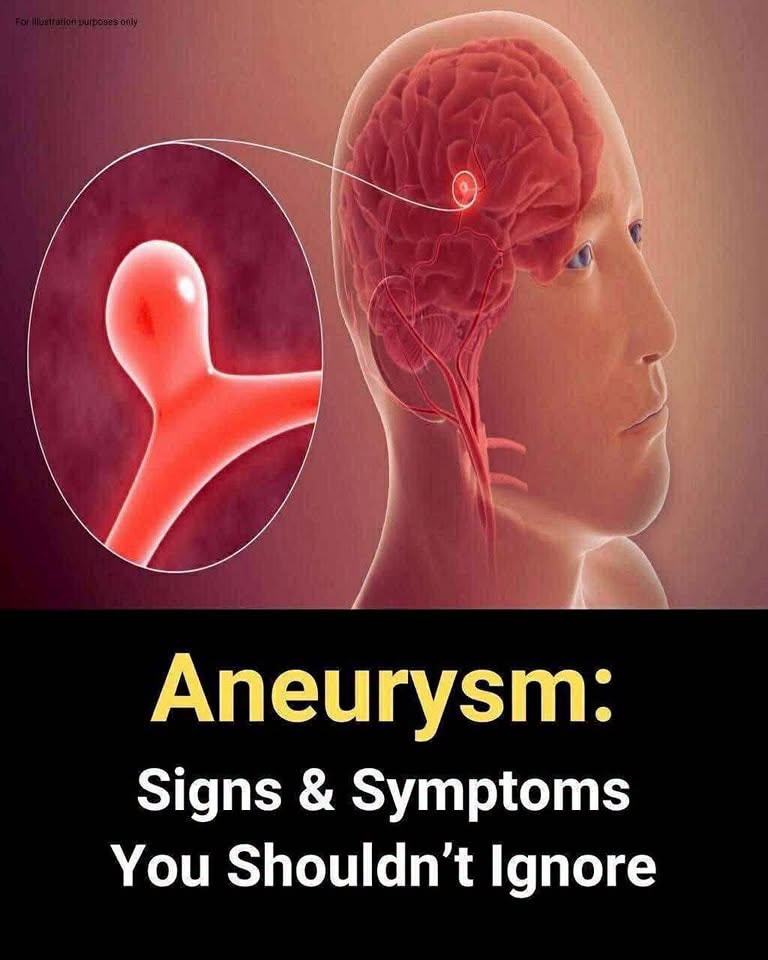
💡 Key insight: Many aneurysms are discovered before rupture during scans for unrelated issues. If you have risk factors (family history, smoking, high blood pressure), ask your doctor about screening.
🩺 Who’s at Higher Risk?
While anyone can develop an aneurysm, risk increases with:
- Family history of brain aneurysms
- Smoking or heavy alcohol use
- High blood pressure (hypertension)
- Age (most common in adults 40–60)
- Certain conditions: Polycystic kidney disease, connective tissue disorders
- Head trauma or drug use (especially cocaine)
🌟 Good news: Managing blood pressure, quitting smoking, and limiting alcohol significantly reduce risk.
🆘 When to Seek Emergency Care
Call 911 or go to the ER immediately if you or someone else experiences:
✅ Sudden, severe headache (“worst ever”)
✅ Headache + vomiting, stiff neck, or vision changes
✅ Loss of consciousness, seizure, or confusion
✅ Slurred speech, facial drooping, or weakness on one side
⏱️ Remember: “Time is brain.” Every minute counts when bleeding occurs in the brain.
🔍 How Aneurysms Are Diagnosed
If an aneurysm is suspected, doctors may use:
- CT scan: Quick detection of bleeding
- CT angiogram or MR angiogram: Detailed images of blood vessels
- Cerebral angiogram: Gold standard for mapping aneurysm size/location
These tools allow specialists to plan treatment before rupture—or act fast if one has occurred.
❤️ Final Thoughts: Awareness Is Power
A brain aneurysm doesn’t always give warning. But when it does, your awareness could be the difference between life and loss.
You don’t need to memorize every detail. Just remember this:
Sudden + severe + neurological = Get help NOW.
Trust your instincts. Advocate for yourself. And if something feels deeply wrong, don’t wait for permission to seek care.
Because your brain—and your life—are worth it.
🧠 Share this with someone you love. You never know when knowing these signs could save a life.
If you’re experiencing symptoms, please contact emergency services immediately. This article is for educational purposes only and not a substitute for professional medical advice
