
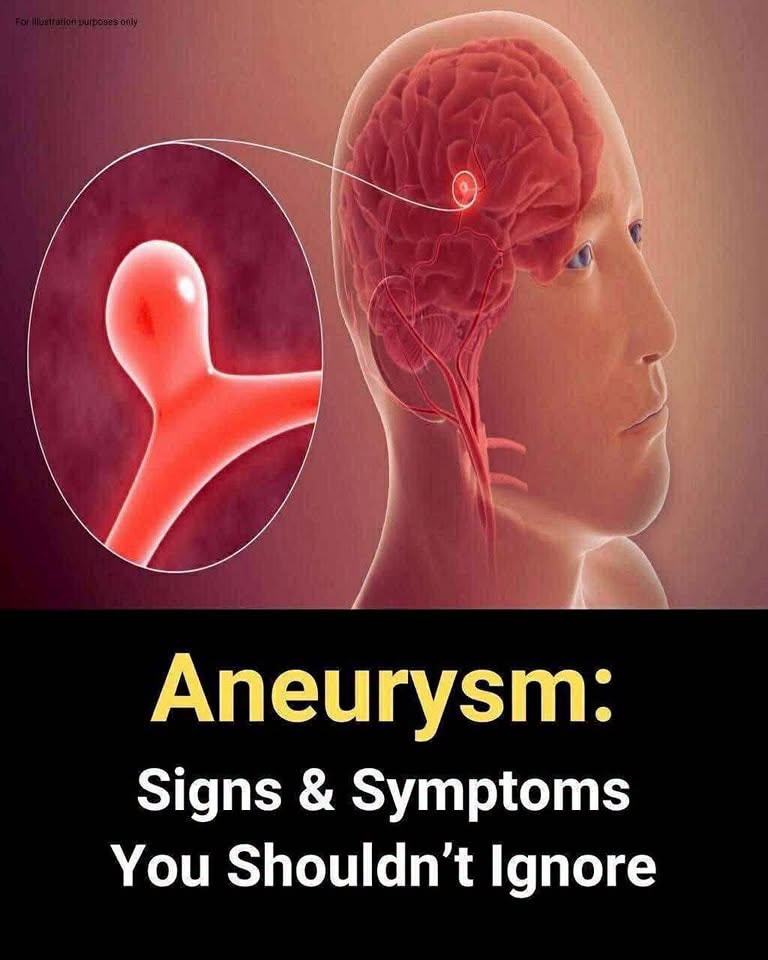
An aneurysm pressing on cranial nerves can cause one eyelid to droop or one pupil to enlarge unexpectedly.
🆘 Action: Sudden facial/eye changes = urgent evaluation.
7. Seizures
New-onset seizures in adults can be triggered by aneurysm-related bleeding or pressure on brain tissue.
🆘 Action: Any first-time seizure requires immediate medical attention.
8. Loss of Consciousness
Fainting, blacking out, or sudden confusion can indicate significant bleeding or brain involvement.
🆘 Action: Call 911. Do not drive yourself.
9. Trouble Speaking or Understanding Speech
Slurred words, confusion, or inability to comprehend language may signal a neurological event like stroke or aneurysm rupture.
🆘 Action: Use the FAST test: Face drooping? Arm weakness? Speech difficulty? Time to call 911.
10. Difficulty Walking, Dizziness, or Loss of Balance
Sudden coordination problems can mean an aneurysm is affecting brain areas controlling movement.
🆘 Action: Don’t dismiss “just feeling off”—sudden neurological changes need evaluation.
11. Pain Behind or Around One Eye
An unruptured aneurysm near the eye socket can cause localized, persistent pain due to nerve pressure.
🆘 Action: Report new, unexplained eye pain—especially with vision changes.
12. Personality or Behavioral Changes
Confusion, mood swings, memory lapses, or uncharacteristic behavior can occur if an aneurysm affects frontal brain regions.
🆘 Action: Sudden cognitive/emotional shifts warrant medical review.
⚠️ Critical Distinction: Unruptured vs. Ruptured
| Unruptured Aneurysm | Ruptured Aneurysm |
|---|---|
| May cause no symptoms or mild warnings (eye pain, vision changes) | Causes sudden, severe symptoms (thunderclap headache, loss of consciousness) |
| Often found incidentally during imaging for other issues | Medical emergency—requires immediate intervention |
| Treatment: Monitoring, coiling, or clipping to prevent rupture | Treatment: Emergency surgery + intensive care to limit damage |
