
👨👩👧 6. How is meningococcus transmitted?
Meningococcus is mainly transmitted from person to person through respiratory and throat secretions.
Transmission is facilitated by close or prolonged contact.
Certain situations can increase the risk of exposure:
Living in the same accommodation as an
There are several groups of meningococci responsible for invasive infections,
including groups A, B, C, W and Y.
Different vaccines offer protection against some of these groups.
Vaccination recommendations vary according to age, risk factors, and national vaccination programs.
It is therefore important to seek advice from a healthcare professional to find out which vaccines are recommended in your country.
🧼 Daily hygiene
Certain habits can help limit the risk of transmission:
Wash your hands regularly.
Avoid sharing objects that have come into contact with saliva.
You may like
Maintain good
respiratory hygiene.
Ventilate living spaces regularly.
Avoid close contact with
a person with a suspected infection until medical evaluation.
These measures are useful, but do not replace vaccination when it is recommended.
🚑 8. What to do if meningococcal meningitis is suspected?
When a person presents with symptoms consistent with invasive meningococcal infection, particularly in cases of rapid deterioration, one should not wait.
Here are the priority actions:
Call emergency medical services immediately.
Describe the symptoms and their progression in detail.
Report any confusion, difficulty breathing, seizures, or the appearance of
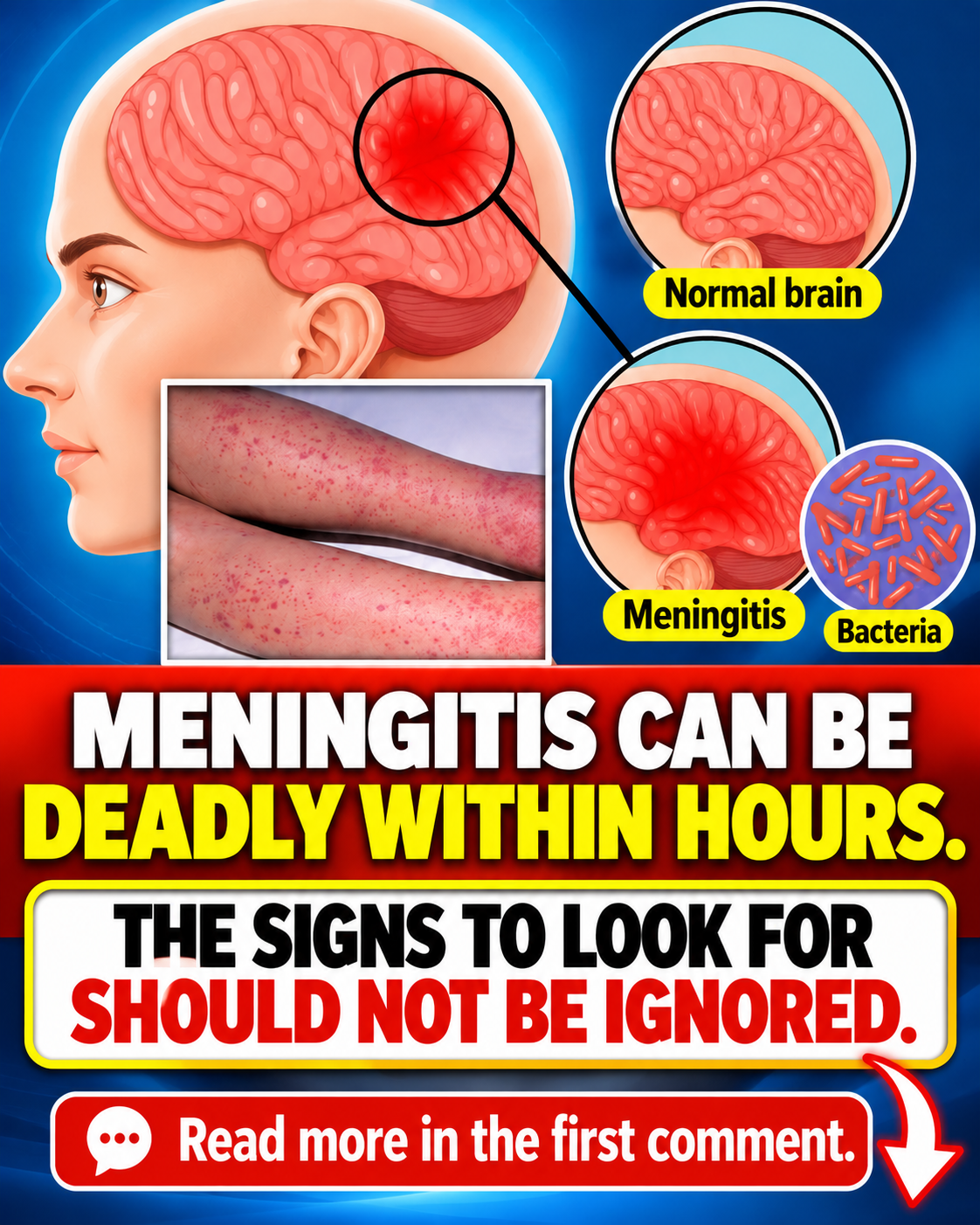
purplish spots.
Do not delay seeking care to perform a
skin test or wait for a rash to appear.
Follow the instructions of healthcare professionals.
Treatment usually relies on the rapid administration of appropriate antibiotics, combined with hospital monitoring and, if necessary, intensive care.
Diagnosis may require blood tests and other medical examinations, but doctors may begin treatment before biological confirmation when suspicion is high.
Every minute counts when a serious meningococcal infection is suspected.
❤️ 9. An essential message to protect your family
Invasive meningococcal disease remains relatively rare, but
its severity justifies particular vigilance.
Its main danger lies in
the fact that it can begin with seemingly ordinary symptoms before causing a sudden deterioration in health.
A fever accompanied by an unusually intense headache, stiff neck, confusion, cold extremities or purplish spots should be taken very seriously.
In infants, the signs may be less typical: feeding difficulties, unusual irritability, excessive sleepiness, or decreased responsiveness.
It is essential not to wait until all symptoms are present.
Early recognition of warning signs, rapid access to care, and appropriate vaccination are the
best ways to reduce the consequences of this infection.
📌 Key
points to remember
A meningococcal infection can be life-threatening within hours. A rapid deterioration in general condition is a major warning sign, even in the absence of skin lesions.
Prevention begins with information, but in the face of worrying symptoms, only urgent medical care can allow us to act in time.
Reference medical sources: Centers for Disease Control and Prevention (CDC), information on meningococcal disease; World Health Organization (WHO), meningitis and prevention of invasive meningococcal infections.
This article is provided
for informational purposes only and is not a substitute formedical advice. If you suspect meningitis or sepsis, contact emergency services immediately.
