
Seizures, abnormally rapid breathing, or difficulty breathing may accompany a severe infection.
They require urgent attention.
🔴 Cold hands and feet
Abnormally cold extremities, particularly when accompanied by pale or mottled skin, may indicate poor blood
circulation related to shock.
🔴 Red or purplish spots on
the skin
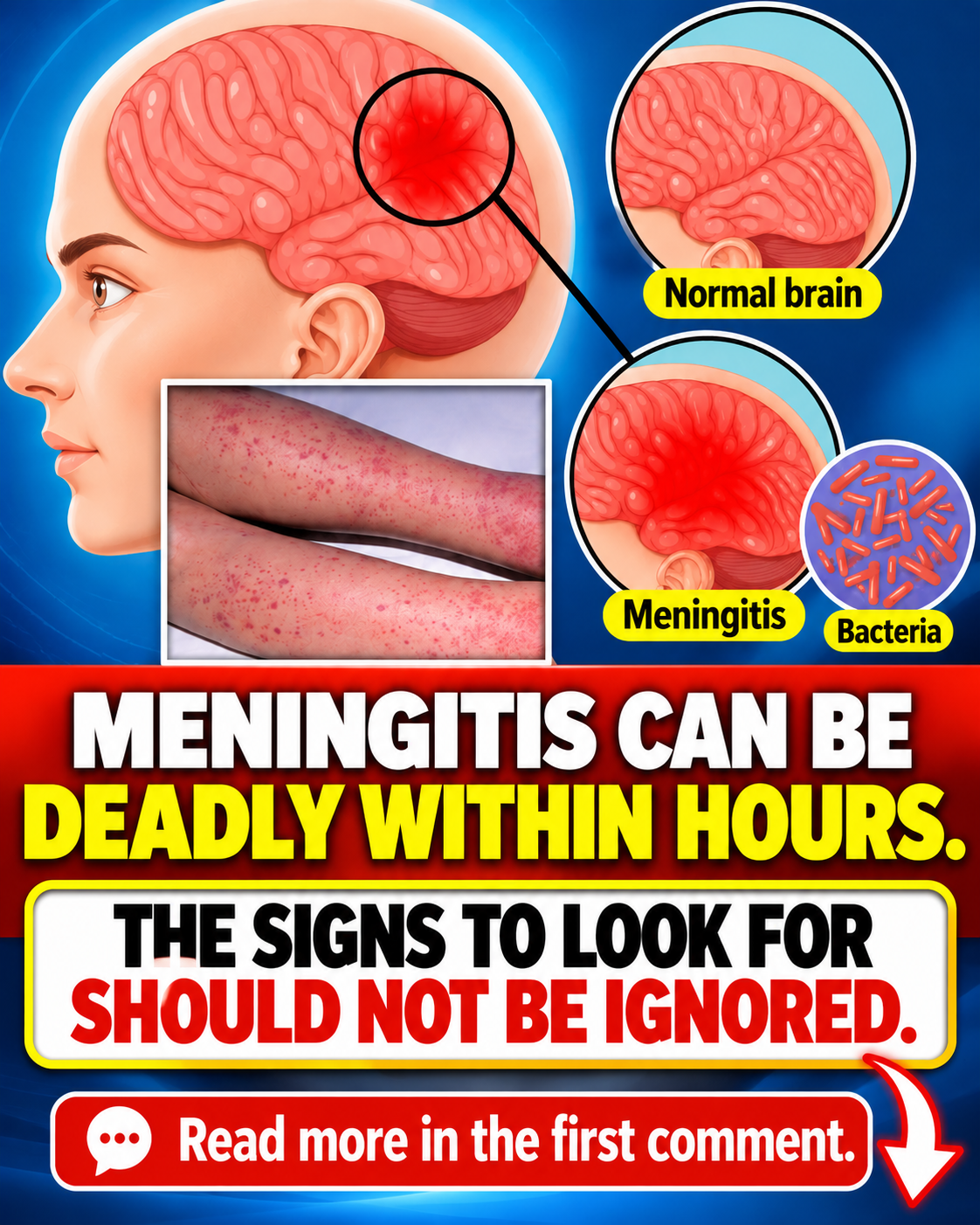
One of the most worrying signs is the appearance of purpura: small red or purplish spots that do not disappear when pressure is applied.
These lesions can sometimes spread rapidly.
Warning: you should never wait for these spots to appear before seeking medical advice.
They may be absent at the beginning of the disease or appear later.
If you experience worrying symptoms or rapid worsening, call emergency services immediately, even if you do not have a rash.
🧠 4.
Why can this infection become fatal within hours?
When meningococci
enter the bloodstream, they can cause an intense inflammatory reaction.
This reaction can damage blood vessels, disrupt clotting, and compromise the supply of oxygen to vital organs.
Several complications can then arise:
Bacterial meningitis: inflammation of the meninges can disrupt the functioning of the central nervous system and cause neurological complications.
Septic shock: blood pressure can drop dangerously low, preventing organs from receiving enough blood.
Coagulation disorders: these can lead to bleeding under the skin and tissue damage.
Multiple organ
failure: the kidneys, brain, lungs and other organs may gradually
cease to function properly.
In the most severe cases, these complications can develop in just a few hours.
That is why urgent antibiotic treatment and hospital care are essential.
📊 5. What are the possible consequences for the survivors?
Even when a patient survives an invasive meningococcal infection, some after-effects may persist long after recovery.
According to CDC data, approximately one in five survivors may experience lasting complications.
You may like
Possible after-effects include:
👂 A partial or total loss of hearing.
🧠 Brain damage.
🦵 Motor or neurological disorders.
🩺 Impaired kidney function.
🩸 Significant
tissue damage which, in the most severe cases, may require amputation.
The nature and severity of these complications vary considerably from patient to patient.
Appropriate medical follow-up may be necessary to assess neurological, auditory, and physical consequences after infection.
👨👩👧 6. How is meningococcus transmitted?
Meningococcus is mainly transmitted from person to person through respiratory and throat secretions.
Transmission is facilitated by close or prolonged contact.
Certain situations can increase the risk of exposure:
Living in the same accommodation as an
🧠 Brain damage.
🦵 Motor or neurological disorders.
🩺 Impaired kidney function.
🩸 Significant
tissue damage which, in the most severe cases, may require amputation.
The nature and severity of these complications vary considerably from patient to patient.
Appropriate medical follow-up may be necessary to assess neurological, auditory, and physical consequences after infection.
