
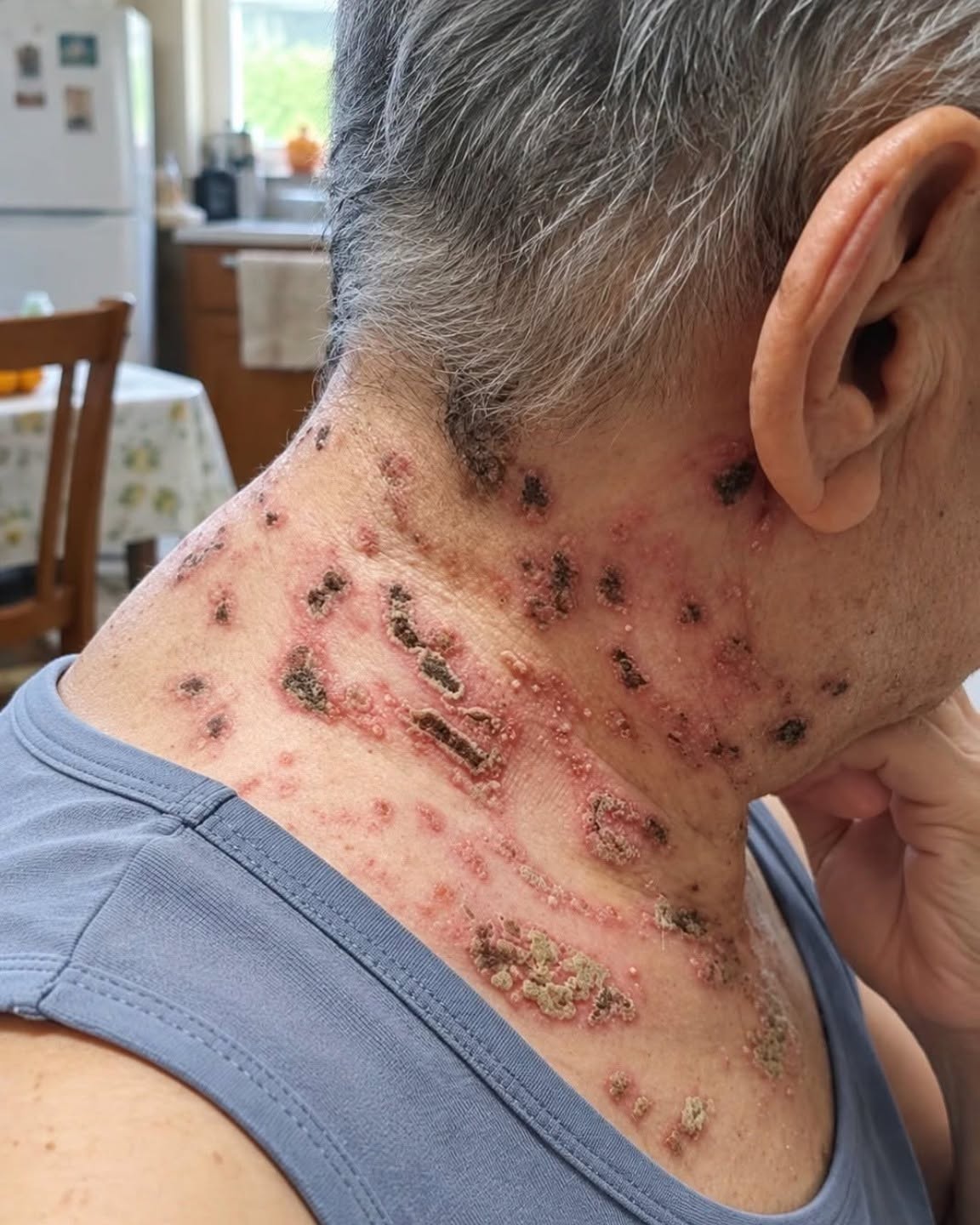
Some people develop more general symptoms around the time the rash appears.
These can include:
- Fatigue
- Headache
- Fever
- Chills
- Feeling generally unwell
These symptoms are not unique to shingles.
Many viral infections can cause them.
That is why they become more meaningful when they occur alongside the characteristic localized pain and rash.
Not everyone with shingles experiences these systemic symptoms.
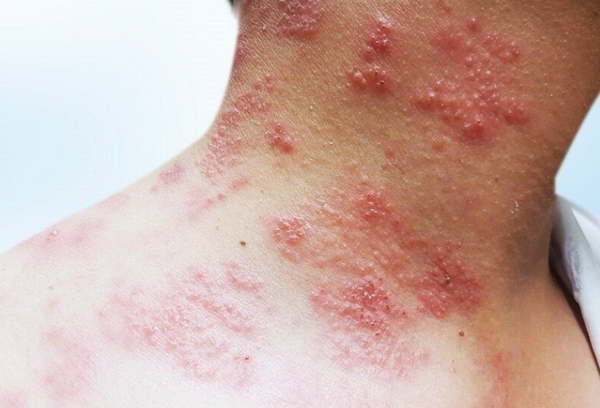
7. The Rash May Affect the Face or Eye
Shingles involving the face requires particular attention.
If the rash appears around the eye, forehead, nose, or nearby areas, it may involve the ophthalmic branch of the trigeminal nerve.
This is known as herpes zoster ophthalmicus.
It can potentially affect structures of the eye and cause serious complications, including vision problems.
Warning signs can include:
- Rash around the eye
- Eye pain
- Redness of the eye
- Sensitivity to light
- Blurred vision
- Swelling around the eye
A suspected shingles rash involving the eye or vision should receive urgent medical assessment.
Do not wait several days hoping it will resolve on its own.
Early treatment can be important in reducing complications.
8. Ear Symptoms Can Also Be Important
Shingles can occasionally affect nerves around the ear.
This can cause a combination of symptoms such as:
- Pain in or around the ear
- A rash involving the ear
- Hearing changes
- Dizziness
- Facial weakness
This form of shingles can be associated with Ramsay Hunt syndrome when specific facial and ear nerves are involved.
Sudden facial weakness, particularly when accompanied by an ear rash or significant ear pain, warrants prompt medical attention.
Why Does Shingles Happen Years After Chickenpox?
This is one of the most interesting things about shingles.
After someone recovers from chickenpox, the varicella-zoster virus can remain dormant inside nerve cells.
It may remain inactive for decades.
Later, the virus can reactivate and travel along a nerve toward the skin, producing the characteristic symptoms of shingles.
Scientists do not always know exactly why the virus reactivates in a particular person at a particular time.
However, the risk increases with age and with conditions or treatments that weaken the immune system.
Who Is More Likely to Develop Shingles?
Anyone who has previously had chickenpox can potentially develop shingles.
However, certain factors increase the likelihood.
Age
The risk rises substantially as people get older, particularly after age 50.
Weakened immune system
People with weakened immune systems may be more susceptible.
This can occur because of certain illnesses, cancer treatments, organ transplantation, HIV infection, or medications that suppress immune activity.
Certain medical treatments
Some medications that suppress the immune system can increase susceptibility.
This is one reason people receiving immune-suppressing treatment should discuss vaccination and infection risks with their healthcare team.
Is Shingles Contagious?
Shingles itself is not spread from one person to another in the same way as a respiratory infection.
However, the varicella-zoster virus can spread from someone with active shingles blisters to a person who lacks immunity, primarily through direct contact with blister fluid.
That person could develop chickenpox rather than shingles.
To reduce the risk of transmission:
- Keep the rash covered when possible.
- Avoid scratching or touching the blisters.
- Wash your hands frequently.
- Avoid direct contact with people who may be particularly vulnerable.
- Do not share towels or clothing that have come into contact with the lesions.
Transmission risk decreases once the lesions have completely crusted over.
Why Early Treatment Matters
If you suspect shingles, contacting a healthcare professional promptly is worthwhile.
Antiviral medications such as acyclovir, valacyclovir, or famciclovir may be prescribed in appropriate cases.
They work best when started early, generally within 72 hours of rash onset, although treatment can still be considered later in some situations depending on the person’s symptoms and risk factors.
Treatment can help shorten the illness and may reduce the risk of certain complications.
That is why recognizing the early pattern can be useful.
Waiting until the rash becomes extensive or extremely painful may mean missing the period when treatment is most effective.
