
5. Dulled Taste Buds
Many people find sweet tastes pleasant. Our tongue gets used to different flavors, and sugar is no exception. British researchers discovered that overweight individuals have a decreased sensitivity to sweetness and a preference for sweet foods. In the same study, healthy and fit individuals who started drinking 2 sodas a day experienced dulled taste buds and sugar cravings after just 4 weeks.
Conversely, a 2016 study found that after a month of reducing sugar intake, the experimental group found they were more sensitive to sweet flavors. Therefore, if you cut back on sugar, foods will begin to taste sweeter without it.
6. Decreased Brain Function
A study published in the journal Neuroscience found that mice fed a diet “similar in composition to the typical diet of most industrialized Western societies, rich in saturated fats and refined sugar,” suffered a reduction in brain function in just 2 months. This is because large amounts of sugar affect proteins and neurotransmitters in the brain that are responsible for learning and memory. In short: sugar makes you less sharp.
7. Skin Problems
Collagen is the most abundant protein in the body and is responsible for skin elasticity. By nature, sugar molecules bind to collagen and help collagen cells move. Too much sugar in the body makes collagen cells less mobile, causing tissue stiffness, including the skin. The loss of skin elasticity becomes apparent with the appearance of wrinkles, among other things.
Additionally, sugar causes cellular inflammation. As you probably know, whenever there is chronic inflammation, problems follow. High sugar levels also cause acne and dermatitis. Carbohydrates like bread, cereals, rice, and pasta cause an increase in insulin and androgen (a male sex hormone) production. Androgens prompt skin glands to produce excess sebum, clogging pores and leading to breakouts.
Moreover, Candida is a yeast that lives in the digestive tract and on the skin. As a yeast, it thrives on sugar. Eating too much sugar causes the yeast to overgrow, leading to nail infections, vaginal infections, athlete’s foot, and oral thrush.
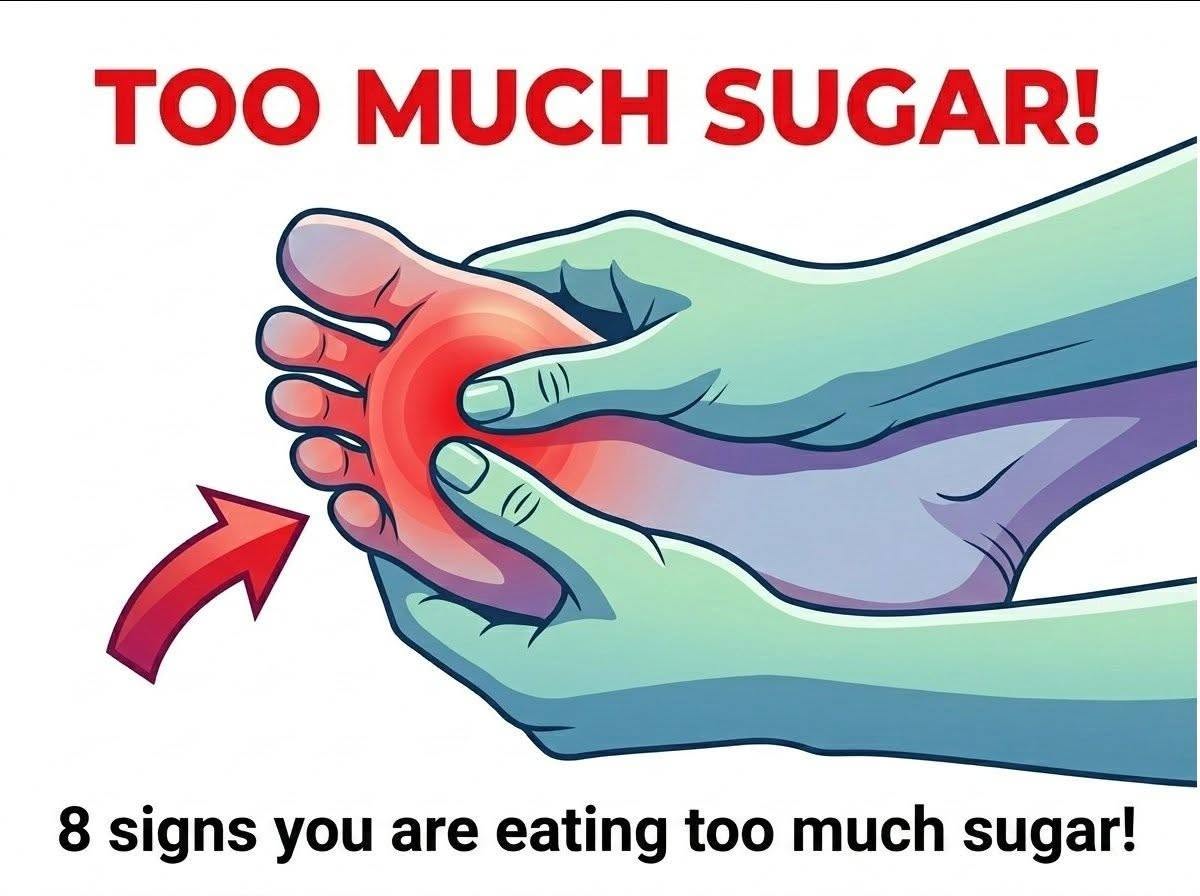
Over time, high blood sugar can also lead to diabetic neuropathy, causing tingling and pain in the feet. Furthermore, internal inflammation and increased insulin production can cause cells to reproduce abnormally and rapidly. Cancer cells feed on sugar, giving you yet another reason to kick the habit.
What Too Much Sugar Does to Your Body
Cancer has been considered a global epidemic. In a Swiss study on worldwide cancer incidence, the overconsumption of sugar in industrialized countries was identified as a major culprit. In the United States alone, an estimated 30 to 40% of healthcare expenditures are devoted to treating sugar-related diseases.
A 2014 study published in The Journal of Clinical Investigation was the first to examine how malignant and benign cancer cells react to increased glucose. All cells consume glucose for fuel. What researchers discovered is that not only do cancer cells (both malignant and benign) consume sugar, but excess sugar disrupts normal cellular expression and causes an “upregulated canonical oncogenic signaling” (tumor development). This is driven by the cells’ complex metabolic reactions to sugar.
Interestingly and encouragingly, when sugar intake is reduced, cells regain their normal function over time.
Simply put: eating too much sugar will make you gain weight. Clinical studies have unequivocally proven that increased sugar consumption leads to weight gain. In fact, a meta-analysis showed that after a one-year observation period, the propensity to gain weight and become obese among people who regularly consumed sugary foods was, on average, 55% higher than among those who reduced their sugar intake.
