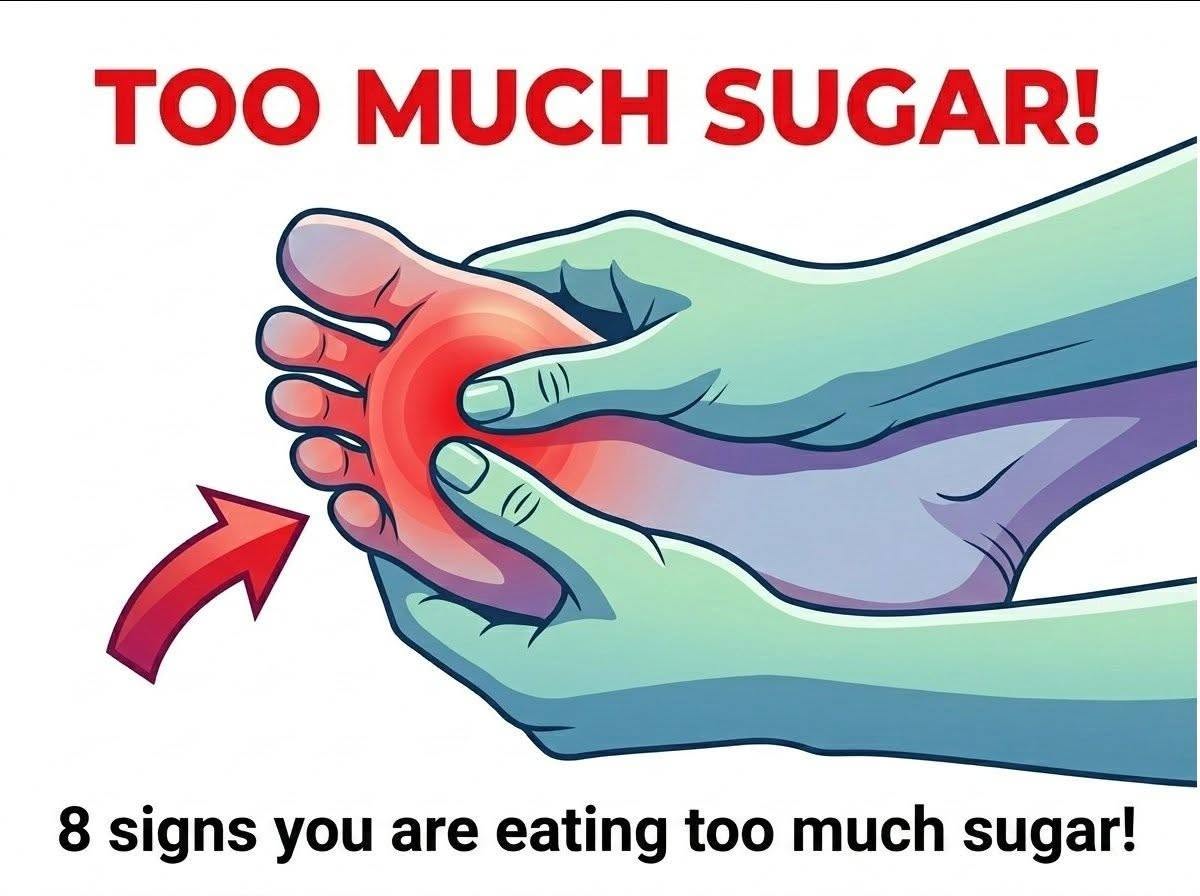
Whether you have a sweet tooth or not, sugar in one form or another is added to almost all packaged foods you buy. It is likely that you consume more sugar—perhaps even too much—without even realizing it. The question then becomes: how much sugar is excessive?
Refined sugar and its substitutes are a true scourge to human existence, causing all sorts of diseases and discomforts. A packaged food might not explicitly list “sugar” in its ingredients, but it can hide under other names.
Common Hidden Names for Sugar:
- Corn syrup or sweetener
- Dextrin
- Dextrose
- Diglycerides
- Disaccharides
- Evaporated cane juice
- Fructose
- Glucose
- High-fructose corn syrup (HFCS)
- Hydrolyzed starch
- Malt syrup
- Maltodextrin
- Maltose
- Rice syrup
- Sorbitol
- Sucrose
Faced with all these sources of sugar, how do you determine the line not to cross? If you experience the following symptoms, it is time to significantly reduce your sweet intake:
Signs You Are Consuming Too Much Sugar
1. Sugar Addiction
Sugar is addictive, much like cocaine, and its effects are similar. It stimulates the production of dopamine, the pleasure hormone. Often, without even thinking about it, we can be tempted by sweets and simple carbohydrates to get our “fix.” As with other addictions, our body develops a tolerance to sugar, meaning the more we consume, the more we crave it, even when we aren’t hungry.
2. Lack of Energy and Fatigue
Orexins, a type of neuropeptide, play a role in the sleep-wake cycle. Sensitive to sugars, they react to glucose levels in the body. A slight increase in blood sugar can inhibit the transmission of neural signals by orexins, leading to a state of drowsiness. Thus, after the fleeting energy provided by sugar, a state of fatigue quickly follows due to the inhibition of these neurotransmitters.
3. Weight Gain
Excessive sugar consumption makes you gain weight. Of course, other factors like activity level and metabolic rate play a role, but the body burns sugar for energy first. What it cannot use immediately, it stores as fat.
Furthermore, eating too much sugar makes you overeat by suppressing the hormone leptin, which tells the body when to stop eating. If you feel tired and lethargic after consuming sugar, you are also less inclined to exercise.
An increase in blood sugar stimulates insulin production to bring it back to normal levels. Insulin lowers blood sugar levels: when it fluctuates or drops too low, your body thinks it needs more fuel. As a result, you eat even when you don’t really need to.
4. Frequent Colds and Flus
Too much sugar weakens the immune system. This is because glucose reduces the activity of white blood cells, which are responsible for eliminating pathogens like viruses. Regularly eating too much sugar makes us more susceptible to contagions because our bodies are less capable of fighting them off.
5. Dulled Taste Buds
Many people find sweet tastes pleasant. Our tongue gets used to different flavors, and sugar is no exception. British researchers discovered that overweight individuals have a decreased sensitivity to sweetness and a preference for sweet foods. In the same study, healthy and fit individuals who started drinking 2 sodas a day experienced dulled taste buds and sugar cravings after just 4 weeks.
Conversely, a 2016 study found that after a month of reducing sugar intake, the experimental group found they were more sensitive to sweet flavors. Therefore, if you cut back on sugar, foods will begin to taste sweeter without it.
6. Decreased Brain Function
A study published in the journal Neuroscience found that mice fed a diet “similar in composition to the typical diet of most industrialized Western societies, rich in saturated fats and refined sugar,” suffered a reduction in brain function in just 2 months. This is because large amounts of sugar affect proteins and neurotransmitters in the brain that are responsible for learning and memory. In short: sugar makes you less sharp.
7. Skin Problems
Collagen is the most abundant protein in the body and is responsible for skin elasticity. By nature, sugar molecules bind to collagen and help collagen cells move. Too much sugar in the body makes collagen cells less mobile, causing tissue stiffness, including the skin. The loss of skin elasticity becomes apparent with the appearance of wrinkles, among other things.
Additionally, sugar causes cellular inflammation. As you probably know, whenever there is chronic inflammation, problems follow. High sugar levels also cause acne and dermatitis. Carbohydrates like bread, cereals, rice, and pasta cause an increase in insulin and androgen (a male sex hormone) production. Androgens prompt skin glands to produce excess sebum, clogging pores and leading to breakouts.
Moreover, Candida is a yeast that lives in the digestive tract and on the skin. As a yeast, it thrives on sugar. Eating too much sugar causes the yeast to overgrow, leading to nail infections, vaginal infections, athlete’s foot, and oral thrush.
Over time, high blood sugar can also lead to diabetic neuropathy, causing tingling and pain in the feet. Furthermore, internal inflammation and increased insulin production can cause cells to reproduce abnormally and rapidly. Cancer cells feed on sugar, giving you yet another reason to kick the habit.
What Too Much Sugar Does to Your Body
Cancer has been considered a global epidemic. In a Swiss study on worldwide cancer incidence, the overconsumption of sugar in industrialized countries was identified as a major culprit. In the United States alone, an estimated 30 to 40% of healthcare expenditures are devoted to treating sugar-related diseases.
A 2014 study published in The Journal of Clinical Investigation was the first to examine how malignant and benign cancer cells react to increased glucose. All cells consume glucose for fuel. What researchers discovered is that not only do cancer cells (both malignant and benign) consume sugar, but excess sugar disrupts normal cellular expression and causes an “upregulated canonical oncogenic signaling” (tumor development). This is driven by the cells’ complex metabolic reactions to sugar.
Interestingly and encouragingly, when sugar intake is reduced, cells regain their normal function over time.
Simply put: eating too much sugar will make you gain weight. Clinical studies have unequivocally proven that increased sugar consumption leads to weight gain. In fact, a meta-analysis showed that after a one-year observation period, the propensity to gain weight and become obese among people who regularly consumed sugary foods was, on average, 55% higher than among those who reduced their sugar intake.
The Dangers of Soda
The amount of soda and carbonated beverages consumed is particularly correlated with significant weight gain, leading directly to obesity and diabetes. Diet soda is just as bad as its regular counterpart because artificial sweeteners are not metabolized by the body and are therefore stored in fat cells, causing inflammation and weight gain.
Billions of gallons of soda are consumed every year in the United States. A 2006 study published in the American Journal of Clinical Nutrition states:
“The findings from large cross-sectional studies, in conjunction with those from well-powered prospective cohort studies with long periods of follow-up, show a positive association between greater intakes of sugar-sweetened beverages and weight gain and obesity in both children and adults… a 12-oz serving [1 can of soda = 1 serving] of regular soda provides 150 kcal and 40-50 g of sugar in the form of high-fructose corn syrup… which is equivalent to 10 teaspoons of table sugar. If these calories are added to the typical US diet without reducing intake from other sources, 1 soda/day could lead to a weight gain of 15 lb or 6.75 kg in 1 year.”
How Much Sugar is Too Much?
Naturally occurring sugars, like those found in fruit, also come with vitamins, minerals, and phytochemicals that facilitate their metabolism and allow cells to efficiently use their food.
The recommended daily amounts of carbohydrates depend on age, size, and activity level. However, on average, the American Heart Association recommends limiting added (non-natural) sugars to:
- Women: 6 teaspoons / 30 grams per day (about 100 calories)
- Men: 9 teaspoons / 45 grams per day (about 150 calories)
Nutrition labels indicate total carbohydrates and break that number down into fiber and sugars. As a general rule, more than 22.5 g of sugar is considered too much, and 5 g or less is considered low. Total carbohydrate intake should make up about 45-65% of your daily caloric intake. On a typical 2000-calorie/day diet, 900-1300 calories or 225-325 grams should come from carbohydrates.
Carbohydrate Content of Typical Foods
| Food Item | Total Carbohydrates | Sugar Content / Notes |
| 1 slice of white bread | 15 g | 1.5 g added sugar |
| 100 g of pasta | 25 g | 8% of total recommended daily intake |
| 100 g of rice | 28 g | 0.1 g sugar |
| 1 medium apple | 19 g | Includes fiber |
| 100 g of typical breakfast cereal | 68 g | 1 g added sugar |
| 1 12-ounce can of cola | 39 g | All sugar |
| 1 medium carrot | 6 g | Includes fiber |
Artificial Sweeteners vs. Natural Alternatives
Artificial sweeteners are not a great alternative to refined sugar. Overwhelming evidence indicates they contribute to obesity, hypertension, diabetes, cardiovascular and neurodegenerative diseases, metabolic syndrome, depression, chronic headaches, and cancer.
Better Natural Alternatives:
Natural sources of sugar add nutrients along with sweetness. Relatively low on the glycemic index compared to refined sugars, they are safe to use and promote wellness. Because of their nutritional value, they are more satisfying:
- Honey (raw and unpasteurized): An anti-inflammatory, antifungal, antibacterial superfood rich in nutrients and antioxidants.
- Maple syrup: Kills cancer cells; rich in minerals, anti-inflammatories, antioxidants, and unique phytochemicals beneficial to human health.
- Molasses: Rich in minerals, including calcium, iron, potassium, selenium, and magnesium.
- Fruit juice (real, no-sugar-added): High in natural sugars but contains plenty of vitamins and minerals.