
The simplest fix is to dump the standing water somewhere appropriate and clean the container thoroughly.
If the water is especially foul, pour it onto a non-edible weedy area or into a composting zone rather than splashing it onto edible leaves. Then scrub the bucket with a stiff brush. A solution of 1 tablespoon of unscented household bleach per 1 gallon of water can be used for disinfection, followed by a very thorough rinse.
If you prefer not to use bleach, hot soapy water plus a good scrub is usually enough if your main goal is prevention. What matters most is removing the slime layer and
decomposing debris stuck to the bottom and sides. That film is what keeps attracting egg-laying insects and supporting larvae.
11. How to keep them from coming back
Prevention is gloriously unglamorous: empty containers promptly, store buckets upside down, clear saucers after rain, and don’t let weeds and leaf litter ferment in water-holding spots. If you collect rainwater intentionally, use covered barrels with fine mesh screens and keep overflow areas draining properly.
Walk your garden once a week in warm weather and look for anything holding more than about 1/2
inch of water for several days. I’ve found forgotten nursery pots, folded tarps, old gloves, wheelbarrow corners, and even a shovel blade can hold enough stagnant water to support odd little aquatic life. Five minutes of checking saves a lot of squirm-inducing surprises.
12. Whether you should kill them or leave them alone
If they’re in an accidental bucket of stagnant water, you don’t need a specialized treatment plan. Emptying and cleaning the container solves the issue. I generally don’t see any reason to reach for insecticides in this situation.
It’s overkill, and it misses the actual cause, which is the standing organic-rich water.
If they’re in a pond designed for wildlife, identification matters more. True rat-tailed maggots usually prefer nastier, low-oxygen spots than a balanced pond, but if one turns up occasionally, that alone doesn’t mean disaster. In a garden bucket, though, simple sanitation is the answer.
13. Why finding them can actually tell you something useful
Unpleasant as they are, they’re helpful little messengers. They tell you water has been sitting too long, oxygen is low, and organic
matter is breaking down. In that sense, they’re like a living warning label for neglected garden containers.
When I find them, I take it as a cue to check everything nearby: clogged downspouts, blocked drainage holes, saucers under pots, muck in watering cans, and the edges of compost bins. Usually the bucket is not the only problem spot. There’s almost always another place nearby that has been quietly collecting water for 10 days, 20 days, maybe longer.
14. The bottom line
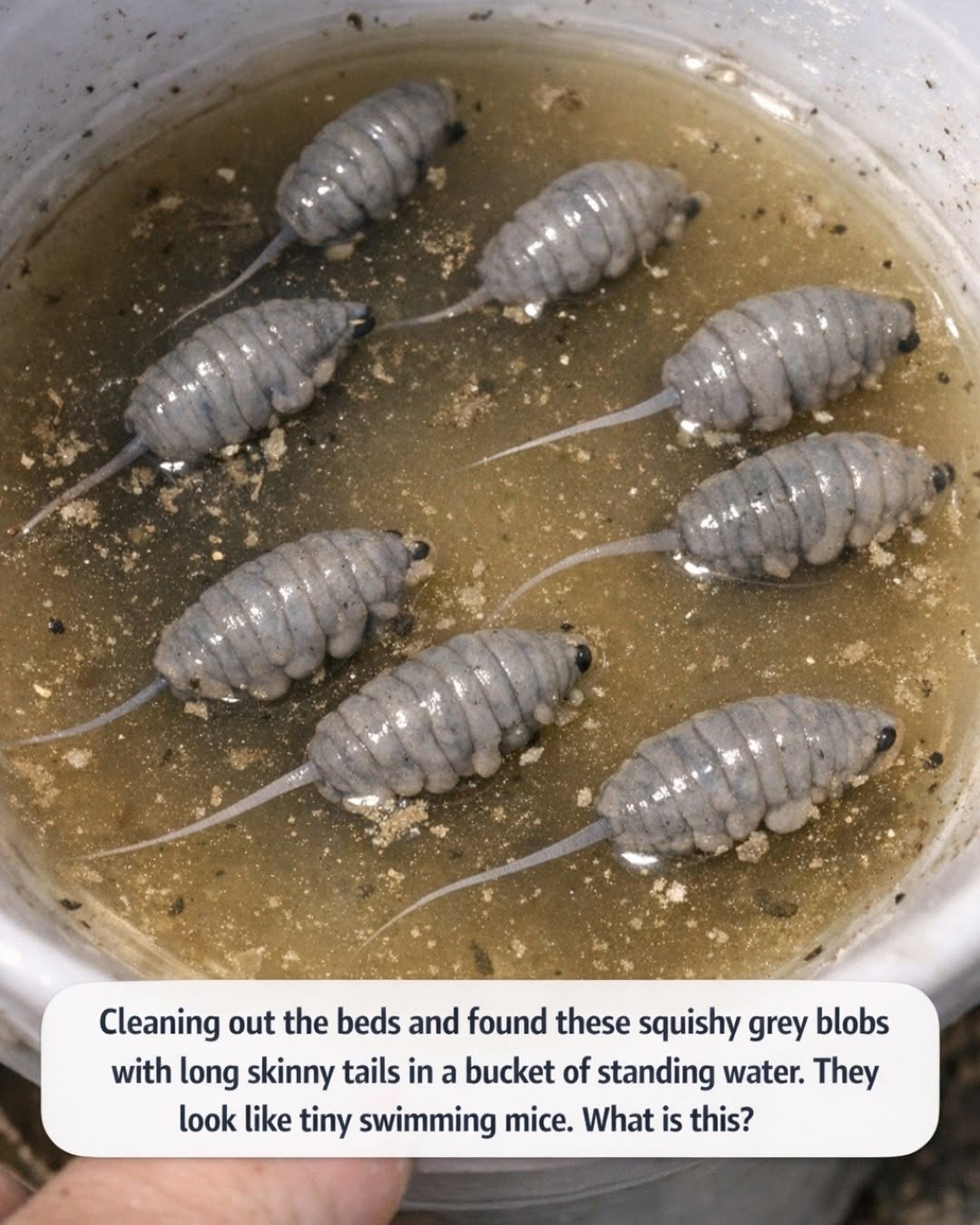
If you found squishy grey blobs with long skinny
tails in a bucket of standing water, the best answer is that you’ve likely discovered rat-tailed maggots, the larvae of hoverflies. They look bizarre, but they are a known, common organism associated with stagnant, dirty water—not miniature swimming rodents.
Dump the water, scrub the bucket, store it upside down, and check the rest of the garden for other water-holding containers. And if you happen to notice bee-like hoverflies working your flowers later in the season, you can enjoy the odd satisfaction of knowing exactly what those creepy little “swimming mice”
