
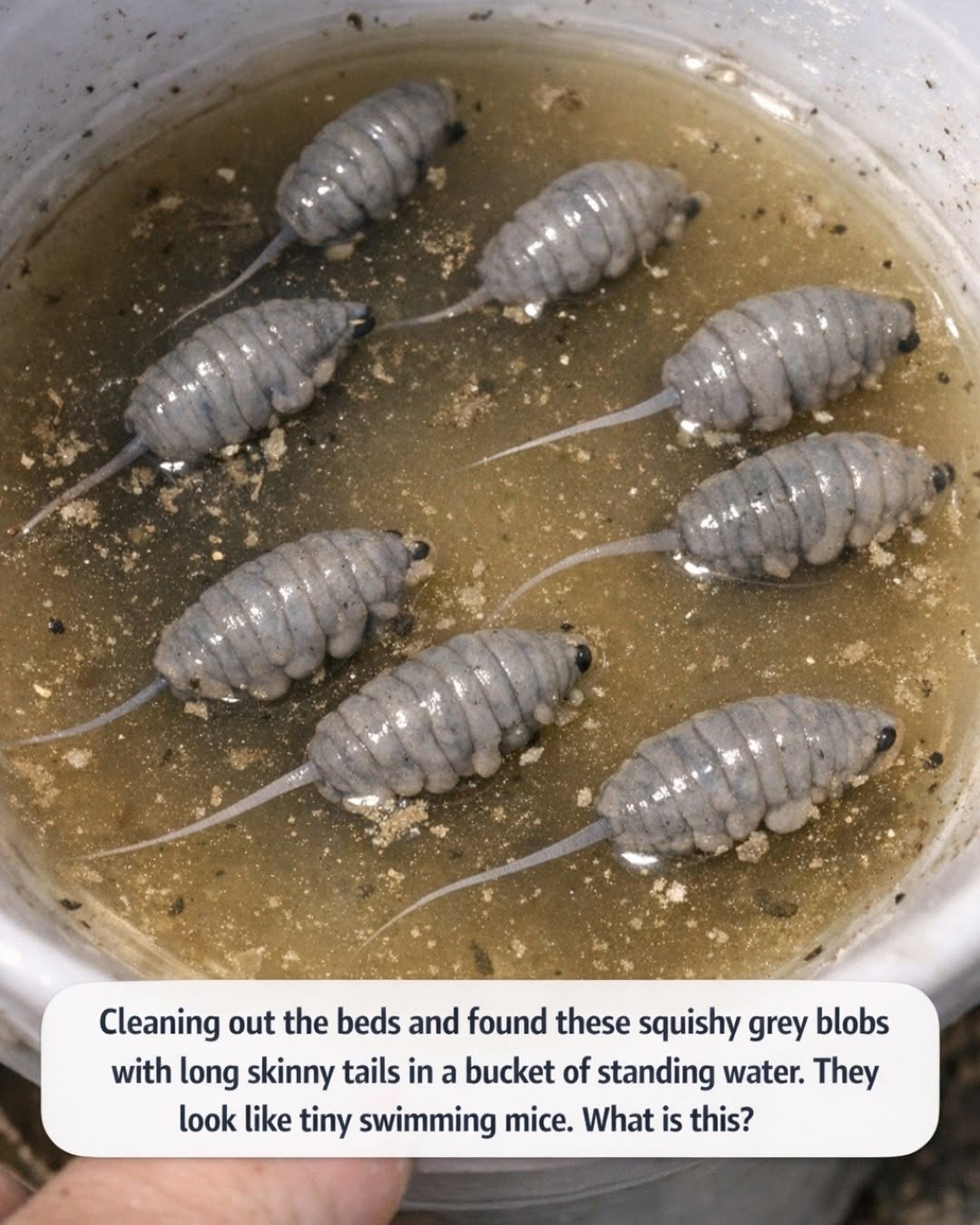
5. What they turn into
These larvae become hoverflies, most often drone flies, which are stout, bee-mimicking flies about 1/2 inch long. Adult drone flies are harmless pollinators. They often hover around flowers, especially dill, fennel, yarrow,
asters, marigolds, and other open blooms where nectar is easy to reach.
Many people mistake the adults for honeybees because they have striped or banded abdomens and a similar shape at a glance. But unlike bees, they have only one pair of wings, large fly eyes, and no narrow “wasp waist.” If you garden, chances are you’ve already seen the adults visiting blossoms in midsummer and never knew their larvae had such odd aquatic lives.
6. Are they dangerous to people or pets?
In the bucket, they are more unpleasant-looking
than dangerous. They do not bite, sting, or chase anyone. You are not dealing with rodent babies or some parasite that is about to crawl out onto the patio. For a healthy person handling a container outdoors, the bigger concern is the dirty standing water itself, which may contain bacteria, algae, or mosquito larvae.
I still recommend common-sense hygiene: wear gloves if the water is especially foul, avoid splashing it into your eyes or mouth, and wash your hands afterward with soap and warm water for at least 20 seconds.
If pets drink from stagnant buckets regularly, that’s worth preventing, but again, the problem is the contaminated water, not specifically the rat-tailed maggots.
7. Why they show up in nasty water
Rat-tailed maggots are scavengers. They feed on decaying organic matter and the microorganisms thriving in it. That means they prefer water rich in rotting plant bits, manure, sludge, or similar material. A clean, freshly filled bucket of water is not nearly as appealing as one with a layer of decomposing leaves and a week or two of summer warmth.
From an ecological standpoint, they are part of the cleanup crew. They help break down waste in wet environments, though most of us would prefer they do it somewhere other than a bucket beside the tomatoes. Their presence is really a signpost that the water has become stagnant and nutrient-loaded.
8. How long they stay in the larval stage
The timing varies with temperature, food supply, and species, but the larval period often lasts 2 to 4 weeks in warm conditions. After that, the larva moves into a pupal stage
before emerging as an adult fly. In a sheltered, undisturbed container, you may have overlapping batches if conditions remain favorable.
That’s one reason people suddenly notice “dozens” at once. The bucket wasn’t colonized overnight. Adult hoverflies likely laid eggs there days or weeks earlier, and the larvae grew quietly until the water was disturbed during cleanup.
9. How they differ from mosquito larvae
Mosquito larvae are much slimmer and more active near the surface. People often call them “wigglers,” and that’s accurate: they thrash and dart with a quick, twitchy
motion. Most are only a few millimeters long, especially when young, and they usually hang at the water’s surface rather than looking like chunky grey grubs with long breathing tubes.
Rat-tailed maggots are thicker, more maggot-like, and far larger when mature. If what you saw looked substantial enough to make you think “tiny mouse,” that points much more strongly to rat-tailed maggots than mosquitoes.
10. What you should do with the bucket right now
