
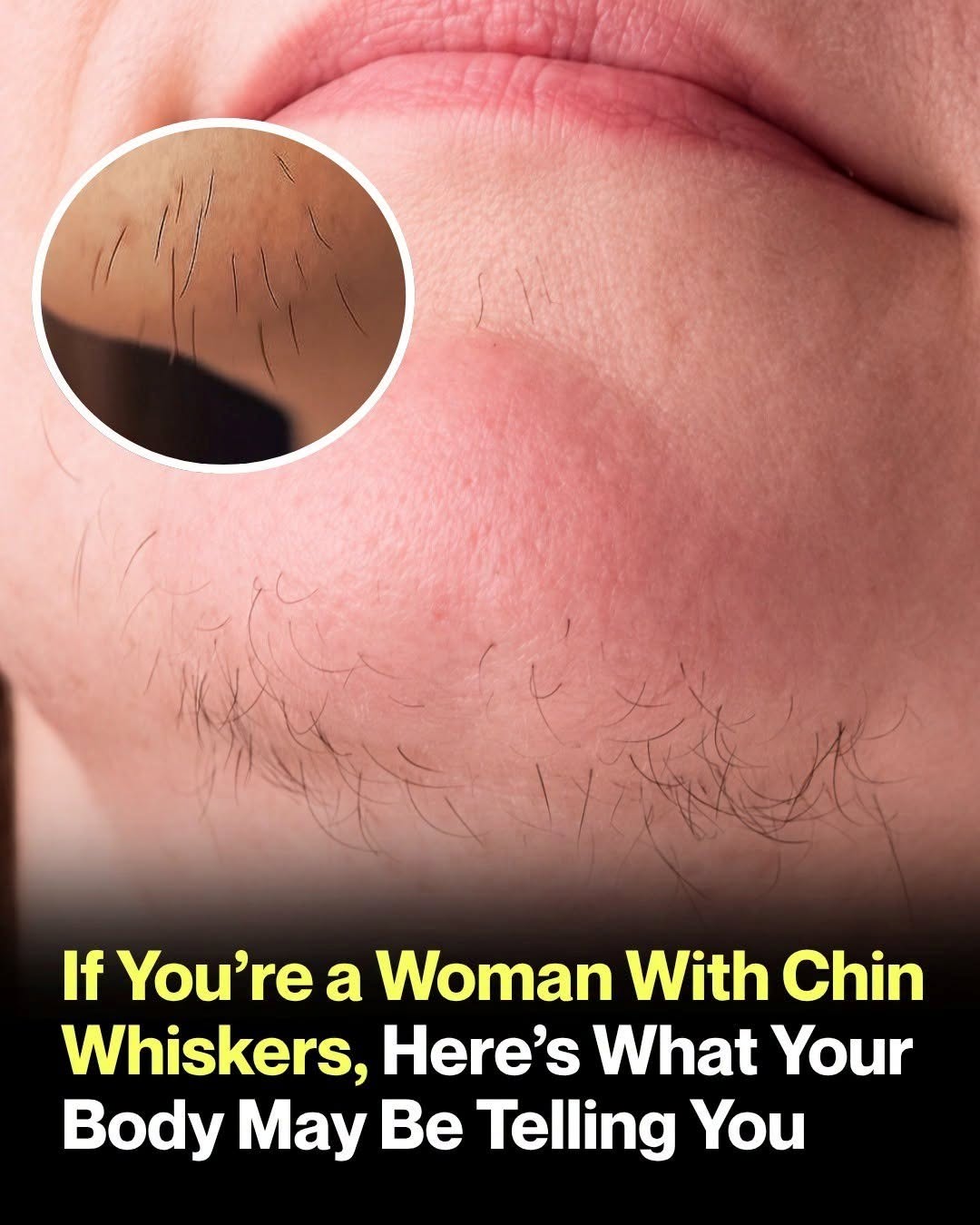
You’re standing in front of the bathroom mirror when the light catches something unexpected.
There it is: one stubborn, dark hair growing from your chin.
You pluck it, forget about it, and then — a few weeks later — another one appears. Maybe it’s in the same spot. Maybe it has brought a friend.
If this sounds familiar, you’re far from alone.
Facial hair in women is much more common than many people realize. In many cases, a few chin whiskers are simply a normal part of genetics, aging, or changing hormone levels. But when facial hair becomes noticeably thicker, darker, more widespread, or begins growing rapidly, it can sometimes offer useful clues about what is happening inside the body.
So, what exactly do chin whiskers mean for a woman?
The answer depends on much more than the presence of one or two hairs.
First, A Few Chin Hairs Can Be Completely Normal
One of the biggest misconceptions about female facial hair is that any dark hair on the chin must mean something is wrong.
That isn’t necessarily true.
Women naturally produce androgens, a group of hormones that includes testosterone. Although these hormones are present at much lower levels in women than in men, they still play important roles in the body.
Hair follicles can also respond differently to hormones from one person to another.
That means two women with similar hormone levels may have very different amounts of facial or body hair. Genetics, age, ancestry, and the sensitivity of individual hair follicles can all influence how noticeable that hair becomes.
MedlinePlus notes that women normally have fine hair on areas including the chin and upper lip. The medical term hirsutism generally refers instead to excessive growth of coarse, dark hair in a pattern more commonly associated with male hair growth.
So if you occasionally find one or two coarse chin hairs — especially if they have developed gradually — it does not automatically mean you have a hormonal disorder.
The bigger question is whether the hair is part of a broader pattern.
When Chin Hair Becomes “Hirsutism”
Hirsutism describes excessive growth of dark, coarse hair in women in androgen-sensitive areas.
These may include the:
- Chin and upper lip
- Jawline
- Chest
- Lower abdomen
- Back
- Inner thighs
It is different from the soft, light-colored “peach fuzz” that naturally covers much of the body.
Hirsutism is relatively common. The Endocrine Society estimates that it affects approximately 5% to 10% of women.
And while increased androgen activity frequently plays a role, not every woman with hirsutism has abnormally high testosterone levels. Sometimes the hair follicles are simply more responsive to normal hormone levels, and in some cases no specific cause is identified.
That is why chin hair should be viewed as a clue rather than a diagnosis.

1. Your Genetics May Simply Favor More Facial Hair
Before assuming there is a medical problem, look at your family.
Does your mother have noticeable chin hair?
What about your sisters, aunts, or grandmother?
Hair-growth patterns are strongly influenced by genetics. Some women naturally develop more coarse facial or body hair than others, even when their hormone levels are within expected ranges.
Family history can also influence the likelihood of conditions associated with hirsutism.
The important distinction is whether the pattern has been relatively stable throughout your adult life or whether something suddenly changed.
If you have always had a few noticeable chin hairs and otherwise feel well, the explanation may be fairly ordinary.
If you suddenly begin growing significantly more facial hair, however, it deserves closer attention.
2. Aging And Menopause Can Make Chin Hair More Noticeable
For many women, chin whiskers seem to appear almost out of nowhere in their 40s, 50s, or beyond.
Hormonal changes associated with perimenopause and menopause may help explain why.
As estrogen levels decline, the balance between estrogen and androgen activity changes. Even without a dramatic increase in testosterone, androgen effects may become relatively more noticeable.
The result can be an interesting contrast: hair on the scalp may become thinner while a few coarse hairs begin appearing around the chin or upper lip.
Cleveland Clinic notes that new or increasing chin hair can occur during the menopause transition as estrogen declines and testosterone has a relatively stronger effect.
So if you are approaching or have gone through menopause and have gradually developed a few chin hairs, this can be a common age-related change.
Again, gradual is an important word.
