
When Should You See a Doctor?
Most tiny white bumps around the eyelids are not emergencies. Nevertheless, certain symptoms deserve medical attention.
Contact a healthcare professional if the bump:
Becomes painful or increasingly swollen
Turns significantly red
Produces drainage
Keeps growing
Does not improve over time
Repeatedly returns
Causes difficulty opening the eye
Changes your vision
Is associated with significant eye redness
Appears after an injury
Is accompanied by fever or feeling unwell
Sudden changes in vision, severe eye pain, major swelling, or a serious eye injury should be treated as more urgent problems.
How Are Milia Removed Professionally?
If a dermatologist confirms that a bump is milia and you want it removed, several professional approaches may be considered.
One common method involves carefully opening the superficial cyst and removing its contents using sterile equipment.
Depending on the situation, a dermatologist may also discuss treatments such as topical retinoids or other procedures.
The best choice depends on the number of bumps, their location, skin type, and whether another condition is responsible.
Because eyelid skin is extremely delicate, treatment should be approached cautiously.
Prevention Isn’t Always Possible
It is important not to blame yourself if you develop milia.
They are not necessarily caused by poor hygiene, and even people with excellent skincare routines can develop them.
Some forms of milia simply occur because keratin becomes trapped beneath the skin.
However, gentle skincare can reduce unnecessary irritation and help maintain the skin barrier.
Avoiding harsh products, excessive exfoliation, and aggressive rubbing is especially useful around the eyes.
Why Identifying the Bump Matters
The biggest lesson is that appearance alone does not always tell you exactly what an eyelid bump is.
A tiny white bump could be milia. A yellowish patch could be xanthelasma. A painful red lump could be a stye. A deeper firm swelling could be a chalazion.
These conditions can look similar at first glance but have different causes and treatments.
That is why repeatedly attempting home remedies without knowing what you are treating can sometimes make things worse.
The Bottom Line
Tiny white bumps on the eyelids can certainly catch your attention, but they are often much less frightening than they look.
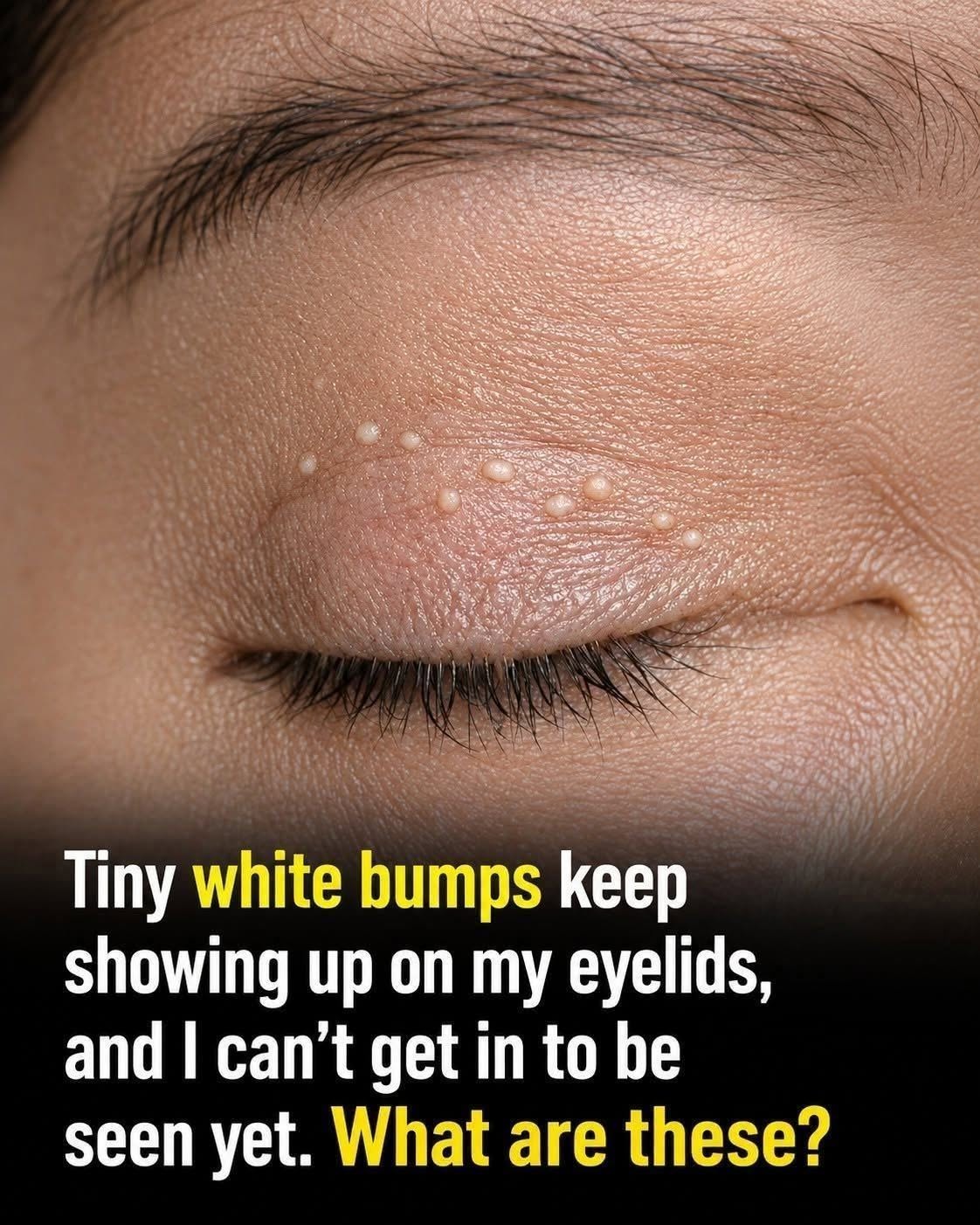
Milia are among the most common explanations. These tiny keratin-filled cysts are generally harmless and may disappear naturally, although persistent bumps can be professionally removed if desired.
Other possibilities include blocked eyelid glands, styes, chalazia, visible oil glands, and yellowish deposits such as xanthelasma.
The safest approach is simple: don’t squeeze, puncture, or aggressively scrub bumps around your eyes.
Instead, keep the area clean, use gentle skincare, and pay attention to changes.
If a bump becomes painful, swollen, red, persistent, rapidly enlarging, or associated with vision problems, have it evaluated by a healthcare professional.
Your eyes are too important to experiment with unnecessarily. What looks like a tiny cosmetic imperfection can sometimes be something entirely different, and a proper examination can provide peace of mind—and the right treatment when treatment is actually needed.
So the next time you notice those tiny white dots in the mirror, don’t panic and don’t reach for a needle. Take a closer look, protect the delicate skin around your eyes, and remember that understanding the cause is the first step toward dealing with it safely
