
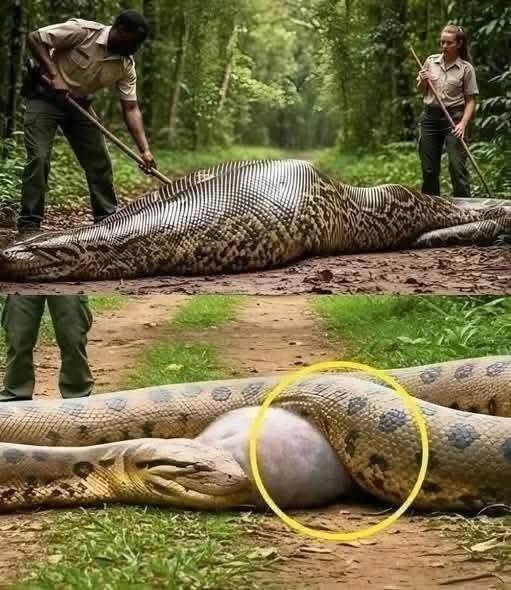
Anacondas possess extraordinary anatomical adaptations that allow them to consume prey much larger than their heads.
Their jaws are not fused together like those of mammals. Instead, elastic ligaments let each side move independently. Powerful muscles gradually pull prey into the mouth while rows of backward-curving teeth prevent escape.
Their skin also stretches significantly, allowing the body to expand around large prey before slowly returning to its normal shape after digestion.
Life in the Wetlands
Green anacondas spend much of their lives in water, where their massive bodies become surprisingly agile.
Their eyes and nostrils sit on top of the head, allowing them to remain almost completely submerged while watching for prey. This stealth makes them effective ambush predators.
Wetland ecosystems provide ideal conditions with abundant food and cover from predators and human activity.
Misconceptions Fueled by Social Media
Many viral posts claim anacondas have swallowed impossible objects, mysterious creatures, or even vehicles. In reality, most such stories lack evidence.
Digital editing, misleading captions, and recycled photographs often spread rapidly online. Wildlife experts encourage people to verify extraordinary claims through reputable conservation organizations or scientific sources before sharing them.
True wildlife stories are fascinating enough without exaggeration.
The Importance of Wildlife Research
Every examination of an animal contributes valuable scientific knowledge.
Researchers may collect samples to study:
Environmental pollution
Heavy metals
Emerging diseases
Parasites
Reproductive health
Genetic diversity
These findings help conservationists monitor ecosystem health and develop strategies to protect endangered habitats.
Threats Facing Anacondas
Although they are powerful predators, anacondas face numerous challenges.
Habitat destruction remains one of the greatest threats. Wetlands are drained for agriculture, roads, and development, reducing the areas where these snakes can hunt and reproduce.
