
The second burglary
After leaving the Avant residence, Maynor reportedly went to another home in the Hollywood Hills.
The Los Angeles Times reported that he attempted to break into that residence as well.
His escape eventually came to an end when police located him in the backyard of that property.
He had shot himself in the foot with the same rifle, according to the newspaper’s account.
L
Los Angeles Times
Investigators also recovered evidence that helped connect him to the crimes.
One significant piece of evidence was a red glove that he dropped while fleeing.
The jailhouse recording
Perhaps one of the most disturbing elements discussed during sentencing involved a telephone call Maynor made from jail.
According to the Los Angeles Times, prosecutors played a recording in court in which Maynor talked to a female acquaintance about the killing and publicity surrounding it.
The newspaper reported that he laughed during the conversation and talked about appearing in the news.
The recording was presented to the judge as evidence of his attitude following the crime.
L
Los Angeles Times
Such evidence can have a powerful effect during sentencing because courts aren’t simply considering what happened during the crime.
They may also consider the defendant’s history, conduct, criminal record and other legally relevant circumstances.
His previous criminal history mattered
The sentence did not occur in a vacuum.
According to the Los Angeles Times, Maynor had previous convictions for robbery and causing great bodily injury.
One earlier robbery conviction involved an attack on a woman in Hollywood. Another robbery case occurred in 2018.
L
Los Angeles Times
The existence of prior convictions became important because prosecutors sought to apply California’s repeat-offender sentencing provisions.
That is one reason the final punishment was dramatically longer than a sentence based solely on the murder charge might otherwise have been.
The role of California’s “three strikes” rules
California has historically had particularly severe sentencing provisions for people with qualifying prior serious or violent convictions.
These are commonly associated with the state’s Three Strikes law.
In Maynor’s case, prosecutors sought enhancements based on his previous convictions.
The Los Angeles Times reported that prosecutors wanted to ensure he would not qualify for early release and argued that his criminal history showed he posed a serious danger.
L
Los Angeles Times
The sentencing debate therefore involved more than simply determining punishment for one terrible night.
It also involved the question of how the criminal justice system should respond to someone with previous violent convictions who commits another extremely serious offense.
The defense asked the judge to consider his background
The defense did not dispute that Maynor would spend an enormous amount of time in prison.
His attorney argued that the court should consider Maynor’s background and asked the judge to remove the prior strikes that increased the sentence.
The judge declined to do so.
According to the Los Angeles Times, the judge emphasized the violent nature of his previous crimes and found insufficient evidence that he had made positive changes while incarcerated.
L
Los Angeles Times
This illustrates an important part of criminal sentencing.
Courts can consider both the specific offense and the defendant’s broader history.
Why such sentences attract attention
A sentence of 150 years is emotionally striking.
It sounds almost surreal.
People naturally ask:
“Why give someone 150 years when they’ll never live that long?”
The answer is that extremely long sentences can serve several legal and practical purposes.
They can:
Reflect multiple convictions.
Account for sentencing enhancements.
Ensure that separate offenses receive separate punishment.
Prevent or restrict the possibility of early release.
Reflect the seriousness of the conduct.
Protect the public from a person considered dangerous.
The exact legal effect depends on the jurisdiction and the structure of the sentence.
In this case, the enormous sentence was intended to keep Maynor imprisoned for the remainder of his life.
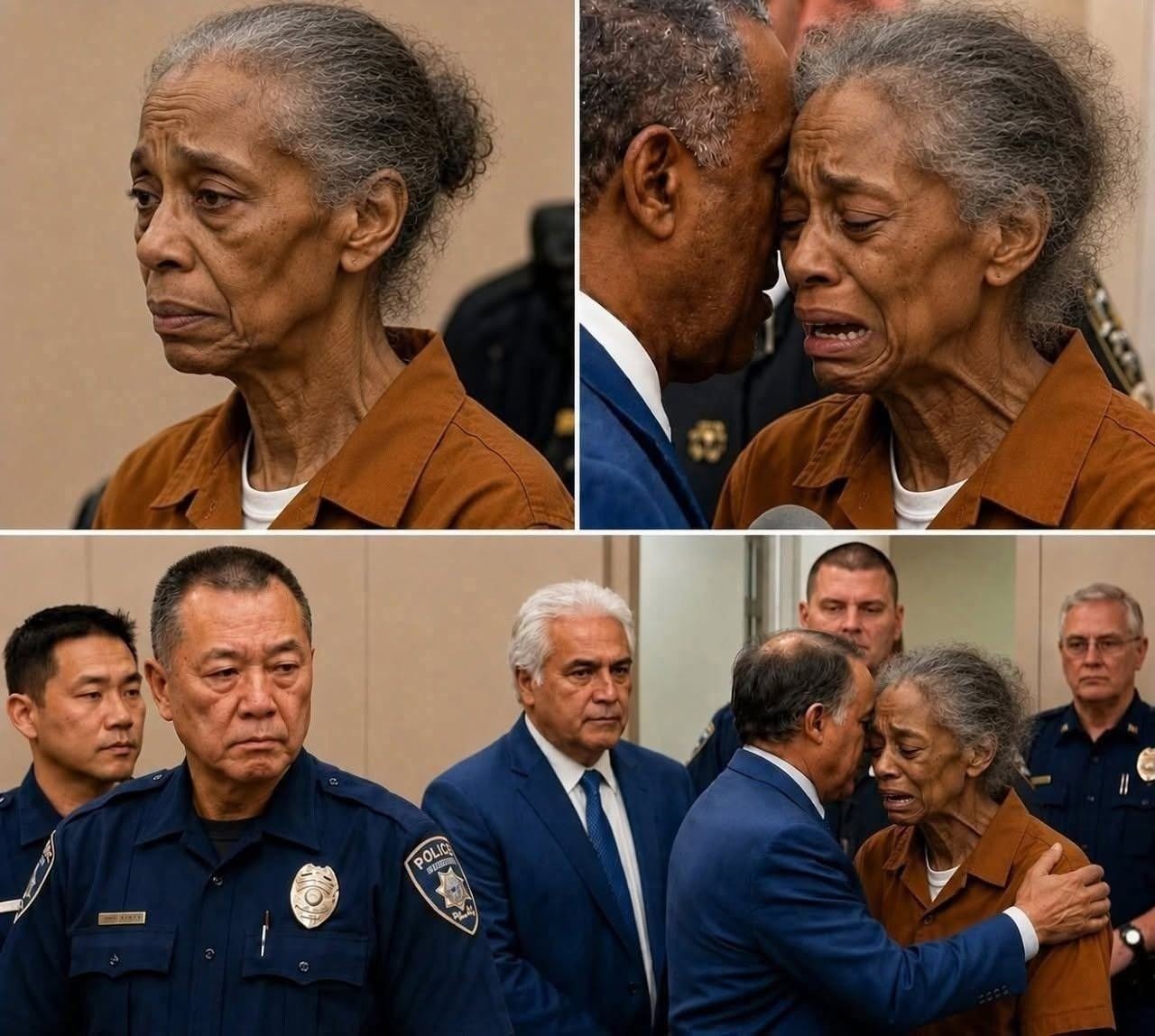
The phrase “old woman” changes the story
This is where viral headlines can become misleading.
Imagine seeing:
“Old woman sentenced to 150 years in prison after she ra…”
Most readers will naturally assume that the woman herself committed some extraordinary crime.
But the documented Jacqueline Avant case tells a completely different story.
An 81-year-old woman was the victim.
The person sentenced to 150 years was a much younger man.
That is an important distinction.
It demonstrates why readers should never rely on an incomplete headline when the story involves a serious crime.
Before sharing, ask:
Who was sentenced?
Who was the victim?
What exactly was the sentence?
What charges produced it?
When did this happen?
Those five questions can prevent a great deal of misinformation.
Why social media headlines leave out details
Modern online headlines compete for attention.
A straightforward headline might say:
“Man Sentenced to 150 Years to Life for Killing Philanthropist Jacqueline Avant.”
That is factual but relatively long.
A social-media account may instead create a mysterious headline:
“Old Woman Sentenced to 150 Years After She Ra… See More.”
The second version creates a curiosity gap.
