
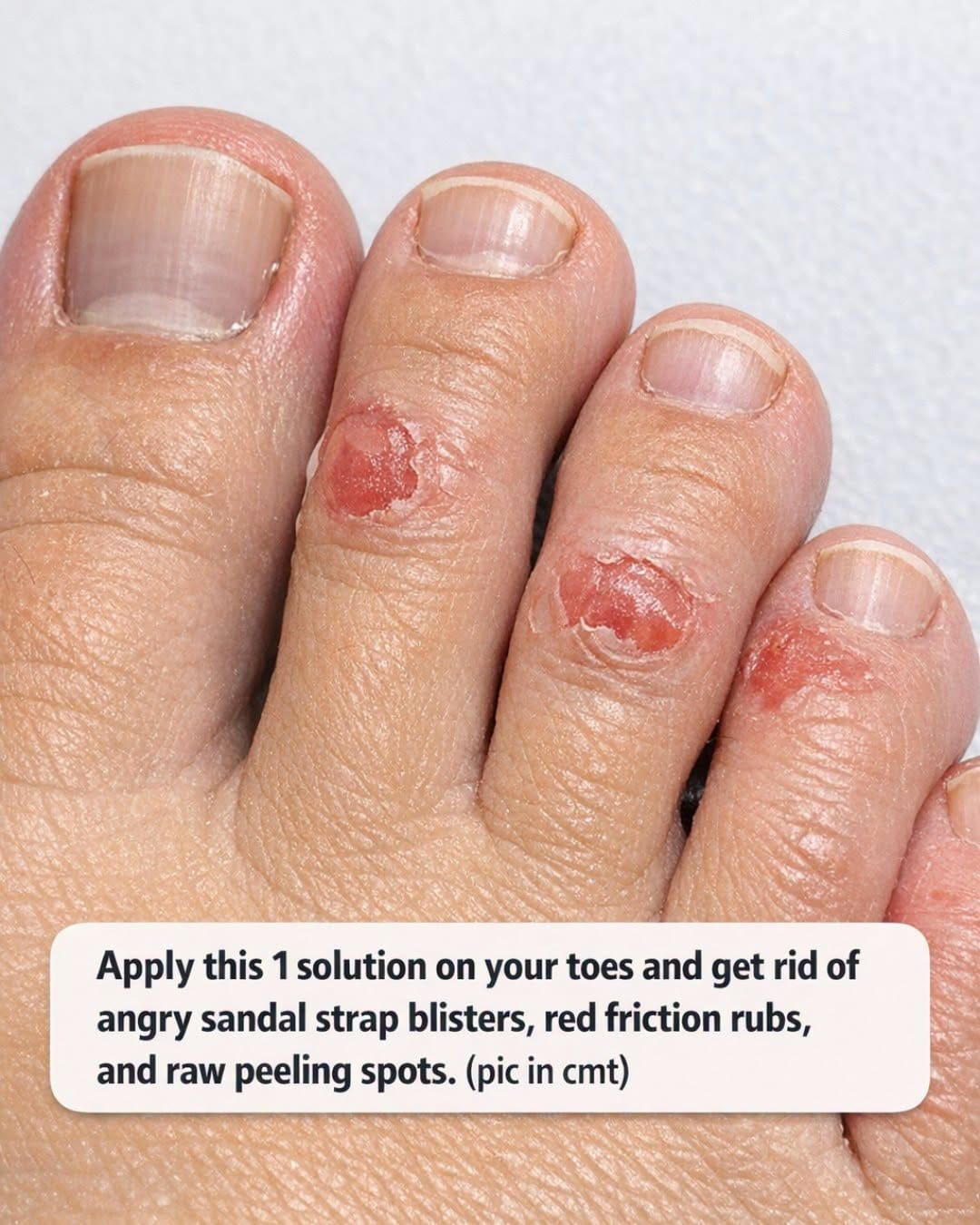
10. How to keep your toes from getting slippery
The main mistake people make is overapplying. Too much petroleum jelly can make the foot shift, which creates a different kind of friction. Use the smallest amount that leaves a soft sheen. After applying, wait 1 to 2 minutes, then lightly blot with a tissue if the skin feels overly slick.
Another helpful trick is to keep the sole of the foot mostly product-free. Focus on the tops, sides, and between-toe strap areas. That way you reduce rubbing where it hurts without making the bottom of your foot slide over the sandal footbed.
11. What to do after you get home
Once the sandals come off, wash your feet with gentle soap and lukewarm water to remove sweat, grit, and leftover jelly. Then inspect the irritated areas under good light. If you see only mild redness, let the skin air out for 20 to 30 minutes, then apply a small amount again overnight if the area feels dry or tight.
If there is a blister, keep it clean and protected. If there is peeling, do not pick at it. I like to switch to soft cotton socks and a roomy slipper for the evening because even household friction from hard floors can keep sore toes irritated longer than necessary.
12. How much this solution costs compared with other fixes
One reason I recommend petroleum jelly so often is cost. A small jar usually runs about $2 to $5, and even a travel-size container can last weeks or months if you are using only a thin coat on a few hot spots. Compared with specialty anti-chafe sticks at $8 to $15 or repeated blister bandage purchases, it is one of the most economical options.
That does not mean the cheapest option is always the only option. If you are already blister-prone, it is worth keeping both petroleum jelly and hydrocolloid dressings on hand. I think of the jelly as prevention and the dressings as backup when prevention was not enough.
13. Signs you need more than a home remedy
If the area becomes increasingly swollen, hot, very painful, or starts draining pus, that is no longer a simple friction problem. The same goes for spreading redness, fever, or red streaks. Those signs can point to infection and deserve medical attention.
People with diabetes, poor circulation, neuropathy, or immune system issues should be especially cautious with foot injuries, even small ones. A tiny sandal blister can turn into a larger problem much faster in those situations, so it is wise to get professional advice early rather than “wait and see.”
14. My practical routine for a blister-free sandal day
What works for me is simple. Before leaving, I wash and fully dry my feet, apply a very thin layer of petroleum jelly to known hot spots, and choose sandals that do not require toe gripping to stay on. If I expect more than 5,000 to 7,000 steps, I bring a travel-size container and a couple of blister bandages.
That routine has saved me on humid days, long walks, and those times when a sandal seems comfortable for the first 10 minutes and then suddenly turns hostile. It is not glamorous, but it is effective. And when the choice is between a 30-second swipe of petroleum jelly and three days of hobbling around with a raw toe, I know which one I’m choosing.
