
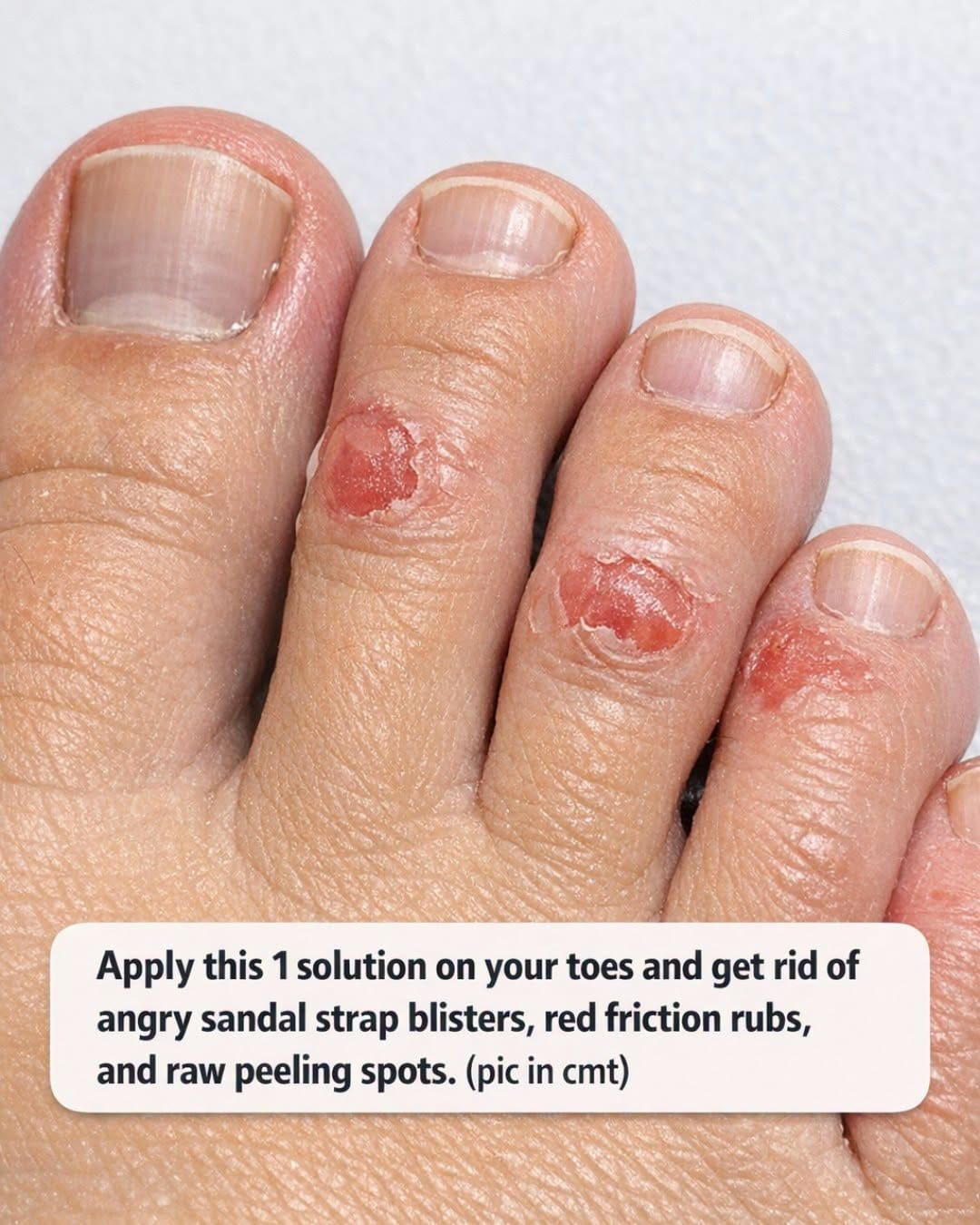
5. How to use it on red friction rubs before they blister
If the skin is red, warm, and sore but not broken, petroleum jelly is at its most helpful. Wash the area gently with lukewarm water, pat it fully dry, then apply a thin coat. If you can, give the skin 10 minutes out of shoes before putting sandals back on.
This is the stage where you can still stop things from getting worse. I’ve had many spots go from “this is definitely becoming a blister” to completely manageable just by cleaning the area, using a thin layer of petroleum jelly, and switching from a tight strap sandal to a softer pair for the rest of the day.
6. What to do for raw peeling spots
If the skin is peeling but not actively bleeding, you need to be more careful. Petroleum jelly can help protect the area from drying out further, but first clean it gently with mild soap and water, then pat dry with a clean towel. Do not scrub away loose skin that is still attached.
Apply a very light layer over the irritated spot. If the sandal still rubs directly on that area, a bandage or hydrocolloid blister dressing is usually a better first choice than jelly alone. Petroleum jelly is useful, but raw skin often needs cushioning as much as lubrication. If the area stings sharply, oozes, or looks yellow-crusted, skip the sandal and let it heal in a closed, soft shoe or open barefoot time at home.
7. When not to use it by itself
If you already have a fully formed blister, especially one filled with fluid, jelly alone may not be enough because the raised bubble still catches on the strap. In that case, cover the blister with a hydrocolloid bandage or a blister pad first. You can place a small amount of petroleum jelly around the edges of the bandaged area if nearby skin is rubbing too.
Also avoid relying on it alone if your sandal fit is plainly wrong. If the strap cuts into the skin, leaves deep pressure marks within 5 minutes, or forces your toes to grip constantly as you walk, no lubricant will completely fix that mechanical problem. The shoe needs adjustment, stretching, or replacement.
8. The best sandal types for this trick
This solution works best with sandals that fit reasonably well but create mild to moderate friction. Think leather slides, flat strappy sandals, toe-loop sandals, and casual walking sandals with fabric or synthetic straps. It is especially helpful when the material is slightly stiff at first but softens with wear.
It is less successful with very loose sandals that make your foot slide forward, because then the rubbing comes from repeated foot movement rather than just strap drag. In those cases, you may need both petroleum jelly and a fit fix, such as tightening an ankle strap or adding a metatarsal pad.
9. How to pair it with a quick sandal break-in routine
If the sandals are new, use petroleum jelly as part of a 3-day break-in plan. On day 1, wear them indoors for 20 to 30 minutes. On day 2, go 45 to 60 minutes. On day 3, try a short outdoor walk of 15 to 20 minutes. Apply the jelly before each wear to reduce the early abrasion that tends to happen while straps are still stiff.
You can also soften problem areas in leather sandals by gently flexing the strap by hand for 1 to 2 minutes or wearing them with thin socks around the house for a brief period. I do not recommend soaking shoes or using harsh stretch sprays on delicate materials unless the manufacturer specifically says it is safe.
