
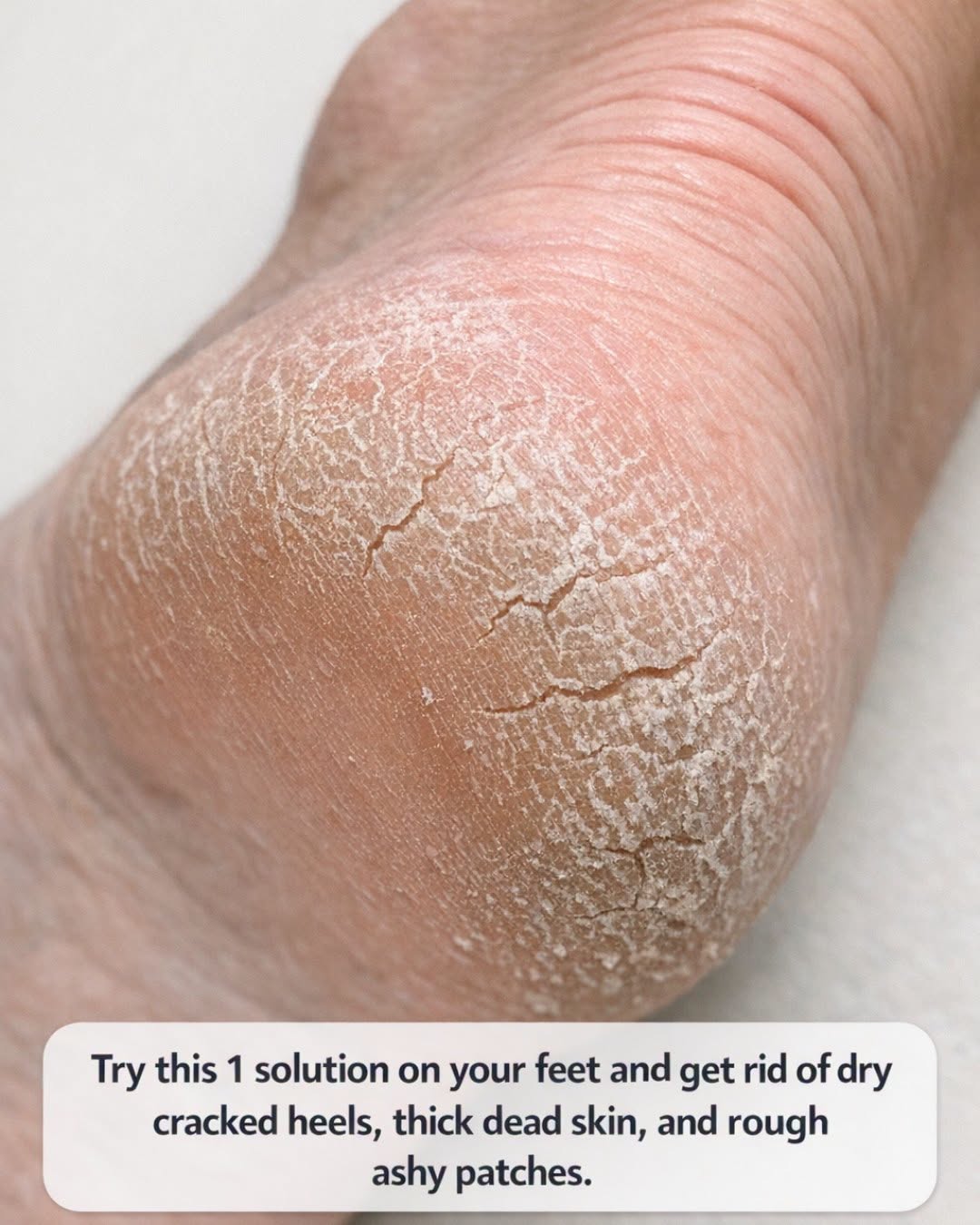
Once the skin is softened, gentle friction is enough. Use a pumice stone, glass foot file, or fine-grit foot buffer on the heel and any rough patches along the sides of the feet. Use small strokes in one direction or light circles for about 30 to 60 seconds per area. You are not trying to make the foot perfectly smooth in one night.
This is where patience matters. If you over-file, the skin can become tender, and the body may respond by making even more thickened skin later. Never use a razor-style scraper at home. I know they are sold in some places, but they are too easy to overdo, especially if the skin is deeply cracked. Slow and steady, two or three nights a week, is much kinder and usually gives better long-term results.
6. The moisturizing step that really changes the outcome
Right after exfoliating, while the skin is still slightly damp, apply a thick layer of cream or ointment. For rough heels, I use about a nickel-sized amount per foot at minimum, and more if the skin looks thirsty. Rub it into the heel, ball of the foot, sides, and any ashy patches until there is a visible coating.
If your heels are cracked, ointments and balms often work better than standard lotion. A urea cream in the 20% range can be especially helpful for thick dead skin, while petroleum jelly is excellent for sealing moisture in overnight. Pull on cotton socks and leave them on for at least 2 hours, or overnight if you can. That little sock trick makes a bigger difference than many people expect because it keeps the product from rubbing off on the sheets and helps the skin absorb it.
7. A simple 7-day routine for noticeably softer heels
If your feet are very dry, here is the routine I would use for 1 week. On days 1, 3, and 5: soak for 10 to 15 minutes, gently exfoliate, apply thick cream, and wear socks overnight. On days 2, 4, 6, and 7: skip the soak and just apply moisturizer morning and night, especially after bathing.
Most people see a difference within 3 to 7 days if they are consistent. The skin usually looks less gray and flaky first, then feels smoother, and finally the thicker edges start to soften. Deep cracks can take longer, often 2 to 4 weeks, but even then, regular moisture usually makes walking more comfortable fairly quickly.
8. Best ingredients for stubborn ashy patches and callused heels
When rough patches are more than mild dryness, ingredient choice matters. Urea is one of my favorites because it both hydrates and helps loosen thickened skin. Lactic acid and salicylic acid can also help break down buildup, but they should be used carefully if the skin is sensitive or split open.
For a family bathroom shelf, I usually recommend starting with a fragrance-free cream containing urea 10% to 20%. If the heels are extremely thick, a product closer to 25% may help, but use it as directed and stop if it burns. Ceramide creams are a nice option for maintaining softer feet once the worst of the dryness is under control. For children or teens with mild roughness, I keep it simple with gentle cream and socks rather than stronger acids.
9. Common mistakes that keep heels rough
The biggest mistake I see is trying to fix severe dryness in one session. People soak too long, scrub too hard, and then forget to moisturize the next day. Another common problem is using very hot water. It feels good in the moment, but hot water can strip oils and leave the skin drier later.
Open-back shoes are another sneaky issue. If your heel is hanging over the edge or rubbing constantly, it is hard to make progress. Walking barefoot on hard indoor floors can do the same. And if you only treat your feet when they look bad, you end up repeating the cycle. A tiny bit of maintenance, even 2 minutes before bed, is much easier than trying to rescue deeply cracked heels every few months.
