
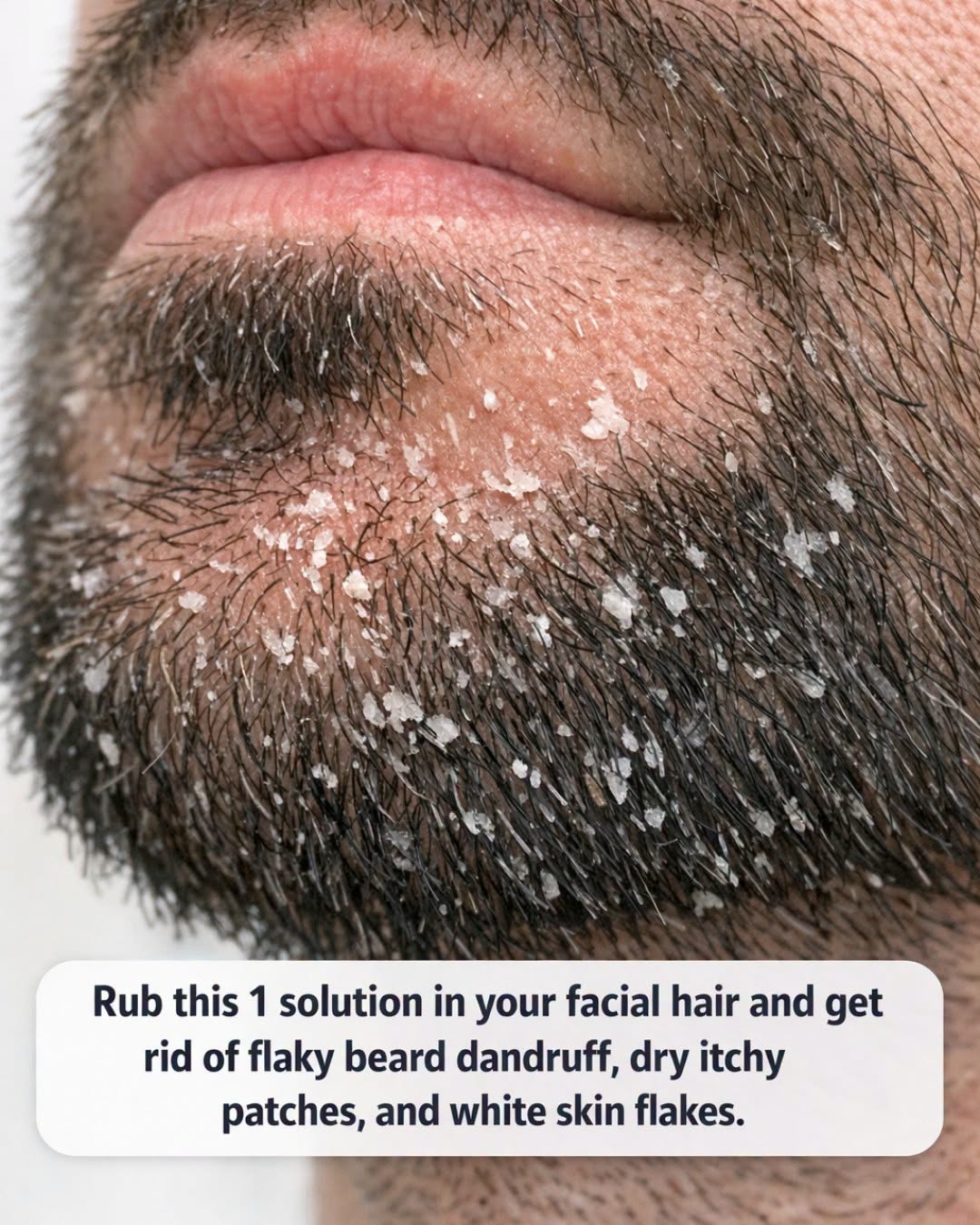
If you have beard dandruff, I want to start with the reassuring part: those little white flakes and itchy patches usually are not a sign that you are “dirty.” More often, they come down to a skin barrier problem, trapped irritation, yeast overgrowth, harsh cleansing, cold dry air, or simply not getting moisture down to the skin under the beard. In my kitchen-minded way, I think of it like dry rice in a covered pot: if the moisture never reaches the bottom, the surface might look fine for a while, but underneath, things are not right.
The “1 solution” I’d recommend rubbing into facial hair is a simple, diluted tea tree oil treatment mixed into a carrier oil, because it can help address both dryness and the flaky, itchy buildup that often behaves a lot like seborrheic dermatitis. Used correctly, it can calm the skin under the beard without making the hair greasy or the irritation worse. Below, I’ll walk you through exactly how to make it, how much to use, how often to apply it, who should skip it, and what to do if your beard flakes are stubborn.
1. Why beard dandruff happens in the first place
Beard dandruff usually shows up as fine white flakes, larger yellowish flakes, redness around the chin and mustache, tight dry patches, and itching that gets worse at night or after washing. The skin under facial hair is harder to cleanse gently and harder to moisturize evenly. Dead skin, natural oil, sweat, and grooming products can collect close to the follicles.
Another common factor is an overgrowth of a yeast called Malassezia, which thrives in oily areas like the sides of the nose, eyebrows, scalp, and beard line. That is why beard dandruff often shows up along with flaky scalp, redness around the nostrils, or scaling behind the ears. Dry winter air can make it worse, but so can overwashing with strong soap or using very hot water, which strips the skin barrier in 30 to 60 seconds.
2. The one solution: diluted tea tree oil in a carrier oil
If I had to pick one practical at-home solution, it would be diluted tea tree oil in jojoba oil. Tea tree oil has antimicrobial and anti-inflammatory properties, while jojoba oil is a lightweight carrier that resembles the skin’s natural sebum more closely than heavier oils do. That makes it a good choice for getting to the skin under the beard without sitting on top in a thick film.
The key word here is diluted. Never rub straight tea tree essential oil directly onto facial skin. Undiluted essential oil can burn, sting, trigger dermatitis, and make the problem dramatically worse. For facial use, I recommend starting low, at about a 1% dilution.
3. The exact recipe to make at home
For a small batch, mix 1 tablespoon of jojoba oil, which is about 15 milliliters, with 3 drops of tea tree essential oil. That gives you a roughly 1% dilution, which is a sensible starting strength for the face. Stir or shake it in a clean amber glass bottle or a small dish right before use.
If you do not have jojoba oil, you can substitute 1 tablespoon of squalane oil or fractionated coconut oil. I would avoid heavy olive oil for this purpose because, while I love it in the kitchen, it can feel too dense on some faces and may leave the beard looking slick rather than clean. Castor oil is also usually too thick for many people’s facial skin.
4. How to apply it so it reaches the skin, not just the beard hair
Start with a clean, slightly damp beard. The best time is after washing or after a warm, not hot, shower. Pat the beard so it is about 80% dry. Place 3 to 6 drops of the oil mixture into your palm for a short beard, or 6 to 10 drops for a medium beard. Very full or long beards may need 10 to 14 drops.
Rub your hands together, then use your fingertips to work the oil down to the skin, especially along the chin, jawline, under the lower lip, and mustache area if that is where flakes collect. Spend about 30 to 45 seconds massaging the skin, not just smoothing the hair. Finish by combing the beard downward with a wide-tooth beard comb so the product distributes evenly.
5. How often to use it for the best results
