
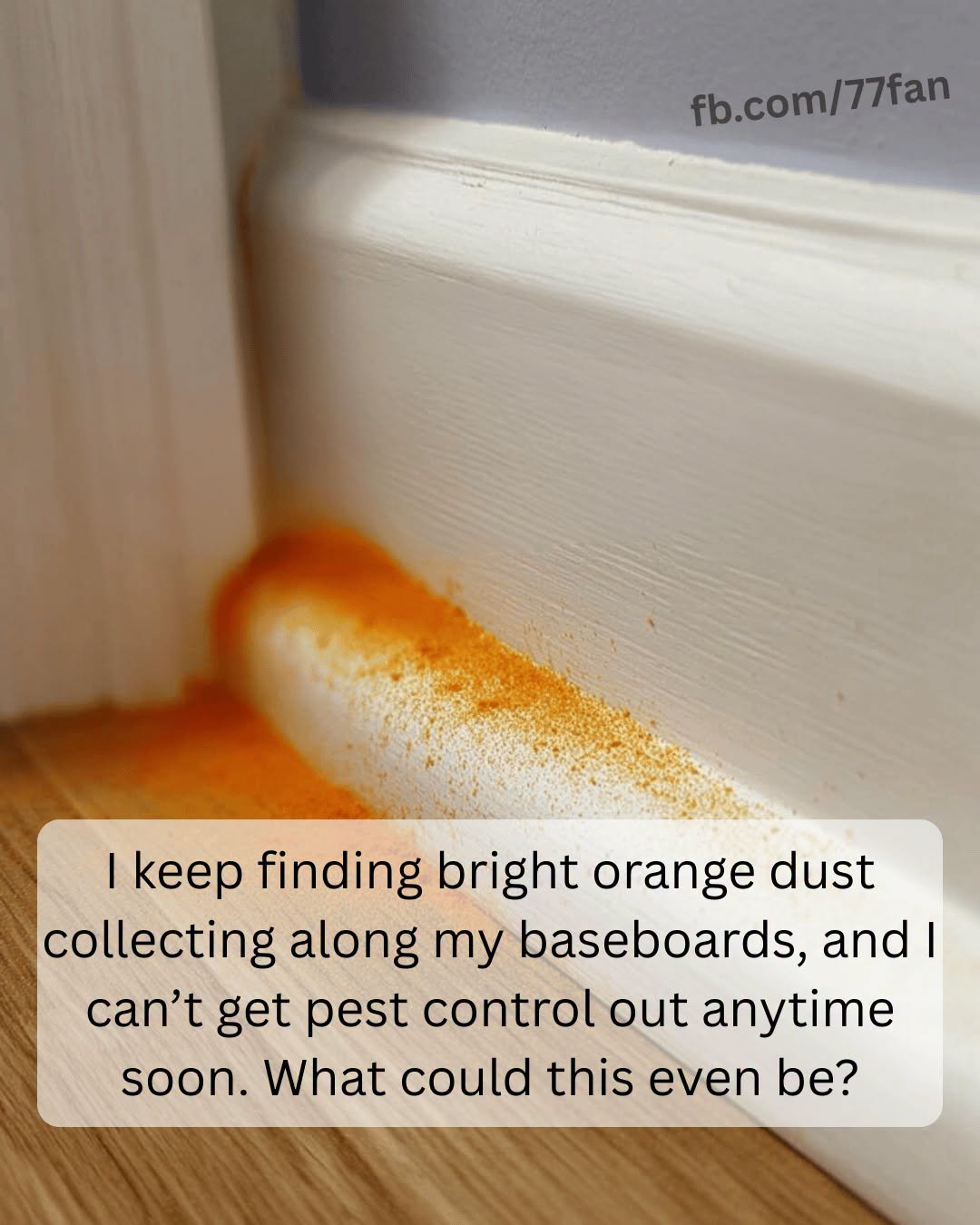
Finding bright orange dust lining your baseboards can stop you in your tracks. It’s not the usual gray fluff you expect when you skip vacuuming for a week. This stuff looks deliberate. Suspicious. Almost like your house is trying to tell you something.
And honestly? It probably is—but not Always in the dramatic, late-night-homeowner-panic way our brains jump to.
Before pest control shows up or a contractor starts poking holes in your walls, it helps to slow down and look at the full picture. Orange dust has a surprising number of explanations, and many of them are far less serious than they first appear.
Let me explain.
First, a Little Perspective (Because Panic Never Helps)
Here’s the thing: orange dust is a symptom, not a diagnosis. It doesn’t automatically mean termites, mold, or structural trouble. Homes are complicated systems—wood, metal, paint, air, moisture—all aging at different speeds.
Sometimes dust is just dust… wearing a brighter outfit.
Now, let’s walk through the most common possibilities, starting with the ones that understandably raise eyebrows.
Could It Be Sawdust From Hidden Wood Damage?
Yes, it could. But it’s not always doom and gloom.
If your home has wood floors, trim, framing, or older baseboards, fine sawdust-like debris can appear when wood dries out, rubs, or breaks down. When insects get involved—termites or carpenter ants—that debris often shows up as frass, which is a mix of wood particles and insect waste.
Frass can look orange, tan, or even reddish depending on the wood type.
What to check:
- Tiny holes in baseboards or trim
- Soft or crumbly wood when pressed
- Dust appearing in the same exact spot repeatedly
If you see consistent piles returning after cleanup, that’s when you flag it for a pro.
Termite Frass vs. Regular Dust (They’re Not Twins)
Termite frass is oddly neat. Almost too neat.
Instead of fluffy or irregular dust, frass looks uniform—tiny pellets, often about the size of coarse sand. You’ll usually find it directly below where termites are active, not scattered randomly like household dust.
Regular dust, by contrast, is messy. It floats. It changes color. It refuses to commit.
If what you’re seeing forms little piles overnight, take photos. That pattern matters.
