
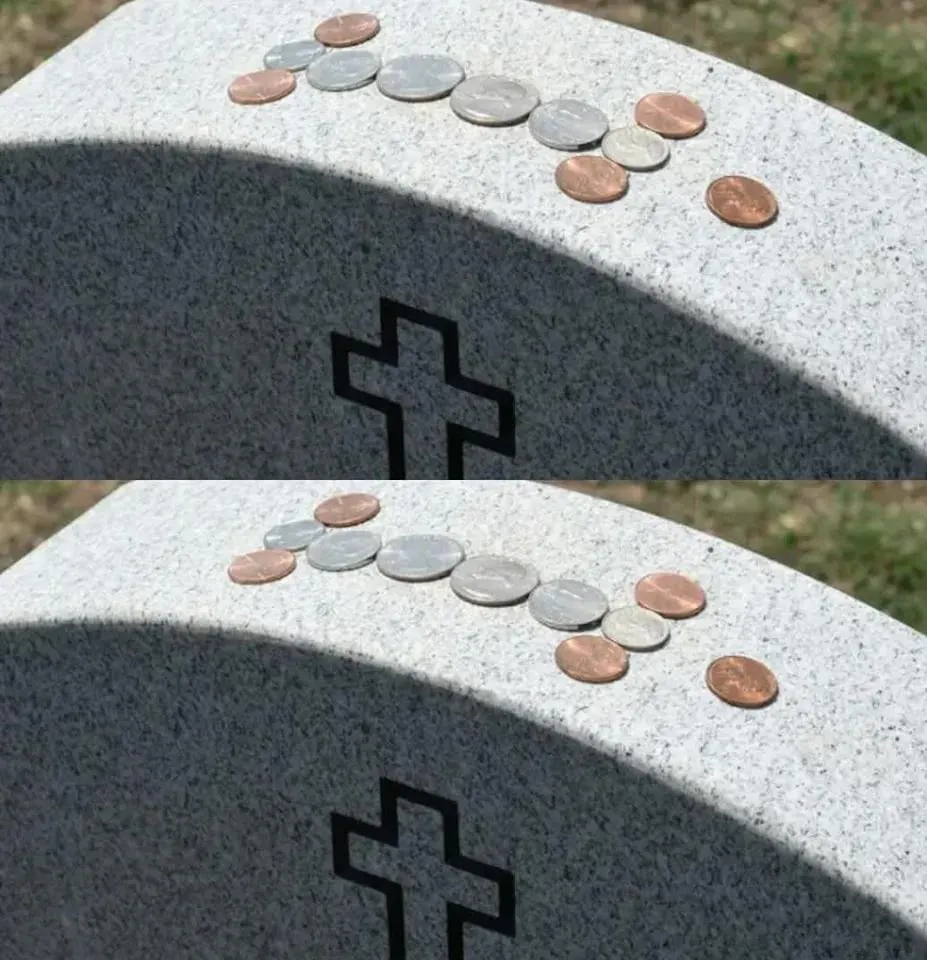
Dime: “We Fought Side by Side”
A dime is more personal. A dime means we served together – we didn’t just train. They were deployed, and maybe fought side by side. Perhaps the same truck, maybe the same mission, maybe the same foxhole. This is a deeply personal memory because it is a deeply personal bond. A bond created by stress, pathos, and survival.
It is an expression of meaning, it is like saying: “Maybe I did what you did. I stood at your side. I saw what you saw.”
Quarter: “I Was There When You Died”
And what about the quarter? This is heavier. If someone leaves a quarter on a gravestone it means they were there when the soldier died. They saw it. Or they held a hand. Maybe they tried to save them. Or maybe they couldn’t.
That coin says, “I was with you at the end.” It says that quietly. Heavily. And in some ways, it may be the most intimate gesture a person can leave behind without saying a word.
It’s a Language of Grief, and Respect.
The beauty of the tradition is how unspoken it is. There is no ceremony, no formal rule book. You do not have to check in or fill out a form. You do not even have to leave your name. But if you know, you know. And once you know, the next time you see a coin on a grave—particularly in one of the military cemeteries—you cannot walk past it.
