
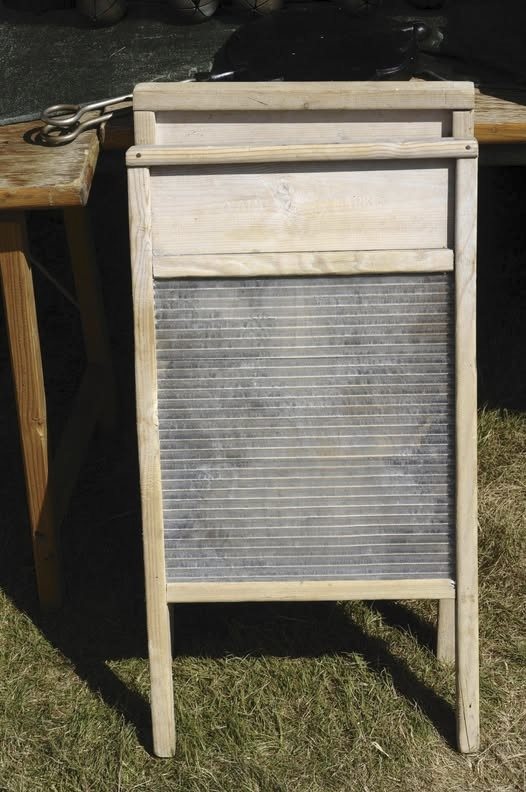
Last Saturday, I wandered through a bustling yard sale on the edge of town, scanning tables filled with glassware, old books, and stacks of vinyl records. Among the piles of forgotten treasures, my eye landed on a peculiar wooden contraption with metal rollers. At first glance, it looked like an odd kitchen tool or a toy from another era. But a small handwritten tag gave it away: “Vintage Laundry Wringer.”
I picked it up and ran my fingers over its smooth wooden handles and cast-iron rollers. It felt sturdy, yet strangely delicate, like something that had endured decades of careful use. I had grown up with modern washers and dryers that did everything with the push of a button. The idea that people once relied on tools like this every week made me pause.
Before electric machines, laundry wasn’t a simple chore—it was a laborious ritual that could take an entire day. Families had to fetch water from wells or rivers, heat it over a fire, scrub clothes with soap, rinse repeatedly, wring them by hand, and hang them to dry. Every step required muscle, patience, and ingenuity. Tools like wringers, hand agitators, and washboards weren’t luxury items—they were lifelines, designed to make life a little more manageable.
