
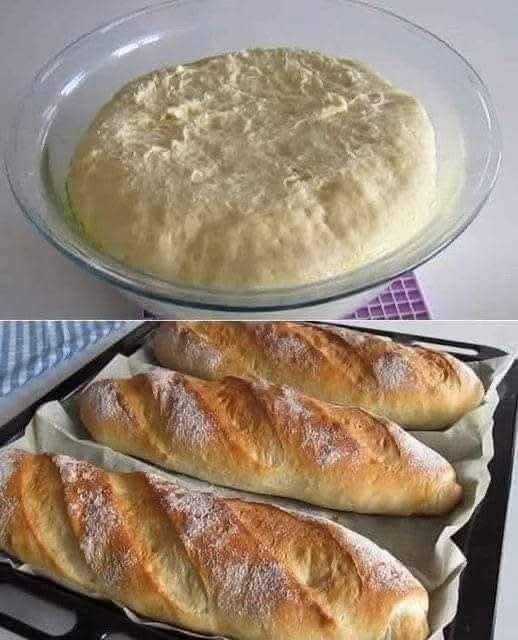
Step 6: Bake
Place both loaf pans on the center rack of the preheated oven. Bake for 30 to 35 minutes, until the tops of the loaves are a deep, even golden brown. To check whether the bread is done, gently tip one loaf out of its pan and tap the bottom — a properly baked loaf will sound distinctly hollow rather than dense and solid. If you have an instant-read thermometer, the internal temperature of a fully baked loaf should read between 190 and 200 degrees Fahrenheit. Remove the loaves from the oven and immediately tip them out of their pans onto a wire cooling rack. While the bread is still hot, brush the tops generously with a small amount of butter — this gives the crust a beautiful sheen and a rich, slightly buttery flavor, and it softens the crust just enough to make it pleasant to slice through. Allow the loaves to cool on the rack for at least 10 minutes before slicing, as the interior is still actively finishing its cooking during this resting period and will be slightly doughy if cut too soon.
Tips for Consistently Perfect Results
The temperature of the water you use to proof the yeast is genuinely the most critical variable in this recipe. Water that is too cold will not activate the yeast effectively, resulting in a dough that rises very slowly or not at all. Water that is too hot — generally anything above 120 degrees Fahrenheit — will kill the yeast entirely, producing a dense, heavy loaf with no rise. If you do not have a thermometer, a reliable test is to run the water over the inside of your wrist: it should feel warm and comfortable, similar to warm bathwater, not hot.
Bread flour will produce a slightly chewier, more structured loaf than all-purpose flour because of its higher protein content, which creates more gluten during kneading. Both work well in this recipe and both produce delicious bread — the difference is subtle enough that complete beginners should not worry about it and should use whichever flour they already have available. If you want to incorporate some whole wheat flour for added flavor and nutrition, you can replace up to one third of the white flour with whole wheat flour without significantly changing the texture or technique.
The dough is more forgiving than most first-time bread bakers expect. If it seems a little too sticky after the initial kneading, add flour one tablespoon at a time and work it in before adding more — a small amount of stickiness is normal and even desirable, as drier doughs tend to produce denser bread. If the dough seems too stiff, wet your hands slightly rather than adding water directly to the dough, which can make it difficult to incorporate evenly. If your loaves do not rise as much as expected during the second rise, give them a little more time rather than baking them prematurely — under-risen bread tends to be dense and heavy, while over-proofed bread has a slightly sour flavor that many people actually enjoy.
Storing and Enjoying Your Homemade Bread
Once the loaves are fully cooled, store them in airtight containers or zip-lock bags at room temperature for up to two to three days, or in the refrigerator for up to five days. Homemade bread does not contain the preservatives that extend the shelf life of commercial bread, so it stales more quickly — though the texture and flavor during those first two days are so far superior to anything from a store that the trade-off is more than worthwhile. For longer storage, homemade bread freezes exceptionally well: wrap each cooled loaf tightly in plastic wrap and then in aluminum foil, label it with the date, and freeze for up to three months. Thaw at room temperature overnight and warm briefly in a low oven to restore the fresh-baked quality.
This bread is magnificent in every way a bread should be: toasted with butter and jam at breakfast, as the foundation of a proper sandwich at lunch, served warm alongside soup or stew at dinner, or simply torn into pieces and eaten on its own while still slightly warm from the oven, which is honestly one of the best things a person can eat. Once you have made this bread, the prospect of buying a supermarket loaf will feel genuinely unnecessary. That is not an exaggeration — it is simply the effect that good homemade bread has on everyone who makes it for the first time.
