
In older homes, moisture can also come from the ground through a process known as capillary action, where water is drawn up through the foundation into the walls. Identifying the source of moisture is essential for addressing the issue effectively.
4. Signs The Bubbles Point To A Leak Inside Your Wall
If the bubbles are accompanied by other signs such as discoloration, mold growth, or a musty odor, this strongly suggests a leak inside your wall. Other indicators include peeling paint, crumbling drywall, or a consistent wetness in the same area, even when it has not rained.
An infrared camera can help detect moisture behind walls without causing damage, highlighting cooler areas indicative of moisture presence.
5. When Rising Damp From The Floor Is The Real Culprit
Rising damp occurs when moisture from the ground rises through the walls by capillary action. This is especially common in older buildings without a proper damp-proof membrane. Look for a tide mark on the lower part of the wall, salt deposits, or a musty smell, which are telltale signs of rising damp.
Measuring the moisture content at different heights of the wall using a moisture meter can confirm rising damp, with higher moisture content closer to the floor.
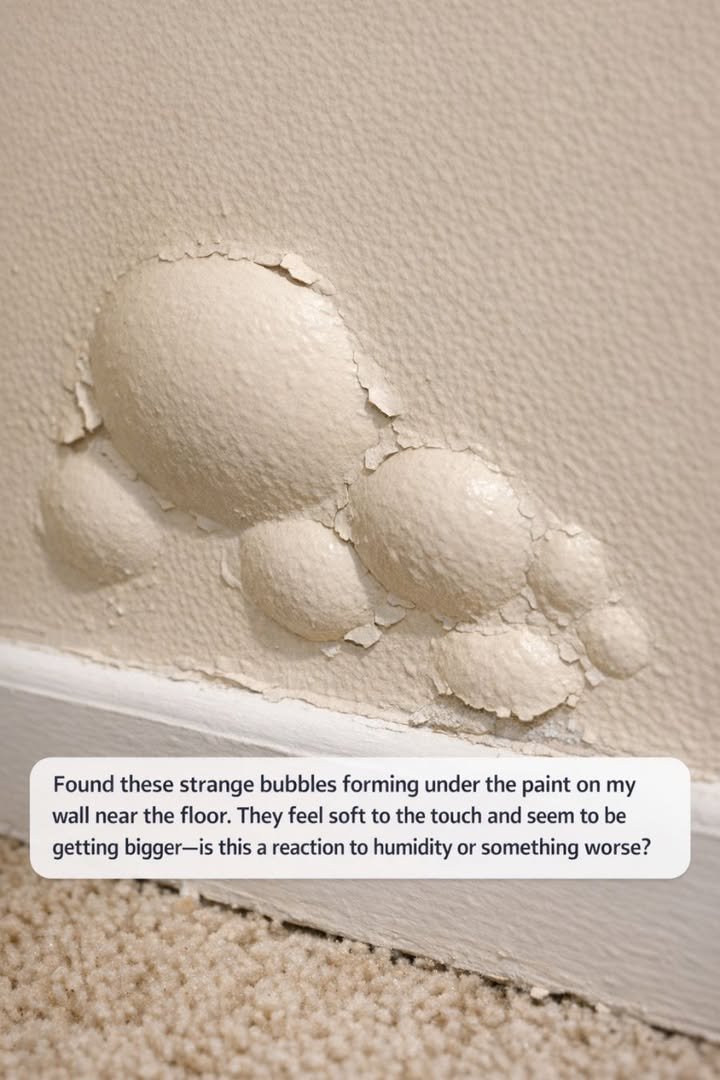
Found these strange bubbles forming under the paint on my wall near the floor. They feel soft to the touch and seem to be getting bigger—is this a reaction to humidity or something worse?
Advertisement
