
To ensure shrimp freshness, start with a smell test. Fresh shrimp should have a mild ocean scent, not a strong or pungent odor. Next, check the color; the shrimp should look slightly translucent with a light pink or gray hue.
Finally, perform a touch test. Fresh shrimp should feel firm to the touch, not mushy or slimy. By following these steps, you can confidently determine whether your shrimp is safe to eat.
7. Raw Vs. Cooked Shrimp: Different Textures, Different Warning Signs
Raw shrimp naturally has a more translucent and moist appearance compared to cooked shrimp, which should be opaque and firm. Cooked shrimp that feels slimy or has an off smell is a clear indication of spoilage.
With raw shrimp, the primary concern is ensuring it does not feel excessively slimy or have a sour odor. Cooked shrimp should not have any discoloration or unusual odors, as these are signs it has gone bad.
8. Common Thawing Mistakes That Turn Good Shrimp Slimy
One of the most common mistakes is thawing shrimp at room temperature. This can lead to rapid bacterial growth and spoilage. Instead, thaw shrimp slowly in the refrigerator or under cold running water.
Another mistake is refreezing thawed shrimp, which can damage the texture and introduce bacteria. Always plan to use thawed shrimp promptly to maintain quality and safety.
9. When In Doubt, Throw It Out: Food Safety Risks You Shouldn’t Ignore
Consuming spoiled shrimp can lead to foodborne illnesses such as food poisoning, characterized by symptoms like nausea, vomiting, and diarrhea. It’s crucial to err on the side of caution and discard any shrimp that shows signs of spoilage.
Food safety should always be a priority. If you have any doubts about the freshness of your shrimp, it’s better to discard it than risk potential health hazards.
10. How To Thaw Shrimp Properly To Avoid Slime Next Time
The best way to thaw shrimp is overnight in the refrigerator. This slow thawing process helps maintain the shrimp’s texture and prevents bacterial growth.
If you’re short on time, place the shrimp in a sealed bag and submerge it in cold water, changing the water every 30 minutes. Avoid using hot water or leaving shrimp to thaw at room temperature, as these methods can lead to spoilage.
11. Storing Shrimp The Right Way To Keep It Firm, Sweet, And Safe
To store shrimp properly, keep it in the coldest part of your refrigerator in an airtight container or tightly wrapped in plastic wrap. This minimizes exposure to air and moisture, which can lead to spoilage.
If you need to store shrimp for an extended period, freezing is the best option. Ensure the shrimp is tightly sealed to prevent freezer burn, and try to use it within 3-6 months for optimal quality.
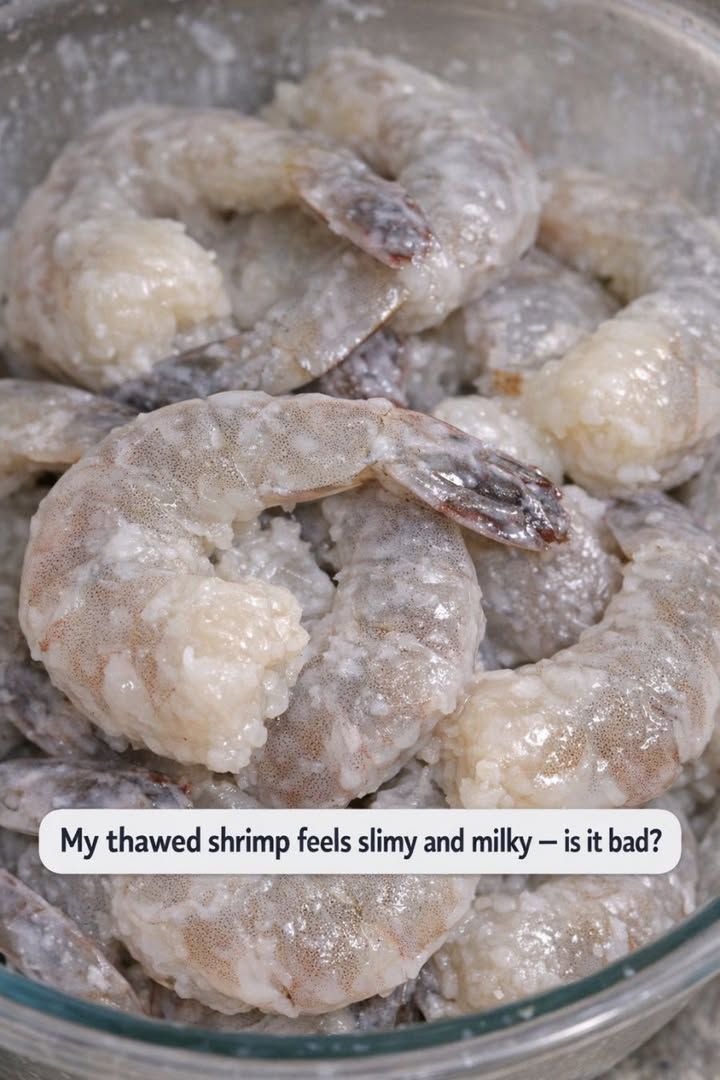
My thawed shrimp feels slimy and milky — is it bad?
Advertisement
