
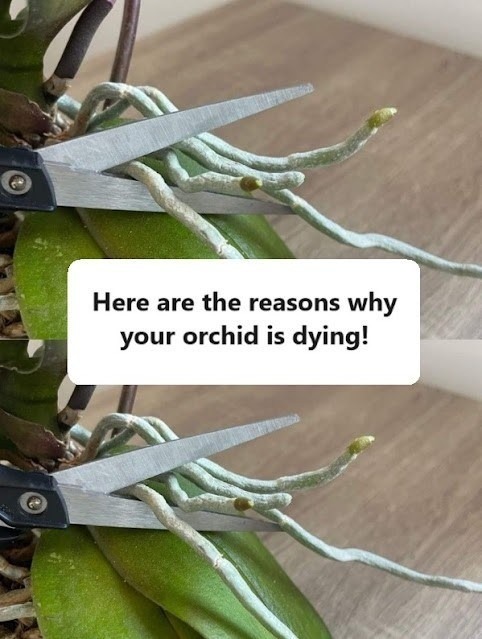
How to Water Your Orchid Correctly
Overwatering is the number one killer of orchids. It’s crucial not to solely depend on the color of aerial roots when determining your orchid’s watering needs. Instead, inspect the roots within the pot. Green roots indicate adequate moisture, whereas a grayish or silvery tone means they require water. The aerial roots can sometimes turn gray even when the potted roots are still moist, which can be very misleading.
A good rule of thumb: water your orchid once every 7–10 days in warm weather and every 10–14 days in cooler months. Always water in the morning so any excess moisture on leaves can evaporate during the day, preventing rot.
Other Common Reasons Your Orchid May Be Dying
1. Too Much or Too Little Light
Orchids need bright, indirect light. Direct sunlight will scorch the leaves, turning them yellow or brown with crispy edges. On the other hand, too little light will prevent blooming and cause the plant to become leggy and weak. A spot near an east- or west-facing window is ideal.
2. Wrong Potting Medium
Orchids should never be planted in regular potting soil, which retains too much moisture and suffocates the roots. Use a specialized orchid bark mix or a blend of bark, perlite, and sphagnum moss that allows air to circulate around the roots freely.
