
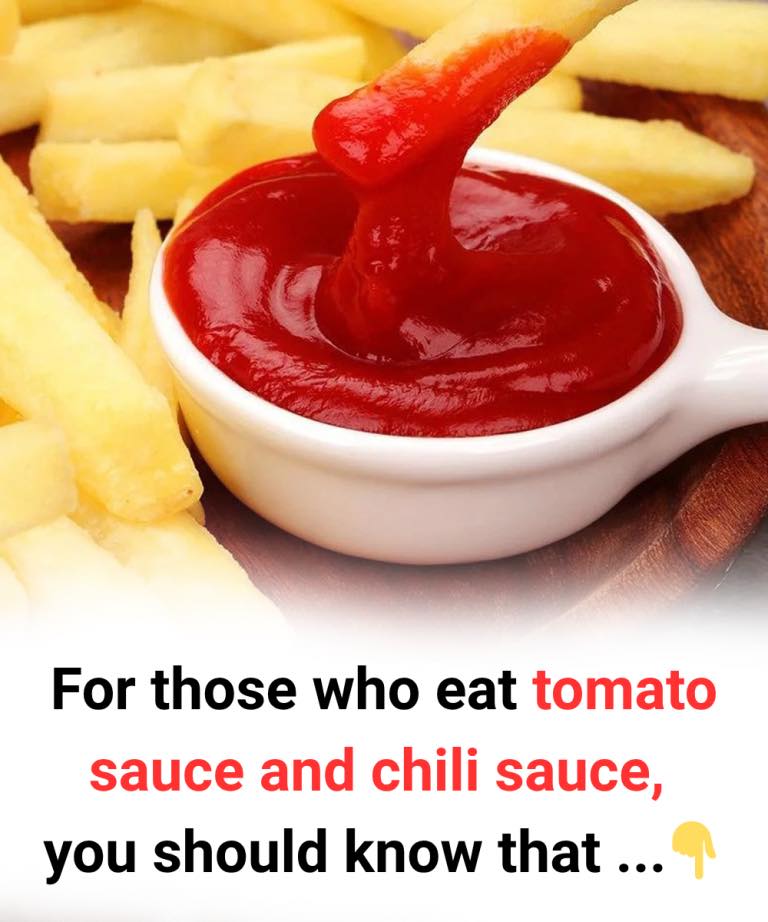
Tomato sauce and chili sauce are two of the most widely consumed condiments in the world. They show up at almost every meal — on burgers, pasta, eggs, rice, noodles, sandwiches, and everything in between. Most people pour them on their food without a second thought, assuming they are simply a harmless, flavorful addition to any dish. But if you are someone who reaches for that bottle of tomato sauce or chili sauce multiple times a day, every single day, there are some important facts you genuinely need to know — facts that the labels on those bottles are not always designed to make easy to find.
The Hidden Sugar Problem
Perhaps the single most surprising and alarming fact about commercial tomato sauce and ketchup-style sauces is just how much sugar they contain — and how well that sugar is hidden from casual view. A single tablespoon of standard commercial tomato sauce or ketchup can contain up to 5 grams of sugar. That is a full teaspoon of sugar in what most people consider a savory condiment. Some varieties contain even more. Research into commercial pasta and tomato sauce products found that certain popular brands contain as much sugar per serving as a chocolate bar.
The World Health Organization recommends that adults ideally consume no more than 25 grams of added sugar per day for good health. If you use tomato sauce or ketchup liberally at several meals — which is completely normal and common — you can easily consume 15 to 20 grams of hidden sugar from condiments alone before you have even touched the actual food on your plate. The same principle applies to commercial chili sauces and sweet chili sauces, which can contain between 15 and 25 percent pure sugar by volume. BBQ sauce, a closely related condiment, can be composed of up to 50 percent sugar in some formulations. This level of hidden sugar consumption, accumulated day after day across years, is directly linked to increased risk of obesity, type 2 diabetes, fatty liver disease, and cardiovascular disease.
The Sodium Crisis Inside the Bottle
Sugar is not the only hidden health concern lurking inside commercial tomato and chili sauce bottles. Sodium is an equally serious issue. Tomatoes in their natural state contain only about 5 milligrams of sodium per 100 grams — an essentially negligible amount. Every milligram of sodium beyond that in a bottled sauce has been added by the manufacturer during processing. And most commercial sauces add a great deal of it.
Excess sodium consumption is one of the most well-documented contributors to high blood pressure, which is itself the leading modifiable risk factor for stroke, heart attack, and kidney disease. Research has strongly linked high-sodium diets to elevated blood pressure since the 1980s, and the relationship is considered one of the clearest and most consistent in nutritional science. Yet most people who sprinkle or pour tomato sauce and chili sauce onto their meals are adding meaningful amounts of sodium to their daily intake without registering it as “salt consumption” at all — because it does not come from a salt shaker. Hot sauce, specifically, delivers approximately 124 milligrams of sodium per single teaspoon — and most people use far more than a teaspoon per meal.
What Are Those Preservatives Actually Doing?
Commercial tomato sauces, ketchups, and chili sauces sit on store shelves for months at a time without refrigeration before purchase. They then sit in refrigerators in opened containers for weeks or months after purchase. The only reason this is possible without the product spoiling rapidly is the addition of chemical preservatives — most commonly sodium benzoate, potassium sorbate, and citric acid.
