
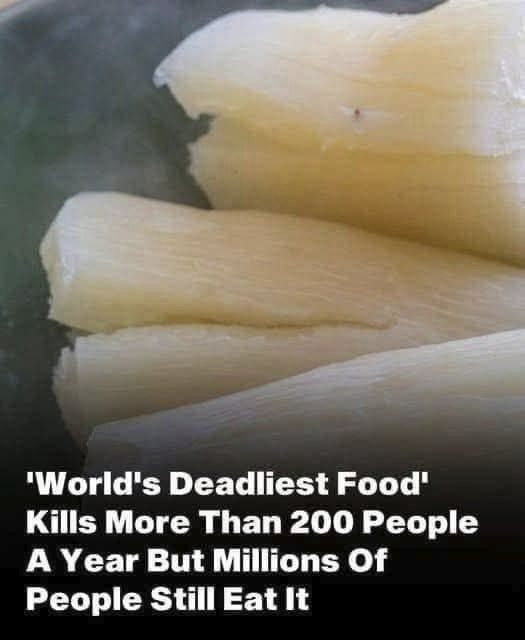
❗ Most deaths happen when people eat bitter cassava without soaking, fermenting, or cooking it properly.
✅ How Millions Eat Cassava Safely Every Day
For generations, cultures around the world have developed traditional methods to remove cyanide from cassava — turning a potentially dangerous food into a safe and reliable staple.
Safe Preparation Steps:
Peel the root – Toxins concentrate in the skin
Soak in water for 1–7 days – Fermentation helps break down linamarin
Grate, pound, or slice thin – Increases surface area for toxin removal
Cook thoroughly – Boiling, roasting, or frying neutralizes remaining cyanide
Dry in sunlight (for flour) – Sunlight accelerates detoxification
✅ In West Africa, cassava is turned into gari or fufu
✅ In South America, it becomes farofa or arepas
✅ In Asia, it’s used in tapioca pearls and cassava cake
📌 These methods aren’t just tradition — they’re science in action.
🌍 Why Cassava Matters Globally
Despite its risks, cassava is a critical food security crop because:
Grows in poor soil and with little water
Survives climate extremes better than wheat, rice, or corn
Provides affordable calories for low-income families
Can be stored in the ground for months
🌱 With climate change threatening global agriculture, researchers are developing low-cyanide, high-yield varieties (like “Nam Dinh” in Vietnam or biofortified cassava in Nigeria).
