
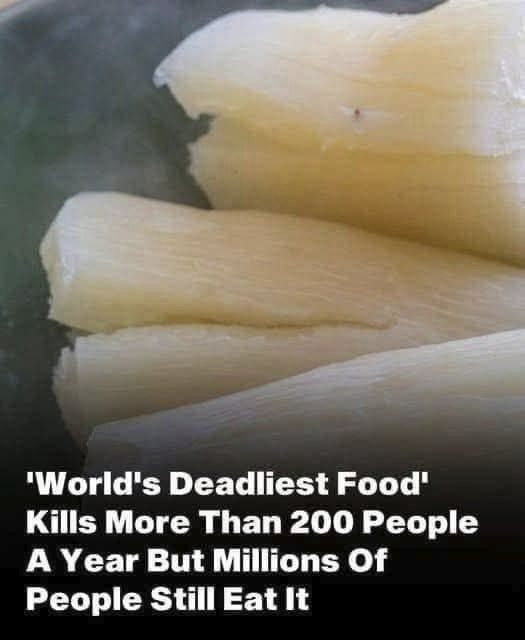
There are two main types:
Sweet cassava
Lower in toxins; safer to eat with basic cooking
Bitter cassava
Higher in cyanogenic glycosides — requires careful processing
💡 Bitter varieties are more common because they’re more pest-resistant — but also more dangerous if mishandled.
⚠️ The Hidden Danger: Cyanide in Raw Cassava
All cassava contains linamarin, a compound that breaks down into hydrogen cyanide when cells are damaged (e.g., during peeling, grating, or chewing).
If consumed raw or poorly processed, it can cause:
Acute cyanide poisoning (nausea, dizziness, seizures, death)
Chronic health issues like konzo — a paralyzing neurological disease linked to long-term cyanide exposure
Goiter and thyroid problems due to interference with iodine uptake
📊 According to WHO estimates, hundreds of non-fatal cases and dozens of deaths occur each year — mostly in sub-Saharan Africa during famines or droughts when traditional processing methods are skipped.
