
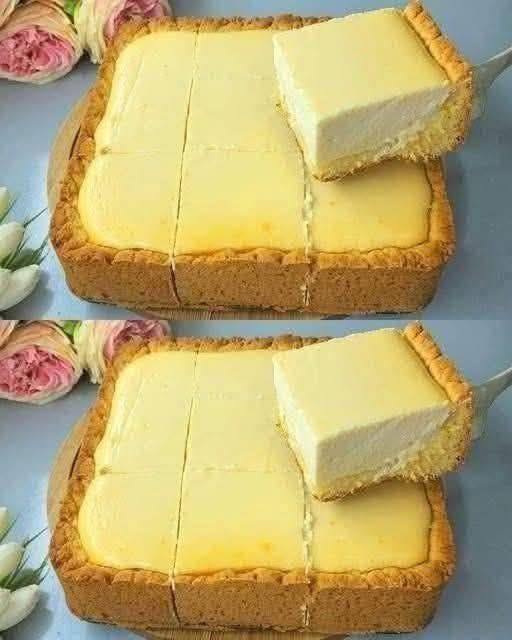
- Pine nuts (a generous handful — lightly toasted before use)
- Powdered sugar, for dusting
Every ingredient here earns its place. The quality of the butter, the freshness of the eggs, and the fragrance of real vanilla extract all make a noticeable difference in the finished tart — this is a recipe simple enough that each component shows clearly in the result.
Step-by-Step Instructions
Step 1 — Make the Shortcrust Pastry
In a large mixing bowl, combine the flour, sugar, baking powder, and salt. Stir briefly to distribute everything evenly. Add the cold butter cubes and rub them into the flour mixture using your fingertips, working quickly to keep everything cool, until the mixture resembles coarse, uneven breadcrumbs with no large butter pieces remaining. A few small flakes of butter visible throughout is perfectly fine — they create a flakier crust once baked.Add the egg and lemon zest and mix gently, pressing the dough together until it just comes together into a smooth ball. Avoid overworking it — the less you handle the dough at this stage, the more tender the crust will be. Shape into a disc, wrap tightly in plastic wrap, and refrigerate for at least 30 minutes. This chilling period is important: it firms the butter back up, relaxes the gluten in the flour, and makes the dough significantly easier to roll without tearing.
Step 2 — Prepare the Custard Filling
Pour the whole milk into a medium saucepan and place it over medium heat. Warm it until it’s just beginning to simmer around the edges — small bubbles forming at the rim, steam rising gently — but do not allow it to reach a full boil.
While the milk is warming, whisk together the egg yolks, sugar, and cornstarch in a large heatproof bowl until the mixture is completely smooth and has turned a pale, creamy yellow. There should be no dry patches of cornstarch remaining.
Once the milk is hot, remove it from the heat and begin pouring it into the egg mixture in a slow, thin, steady stream — no faster than a drizzle — whisking constantly as you pour. This process of gradually adding hot liquid to the egg mixture is called tempering, and it’s what prevents the eggs from scrambling. Once all the milk has been incorporated, return the entire mixture to the saucepan.
Cook over low to medium-low heat, stirring constantly with a wooden spoon or heatproof spatula, until the custard thickens noticeably and begins to leave a clear trail when you drag the spoon through it. This usually takes 5 to 8 minutes. The moment it reaches a smooth, pudding-like consistency, remove the pan immediately from the heat and stir in the vanilla extract.
To prevent a skin from forming on the surface as it cools, press a sheet of plastic wrap directly onto the custard so it sits flush against the surface with no air gap. Allow the custard to cool to room temperature, then refrigerate until you’re ready to assemble the tart. The custard can be made up to a day ahead.
Step 3 — Assemble the Torta
Preheat your oven to 180°C (350°F). Lightly butter a 24 to 26 cm round tart or springform pan.
Remove the chilled pastry dough from the refrigerator and divide it into two portions — roughly two-thirds for the base and one-third for the lid. On a lightly floured surface, roll the larger portion into a circle approximately 3 to 4mm thick and large enough to line the base and sides of the pan with a small overhang. Carefully transfer it to the prepared pan, pressing it gently into the base and up the sides without stretching it. Trim any excess overhang.
Spoon the cooled custard into the pastry shell and spread it into an even, smooth layer. Roll out the remaining portion of dough into a circle roughly the same diameter as the top of the tart pan and lay it gently over the custard. Press the edges of the top and bottom pastry together firmly to seal, then trim any ragged edges. Scatter the pine nuts generously and evenly across the top crust, pressing them very lightly so they adhere during baking.
Step 4 — Bake and Cool
Place the assembled tart in the center of the preheated oven and bake for 35 to 40 minutes, until the pastry is a deep golden brown and the kitchen smells of warm butter and vanilla. The top should look set and feel firm with only the faintest give when pressed gently in the center.
Remove from the oven and allow the tart to cool completely in the pan before attempting to remove or slice it — the custard needs to set fully as it cools, and cutting into a still-warm Torta della Nonna will result in the filling spilling out rather than holding its shape. Patience here is genuinely rewarded.
Once fully cooled, dust the surface generously with powdered sugar immediately before serving. Do not dust while the tart is still warm — the sugar will melt directly into the crust and disappear rather than sitting on top as a visible, beautiful finish.
Tips for Success
Keep the butter cold throughout. Cold butter is the single most important factor in achieving a light, flaky, tender shortcrust. Work quickly when rubbing the butter into the flour, and if the dough warms up significantly before you’re ready to roll it, return it to the refrigerator for another 10 minutes.
