
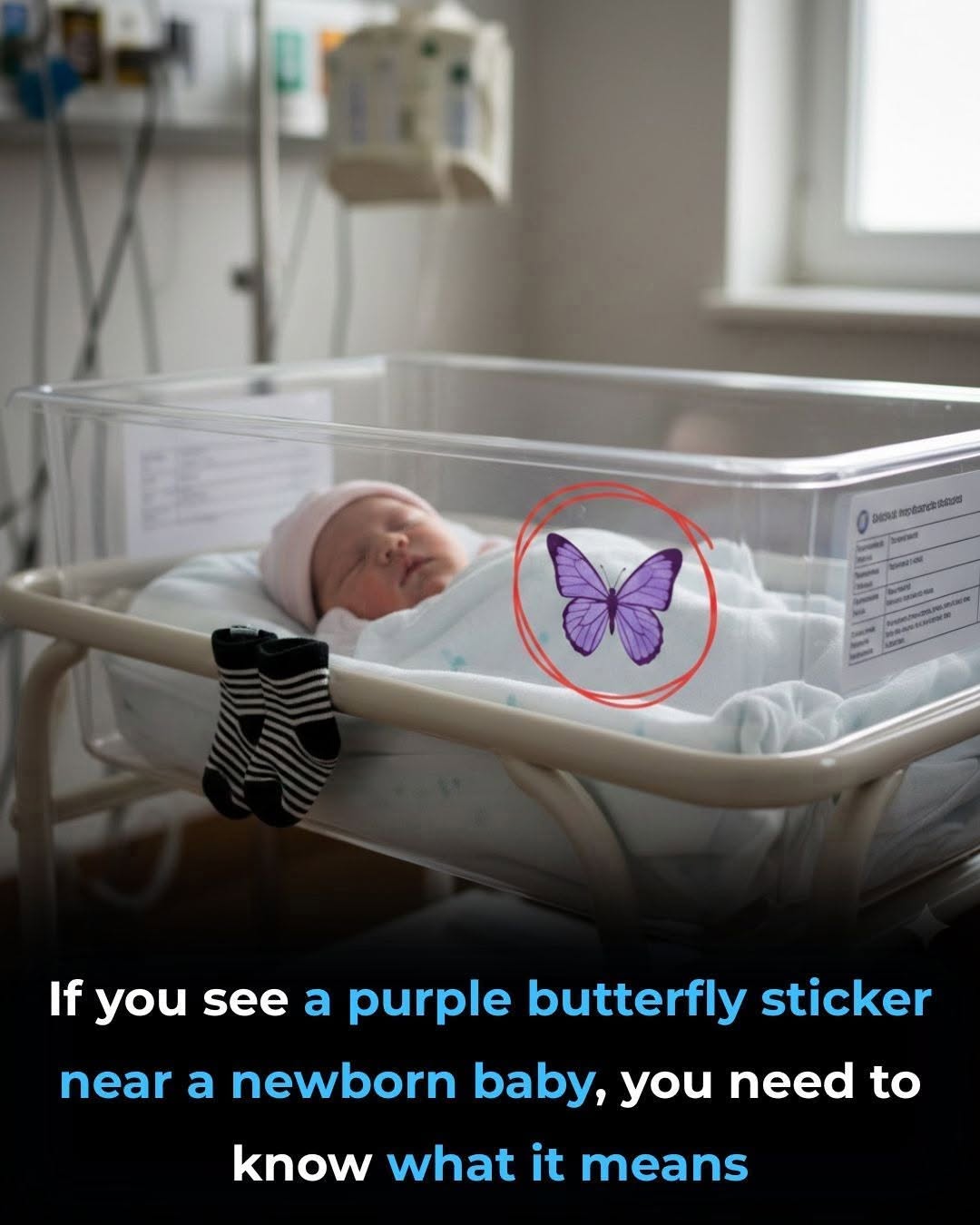
Millie Smith and Lewis Cann found out they were having twin girls, but only one of them would survive.
Smith gave birth to identical twins Callie and Skye on April 30, following a high-risk pregnancy that lasted 30 weeks. Skye only lived for three hours.
Without her sister, Callie spent the night in the NICU incubator under the watchful eyes of her adoring and distraught parents.
An exhausted mother of healthy newborn twins told Smith, in all candor, that she was “so lucky” not to have two infants.
The statements devastated the new mother, and she was at a loss for words. Then she saw the purple butterfly and knew that Skye’s legacy was to comfort other bereaved parents.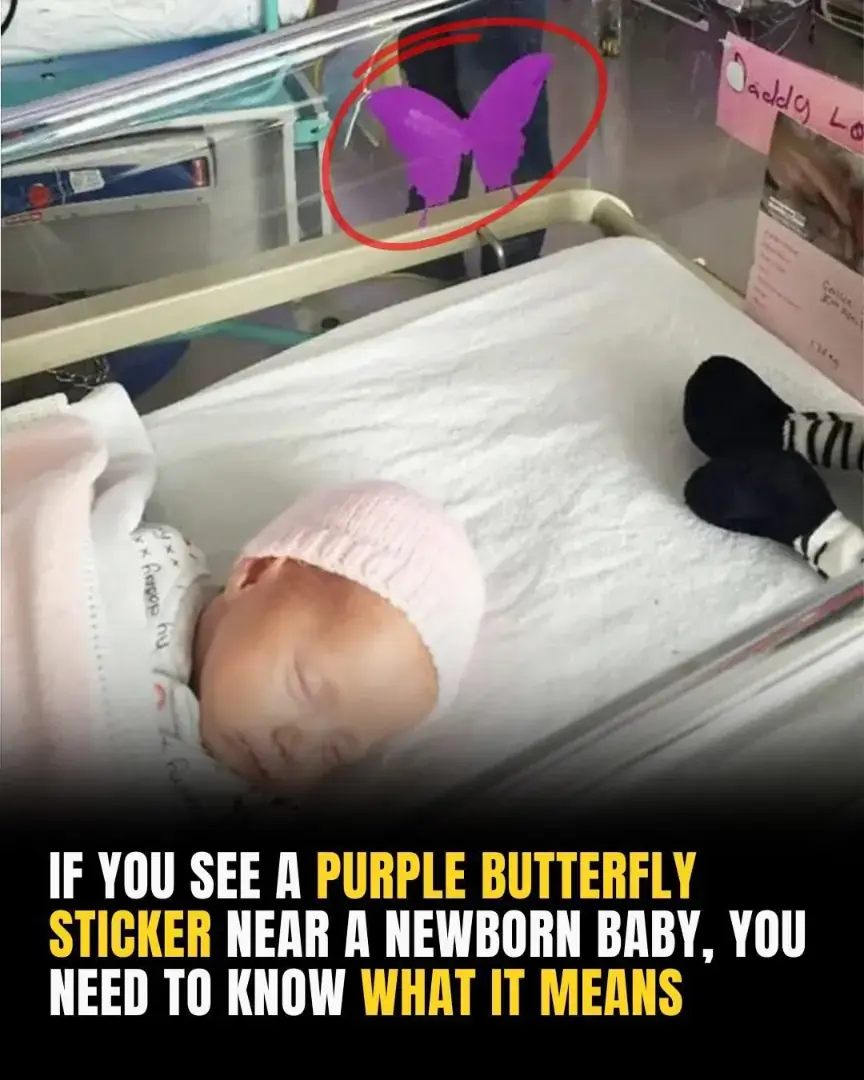
Millie Smith and her partner, Lewis Cann, welcomed their first child in November 2015.
Smith, who is expecting a pair of daughters and whose family includes many sets of twins, reported a “gut feeling” that she was carrying more than one baby.
The British parents were shocked to find out that their unborn child had a deadly disease less than two weeks after they found out they were expecting twins.
“During the scan, the doctor didn’t say anything. I was very excited and loved seeing the little babies, but she was silent. Both Lewis and I immediately knew there must be a problem,” Smith said.
The CDC reports that approximately 1 in 4,600 newborns in the United States are born with anencephaly; thus, the doctors broke the news that one of the babies had the condition.
Because of the severe nature of this birth abnormality, “almost all babies born with anencephaly will die shortly after birth.”
The parents went forward with the extraordinarily high-risk pregnancy while knowing that one of their babies would likely die shortly after birth.
Smith and Cann gave their daughters, who were born months later, the names Skye and Callie.
“We knew that Skye needed to have a name before she was born,” Smith said. “Knowing she would only survive for seconds or minutes, I wanted her to be named during that time.”
The meaning behind “Skye,” she explained, symbolized “somewhere we knew she would always be, that we could look up at the sky and remember our baby.”
On April 30, Smith went into labor at just 30 weeks along, necessitating a quick C-section
The pair was provided with a “bereavement midwife” and a “Daisy Room,” a space where parents can be with their infant before and after death, to help them cope with the loss.
“When the girls were born, they both cried. This was a huge moment, as we were told that Skye would not make a noise or move,” said Smith, who was thankful to have spent three hours with Skye before she died.
“We were cuddling Skye when she passed away. This was the worst moment in our lives. I have never ever felt heartbreak like that before. But I am proud that she fought for so long to spend time with us.”
Callie was one of three sets of twins staying in the NICU while they all recovered from being born prematurely.
“Most of the nurses were aware of what had happened, but as time passed, people stopped talking about Skye. After about four weeks, everyone acted as though nothing had happened, meaning the families around me had no idea about our situation,” Smith recalled.
Innocuously, Smith was told that she was “so lucky” not to have twins by a frazzled mother whose twins were also in the NICU.
“None of the other parents knew what had happened or anything about Skye. The comment was completely innocent and more out of humor…They weren’t to know that I did at one point have two.” Smith continued, “But the comment nearly broke me. I ran out [of] the room in tears and they had no idea why. I didn’t have the heart to tell them what had happened. A simple sticker would have avoided that entire situation.”
Smith then knew she had to make something that would speak for parents who had just lost a child so that this kind of miscommunication would never happen again.
She created a poster for the neonatal intensive care unit to inform staff and visitors that a purple butterfly on the incubator indicated the loss of one or more babies in a set of multiples.
“I chose butterflies, as I felt it was fitting to remember the babies that flew away, the color purple because it is suitable for both boys or girls,” said Smith.
The Skye High Foundation, which oversees the purple butterfly initiative, has helped expand the idea to hospitals in many different nations.
Callie, now 7, is full of life and joy, and her memory continues on in purple butterfly cards and other programs to support families who have lost a baby like Skye.
Purple butterfly merchandise currently includes a wide variety of gifts and accessories.
“Ultimately I will never be able to stop this from happening, but the more support groups we can set up and put things in place like the stickers the better it will be. It’s the hardest thing anyone has to deal with,” Smith said.
The world is fortunate to have compassionate people like Millie Smith who are working to ease the suffering of those who have experienced the loss of a child of any age.
A Purple Butterfly That Reminds the World: No Baby Should Ever Be Forgotten
For Millie Smith, the purple butterfly was never simply a symbol placed on the side of an incubator. It represented a little girl whose life was brief but whose existence had changed her family forever. It was a reminder that even when a baby is no longer physically present, the love surrounding that child does not disappear.
In the days and weeks following Skye’s death, Smith began to understand that grief in a neonatal intensive care unit could be particularly complicated. Parents were surrounded by the sounds of newborn babies crying, the steady rhythm of medical equipment, and the constant movement of nurses and doctors. Some families were celebrating small improvements in their children’s health, while others were anxiously waiting for news that might determine the future of their newborns.
For Smith, every sound and every sight carried a different meaning. She was grateful that Callie was alive and receiving the care she needed, but she was also grieving the daughter who should have been beside her sister.
There was no simple way to explain that contradiction to strangers.
She was a mother of twins, yet she had only one baby to bring home. She had experienced the joy of welcoming two daughters into the world, followed almost immediately by the unimaginable pain of saying goodbye to one of them.
The purple butterfly offered a quiet way to communicate that reality without requiring parents to explain their personal tragedy repeatedly.
The Importance of Recognizing Every Baby
One of the most difficult aspects of losing a baby is that the outside world may quickly return to normal.
For friends, relatives, colleagues, and even hospital visitors, life continues. Conversations move on to ordinary subjects. People ask about the surviving baby, congratulate the parents, and discuss the future.
But for a bereaved parent, the world has fundamentally changed.
A baby who lived for only a few minutes or hours is still a child. That child was anticipated, loved, named, and imagined long before birth. Parents may have chosen clothes, prepared a nursery, discussed possible personalities, and dreamed about the relationship their children would share.
The fact that a baby died shortly after birth does not make those dreams less meaningful.
Smith’s experience highlighted how easily one baby’s existence could become invisible in an environment where medical attention naturally focused on the surviving infant.
When Callie remained in the NICU, nurses and medical staff had to continue providing treatment and monitoring her development. Their attention was understandably directed toward the babies who needed immediate medical support.
However, Smith and Cann were still parents of two daughters.
They needed people to understand that Skye was not simply a medical tragedy or a detail in Callie’s medical history. She was a member of their family.
The butterfly initiative was designed to make that understanding easier.
A small purple sticker could tell everyone entering the room that a family had experienced the loss of one or more babies in a multiple pregnancy. It allowed nurses, doctors, volunteers, and other parents to approach the family with greater awareness.
More importantly, it helped prevent painful misunderstandings.
Instead of expecting grieving parents to explain their circumstances every time someone made an innocent comment, the symbol communicated the information gently and respectfully.
It was a simple idea, but its emotional value was enormous.
Why the Butterfly Became Such a Powerful Symbol
Butterflies have long been associated with transformation, remembrance, hope, and the fragility of life.
For Smith, the image carried a particularly personal meaning. She imagined Skye as a little soul who had flown away, yet remained connected to the family through memory and love.
The choice of purple was equally thoughtful.
Purple is a color that can represent both boys and girls, making it suitable for families who have experienced different kinds of pregnancy and infant loss. It also has associations with compassion, dignity, and remembrance.
The symbol was deliberately simple. It did not need elaborate explanations or complicated instructions. Anyone who understood its meaning could immediately recognize that the family deserved sensitivity.
A butterfly on an incubator could communicate something that words sometimes failed to express.
It could tell another parent not to ask where the second baby was.
It could remind a visitor to avoid making assumptions about how many children a family had.
It could help a nurse understand why a mother might become emotional when looking at another set of twins.
And it could give bereaved parents a little more control over how their story was shared.
Perhaps most importantly, it acknowledged that the baby who died had existed.
For parents who fear that their child might gradually disappear from conversations and memories, that acknowledgment can be deeply comforting.
Turning Personal Heartbreak Into Support for Other Families
Creating the butterfly symbol did not mean that Smith had overcome her grief.
The loss of Skye remained part of her life, and there would always be moments when memories returned unexpectedly.
Birthdays, family celebrations, school milestones, and ordinary photographs could all bring reminders of the daughter who was missing.
Watching Callie grow would bring happiness, but it could also make the absence of Skye more noticeable.
The two girls had begun their lives together, yet their journeys had taken dramatically different paths.
Smith could not change what had happened. She could not give Skye more time or prevent the heartbreak that followed her birth.
