
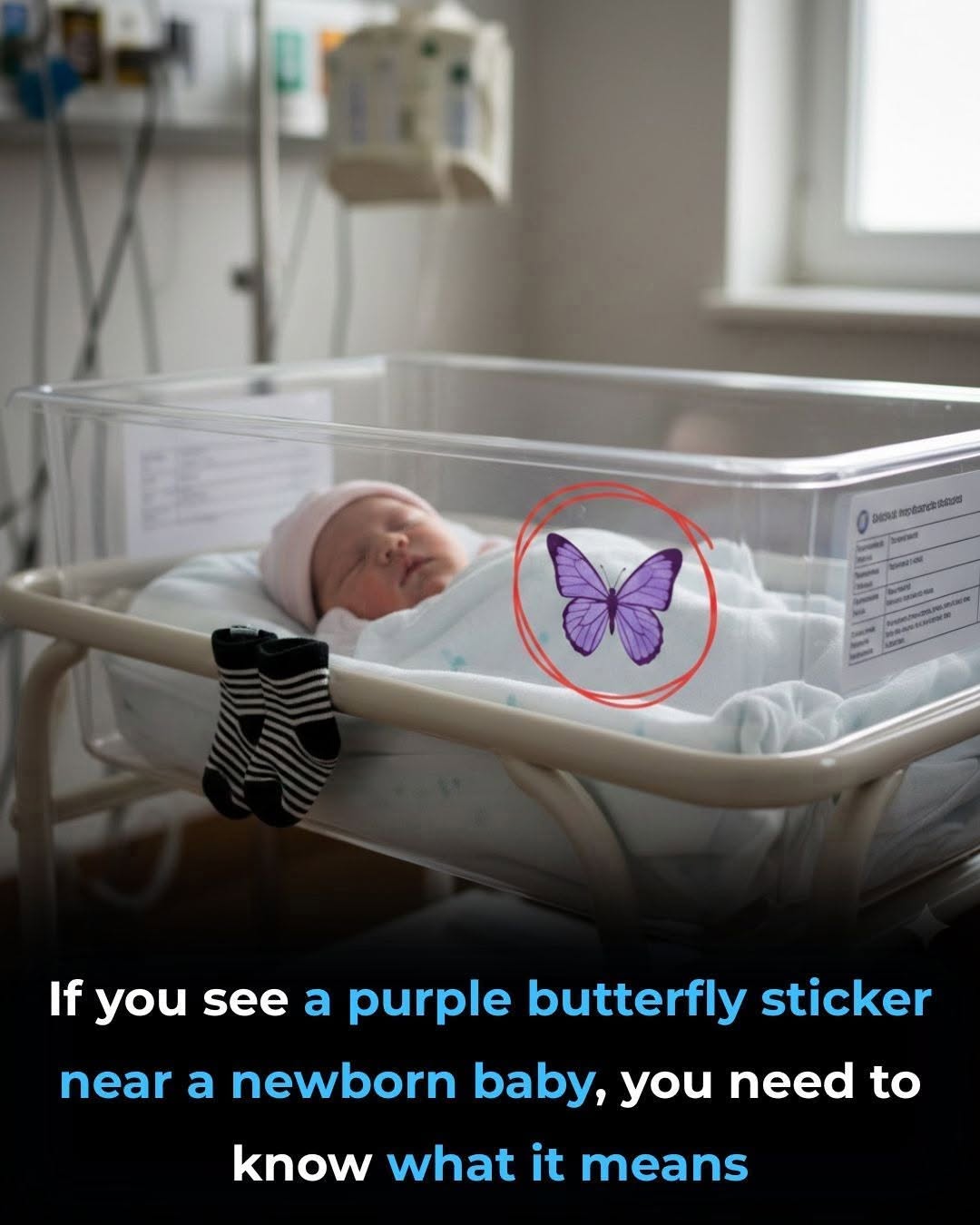
But she could do something meaningful with the experience.
She could help other parents avoid the same painful encounters. She could encourage hospitals to recognize the emotional needs of families who had lost one baby in a multiple pregnancy. She could create a shared language that made compassion easier to express.
This became the foundation of the purple butterfly initiative.
Over time, the idea developed beyond a single poster in a neonatal unit. It became part of a wider effort to improve awareness of baby loss and provide support to families experiencing bereavement.
The Skye High Foundation helped carry that message forward, encouraging hospitals and healthcare professionals to adopt the symbol and recognize the importance of sensitive communication.
What began with one mother’s painful experience gradually became a source of comfort for families she might never meet.
The Unique Challenges Faced by Parents of Twins
Losing one baby in a twin pregnancy presents emotional challenges that can be difficult for others to understand.
Parents may find themselves experiencing two seemingly contradictory emotions at the same time.
They are thankful that one child has survived, yet devastated that the other has died.
They may celebrate the surviving baby’s first smile while privately wondering what the other child would have been like.
They may feel excited about bringing their baby home, but the celebration can also be accompanied by sadness because the family is not complete in the way they had imagined.
This experience can create a complicated form of grief.
Some parents worry that expressing sadness might appear ungrateful for the child who survived. Others feel pressure to focus entirely on the healthy baby and avoid discussing the child who died.
Yet love is not something that must be divided according to circumstances.
A parent can be completely devoted to a surviving child while continuing to mourn a baby who is no longer alive.
Both feelings can exist together.
The purple butterfly helps make space for that reality.
It reminds people that a family can be celebrating one baby’s progress while simultaneously grieving another baby’s absence.
It also encourages healthcare professionals to recognize that the surviving twin may not be the only child whose story matters to the parents.
For families like Smith and Cann, acknowledging both babies is an important part of feeling understood.
A Hospital Environment Where Compassion Matters
Neonatal intensive care units are places of extraordinary medical dedication.
Doctors, nurses, midwives, and other healthcare workers care for newborns who may require intensive treatment, breathing assistance, feeding support, and constant observation.
For many parents, the NICU becomes a world of uncertainty.
They learn to interpret monitor readings, recognize changes in their baby’s breathing, and celebrate small improvements that others might not fully appreciate.
A day without complications can feel like a victory.
A successful feeding can become a major milestone.
A few additional grams of weight can bring enormous relief.
However, the NICU is also a place where different families experience very different realities.
Some parents are waiting to take their babies home. Others are preparing for difficult medical conversations. Some have already experienced a loss but must continue visiting the unit because another child remains hospitalized.
This is why communication and emotional awareness are so important.
A hospital may have excellent medical equipment and highly trained professionals, but families also need to feel that their emotional experiences are recognized.
A simple symbol can help bridge that gap.
The purple butterfly provides a visual reminder that not every incubator represents the same family circumstances.
It encourages staff and visitors to approach conversations thoughtfully.
It also demonstrates that small changes in hospital culture can make a significant difference to families experiencing grief.
No sticker can remove the pain of losing a baby. No poster can replace the comfort of holding a child. But preventing an avoidable misunderstanding can spare a parent from an additional moment of heartbreak.
Sometimes, that is meaningful enough.
The Difficult Journey of Grieving While Raising a Child
For Smith, the days following the birth of her daughters involved two very different experiences.
She had to grieve Skye while also caring for Callie.
The demands of caring for a premature baby can be exhausting. Parents may spend long hours in the hospital, follow medical instructions, attend appointments, and worry about every change in their child’s condition.
At the same time, bereavement does not pause simply because another baby needs attention.
A mother can be sitting beside an incubator, watching her surviving daughter sleep, while memories of the baby she lost return without warning.
She may feel relief when Callie makes progress and sadness when she remembers that Skye should have been making those same milestones.
There may also be questions that have no easy answers.
What would Skye have looked like as she grew older? Would the sisters have shared the same interests? Would they have developed similar personalities despite being identical twins?
These questions are part of the emotional landscape of losing a twin.
Although Skye’s life was extremely short, her place in the family did not end when she died.
Her name could continue to be spoken. Her story could be shared. Her memory could remain part of family photographs, conversations, and important milestones.
For many bereaved parents, this is essential.
They do not necessarily expect other people to understand every detail of their grief. They simply want their children to be remembered.
Helping People Find the Right Words
Many people feel uncomfortable speaking to someone who has experienced the death of a baby.
They worry about saying the wrong thing. They may avoid mentioning the child because they believe doing so could make the parents sad.
Others try to offer reassurance by encouraging the parents to focus on their surviving children or reminding them that they are fortunate to have another baby.
Although such comments are often intended kindly, they can unintentionally make grieving parents feel that their loss is being minimized.
The experience that inspired Smith’s initiative demonstrates how important it is to choose words carefully.
There is no perfect sentence that can remove the pain of losing a child.
However, simple expressions of acknowledgment can be meaningful.
Asking about the baby by name, recognizing the family’s loss, and allowing parents to talk about their child can communicate genuine compassion.
Sometimes, the most helpful response is simply to listen.
People do not need to solve grief. They do not need to explain why something happened or search for a positive lesson in every tragedy.
They can acknowledge that the situation is heartbreaking and let the parents decide what they wish to share.
The purple butterfly helps create an environment where these conversations can happen with greater sensitivity.
It also reminds people that silence is not always the kindest response. Remembering a baby does not necessarily reopen a wound. For many parents, being able to speak about their child is an important part of keeping that child’s memory alive.
Skye High Foundation: A Legacy That Reaches Beyond One Family
As awareness of the purple butterfly grew, the message associated with Skye’s name reached families and medical professionals beyond the hospital where Callie had received treatment.
The Skye High Foundation became an important part of expanding the initiative.
Its work reflects a simple but powerful belief: families experiencing baby loss deserve recognition, understanding, and support.
The foundation’s efforts have helped bring attention to the needs of parents who lose one or more babies in multiple pregnancies.
The initiative also encourages hospitals to make bereavement support more visible and accessible.
