
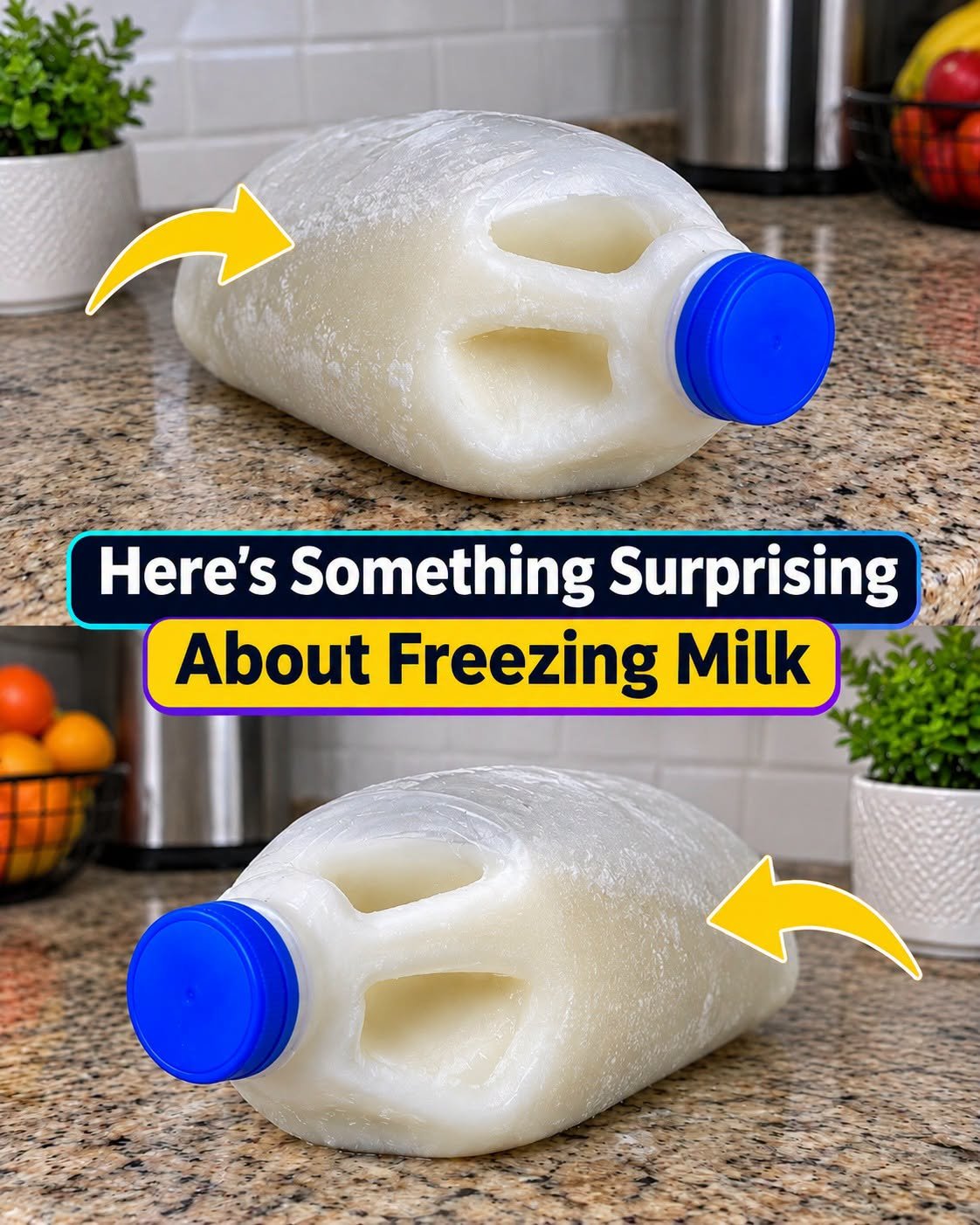
When frozen storage becomes part of your routine, bulk shopping can be a little easier to manage, especially if your household uses milk regularly but not always at the same rate.
Why Freezing Milk Can Make Financial Sense
Saving money on groceries is not always about finding the lowest advertised price.
Sometimes it is about ensuring that you actually use what you purchase.
Consider a simple example.
Imagine a household normally buys two smaller containers of
milk each week. One day, the supermarket offers a larger container at a noticeably lower price per unit.
Buying the larger container could reduce the cost of milk, but only if the household uses enough of it.
If half the container spoils, the discount may offer little benefit.
By freezing the portion that will not be consumed soon, the household has a better chance of enjoying the lower unit price without sacrificing the unused milk.
The actual savings depend on local prices, container sizes, electricity costs,
freezer space, and how consistently the stored milk gets used. Freezing is not automatically cheaper in every situation.
For example, purchasing an enormous quantity of milk would make little sense if your freezer is already full or you rarely cook with dairy products.
However, for households that regularly use milk, the freezer can provide a useful buffer between purchasing and consumption.
It also helps reduce emergency shopping trips.
Imagine preparing pancakes on a Sunday morning and discovering that the milk carton in your refrigerator is nearly
empty. Without a backup supply, you might need to visit a nearby store, where prices could be higher than those at your usual supermarket.
If you have a small frozen portion available and have planned ahead to thaw it, the ingredient is already waiting in your kitchen.
The savings may seem modest during a single week, but preventing repeated waste can make grocery spending more efficient over time.
More importantly, this practice encourages a valuable change in perspective.
Instead of treating groceries as something that must
be consumed immediately or discarded, you begin considering how proper storage can extend their usefulness.
That mindset can influence how you manage many foods, not just milk.
Can You Really Freeze Ordinary Dairy Milk?
The short answer is yes.
Pasteurized cow’s milk can be frozen, including whole, reduced-fat, low-fat, and skim milk.
However, freezing milk does not mean it will look, feel, or taste exactly the same after thawing.
Milk is not a simple liquid consisting of a single ingredient. It contains water, proteins, fats,
lactose, minerals, and other components distributed throughout the liquid.
When milk freezes, much of its water forms ice crystals. As this happens, the arrangement of the other components changes.
After thawing, some separation may be visible, and the milk may appear slightly grainy or less uniform than before.
This does not automatically mean it has spoiled.
In fact, changes in texture are a well-known consequence of freezing dairy milk.
The University of Nebraska–Lincoln Extension explains that pasteurized milk can be frozen, although separation and a
