
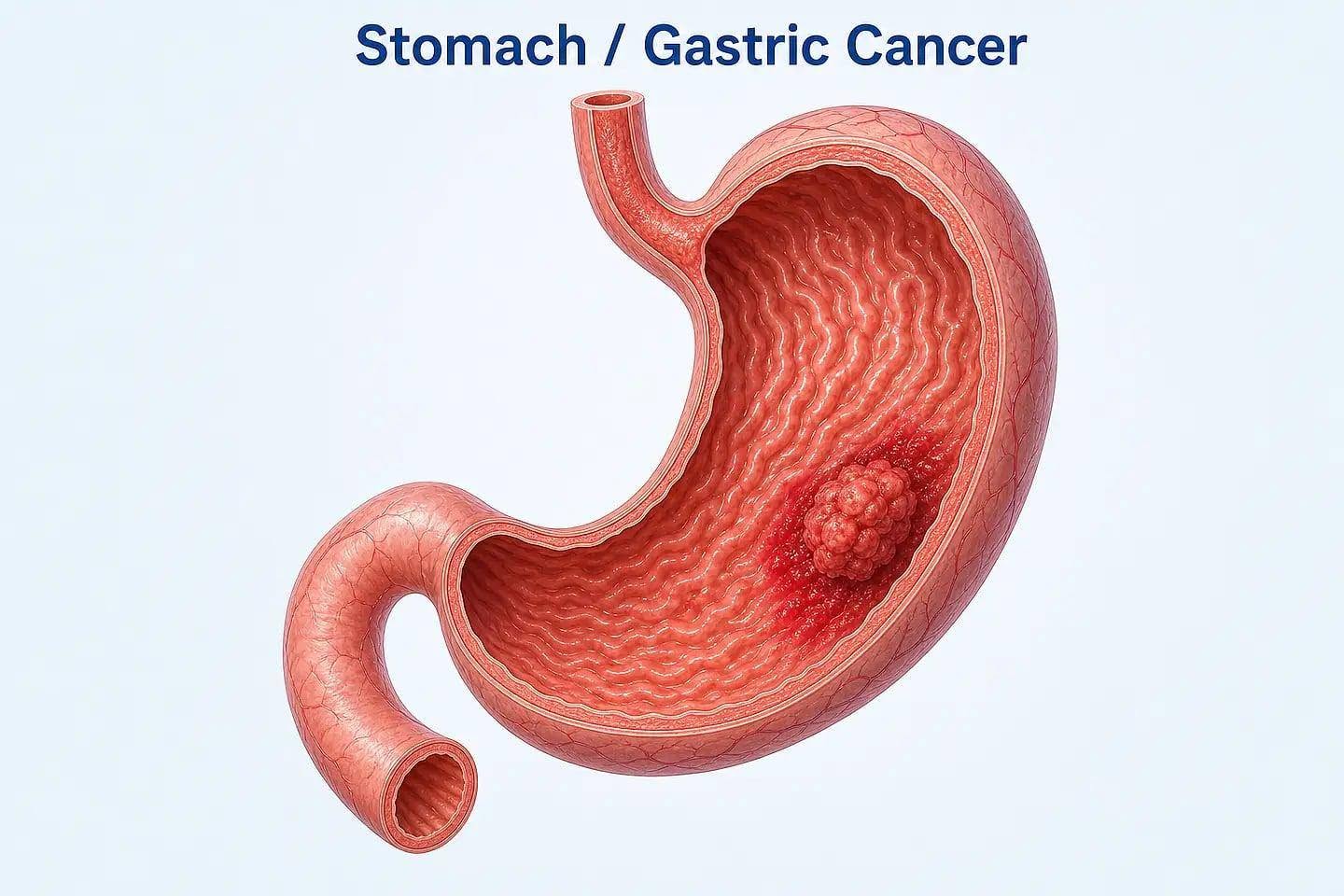
Diet may also play a role. Diets high in salted, smoked or poorly preserved foods have been associated with increased risk, while lower consumption of fruits and vegetables is also identified as a risk factor.
Health Conditions
I
Institut National du Cancer
Discover more
Science
Cancer treatment options
Pancreatic cancer screening
Having a risk factor does not mean you will develop cancer.
Stomach cancer awareness
Likewise, people without obvious risk factors can still develop the disease.
When should you see a doctor?
The biggest mistake is to assume that every digestive symptom is either harmless or cancer.
Neither assumption is appropriate.
Instead, pay attention to symptoms that are persistent, worsening, unusual for you or accompanied by other warning signs.
The NHS advises seeking medical evaluation for symptoms such as difficulty swallowing, a lump in the abdomen, noticeable unexplained weight loss, or digestive symptoms that worsen or fail to improve.
N
nhs.uk
Oncology specialist directory
Discover more
Cancer patient support
Pancreatic cancer treatment
Early detection tests
You don’t need to diagnose yourself before making an appointment.
That’s the healthcare professional’s job.
How is stomach cancer diagnosed?
GERD & Digestive Disorders
If a doctor believes your symptoms require further investigation, they may ask about your medical and family history and perform a physical examination.
Blood tests can be used to look for anemia, and stool testing may check for hidden blood.
Institut National du Cancer
Cancer
One of the main diagnostic procedures is an upper endoscopy.
Deadly disease information
During an endoscopy, a doctor uses a thin flexible instrument with a camera to examine the esophagus, stomach and the first part of the small intestine.
If an abnormal area is found, a biopsy can be taken.
A biopsy allows specialists to examine tissue under a microscope and determine whether cancer cells are present.
I
Institut National du Cancer
Additional imaging and tests may be needed if cancer is diagnosed, particularly to determine whether it has spread and to help doctors plan treatment.
Discover more
Dictionaries & Encyclopedias
Marriage
Magazines
Can stomach cancer be prevented?
Cancer
Not every case can be prevented, but some risk factors can be addressed.
Symptom tracker app
Avoiding tobacco is important.
A balanced diet emphasizing fruits, vegetables and other nutritious foods is beneficial for overall health.
If you have an H. pylori infection, appropriate testing and treatment can reduce the risk associated with that infection.
People with strong family histories or certain inherited conditions may also need specialized medical advice about their individual risk.
Institut National du Cancer
Cancer
There is no guaranteed way to prevent stomach cancer.
But understanding your personal risk can help you make informed decisions.
Discover more
Digestive health supplements
Health Conditions
Men’s Interests
Don’t let fear stop you from getting checked
Wellness coaching services
Perhaps the most important message is this:
Having these symptoms does not mean you have stomach cancer.
Indigestion, bloating, nausea, heartburn and abdominal pain are common and can result from many non-cancerous conditions. The NHS explicitly emphasizes that these symptoms can have many other causes.
N
nhs.uk
The reason to pay attention is not because every symptom is dangerous.
Health
It is because persistent changes deserve an explanation.
Getting checked can provide reassurance if the cause is harmless—and can allow appropriate treatment if another medical condition is responsible.
If cancer is present, finding it as early as possible can give doctors more opportunities to treat it.
Oncology specialist directory
Final thoughts
Discover more
Gut health probiotics
Symptom relief products
Health
Stomach cancer can indeed be difficult to detect early because it may cause few or no symptoms at first.
When symptoms appear, they can resemble ordinary digestive problems.
That is why awareness matters.
Watch for persistent indigestion, unusual fullness after eating, appetite loss, unexplained weight loss, upper-abdominal discomfort, nausea or vomiting, difficulty swallowing, gastrointestinal bleeding and unexplained fatigue.
But don’t panic when you recognize one of these symptoms.
Symptoms are signals, not diagnoses.
If something feels different from your normal health, continues for weeks, becomes worse or is accompanied by warning signs such as unexplained weight loss or bleeding, speak with a healthcare professional.
Stomach cancer awareness
Your body doesn’t always send a dramatic warning.
Discover more
Cancer prevention guide
Lesbian, Gay, Bisexual & Transgender
Chronic disease management
Sometimes it sends a small change.
And paying attention to that change can be the first step toward finding out what is really happening.
