
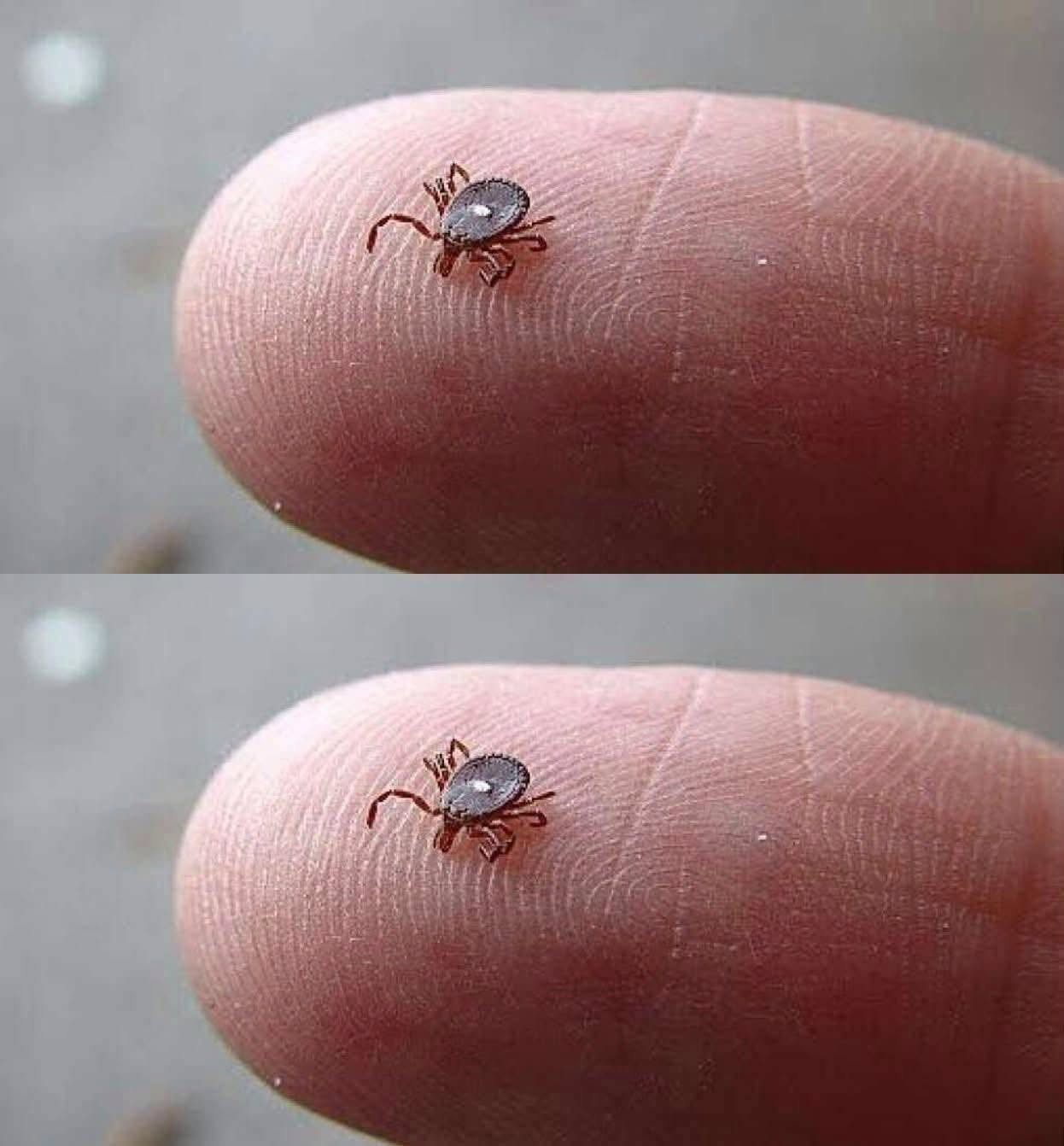
Finding a tiny insect crawling on your child after a walk in the woods can be alarming—especially when it looks like a tick and has a noticeable white marking on its back.
The good news is that the white spot itself is not something mysterious or unusual. In fact, it can be an important identification feature.
Could It Be a Lone Star Tick?
Based on the appearance in the photo, the insect looks consistent with a tick, and the prominent white spot is characteristic of an adult female lone star tick (Amblyomma americanum). The CDC identifies the distinctive white “lone star” on the back as a key feature of this species.
However, a photograph alone isn’t enough to confirm the species with certainty. Tick identification can depend on details such as the tick’s size, life stage, markings, and geographic location.
Why Does This Tick Have a White Spot?
The white marking is a natural part of the tick’s body. It isn’t a parasite, egg, or unusual growth.
The adult female lone star tick is particularly recognizable because of this single pale spot on the shield-like area of its back.
This is where the name “lone star tick” comes from.
Should You Be Worried?
A tick found crawling on the skin is different from one that has already attached and fed. If the tick was simply crawling and was removed before attaching, the situation is generally less concerning.
Still, it’s important to check your child carefully after outdoor activities. Ticks can hide in areas such as the hairline, behind the ears, around the waist, and in skin folds.
Some ticks can transmit infections, so an attached tick should be removed promptly. The CDC recommends removing an attached tick as soon as possible.
What Should You Do If a Tick Is Attached?
If you find a tick attached to the skin:
- Use clean, fine-tipped tweezers.
- Grip the tick as close to the skin as possible.
- Pull upward slowly with steady pressure.
- Avoid twisting or jerking the tick.
- Clean the bite area and your hands afterward with soap and water or rubbing alcohol.
Avoid trying to remove a tick with petroleum jelly, heat, nail polish, or other substances. The CDC specifically advises against these methods.
Keep an Eye on the Bite
After a tick exposure, monitor your child for changes in the following days and weeks.
Possible symptoms of tick-borne illness can include fever, rash, unusual tiredness, headache, muscle aches, or joint pain. If your child develops concerning symptoms after a tick bite, contact a healthcare professional and mention the tick exposure.
Don’t Let the White Spot Panic You
The unusual-looking white marking may actually be the easiest clue for identifying what you found. In the United States, the CDC recognizes the white spot on an adult female lone star tick as a distinctive characteristic.
So while finding a tick on a child is certainly something to take seriously, the white spot itself isn’t a reason to panic. The important steps are to remove any attached tick promptly, check for additional ticks, clean the area, and watch for symptoms.
If you’re unsure whether the insect in your photo is actually a tick, a local healthcare professional or qualified tick-identification service can help confirm it.
