👍Your kidneys work silently—filtering waste, balancing fluids, and regulating blood pressure—often without fanfare… until they start to fail. And by then, symptoms can be subtle, easy to dismiss as “just stress” or “getting older.”
But kidney disease is often called a “silent killer” for a reason: you can lose up to 90% of kidney function before symptoms become obvious. The good news? With early detection and smart lifestyle changes, you may be able to slow or even halt progression—potentially avoiding dialysis altogether.
Here are 9 critical warning signs your kidneys may be struggling, plus the key tests and proactive steps you can take now to protect your kidney health.
🔍 9 Warning Signs Your Kidneys Are in Trouble
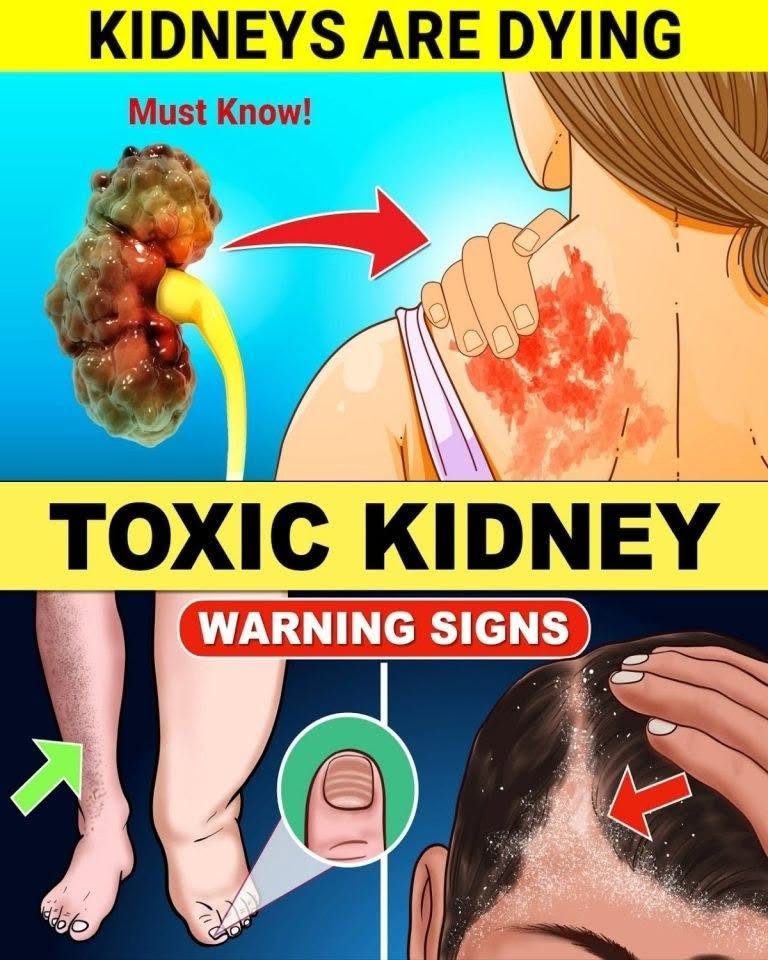
- Swelling in Ankles, Feet, or Hands
Kidneys help regulate fluid balance. When they falter, excess fluid builds up—especially in the lower extremities. Puffiness around the eyes in the morning can also signal protein loss through the kidneys. - Persistent Fatigue or Brain Fog
Failing kidneys produce less erythropoietin, a hormone that signals your body to make red blood cells. Low red blood cell count = anemia = constant tiredness, weakness, or trouble concentrating. - Changes in Urination
Watch for:
Foamy urine (sign of protein leakage)
Dark, pink, or cola-colored urine (blood in urine)
Frequent urination at night (nocturia)
Difficulty urinating or very little output
These aren’t “normal aging”—they’re red flags.
- Persistent Itching or Dry Skin
When kidneys can’t remove waste and excess phosphorus, toxins build up in the blood, causing severe, unrelenting itchiness—often on the back, arms, or legs.
5. Metallic Taste in Mouth or Ammonia Breath
Known as “uremic fetor,” this occurs when waste accumulates in the blood (uremia). Food may taste off, and you might lose appetite or feel nauseous.
6. Shortness of Breath
Fluid buildup from poor kidney function can collect in the lungs. Anemia (from low red blood cells) also reduces oxygen delivery, making you feel winded—even at rest.
7. Muscle Cramps or Leg Twitches
Electrolyte imbalances (like low calcium, high potassium, or low sodium) caused by kidney dysfunction can trigger painful cramps, spasms, or restless legs.
8. High Blood Pressure That’s Hard to Control
Kidneys and blood pressure are deeply linked. Damaged kidneys can’t regulate fluid and hormones properly, causing hypertension—which, in turn, further damages the kidneys. It’s a dangerous cycle.
9. Nausea, Vomiting, or Loss of Appetite
As toxins build up in the bloodstream, your digestive system reacts. Many people mistake this for a stomach bug—but if it’s ongoing, kidney issues could be the root cause.