

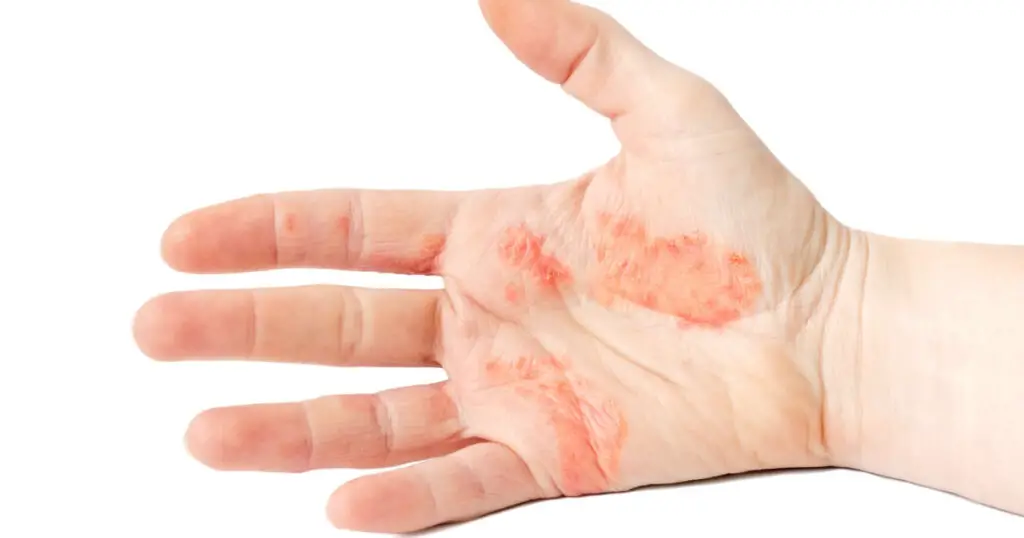
- Deep-set blisters on hands and feet (specifically on the edges of the fingers, toes, palms, and soles of the feet)
- Itching
- Redness
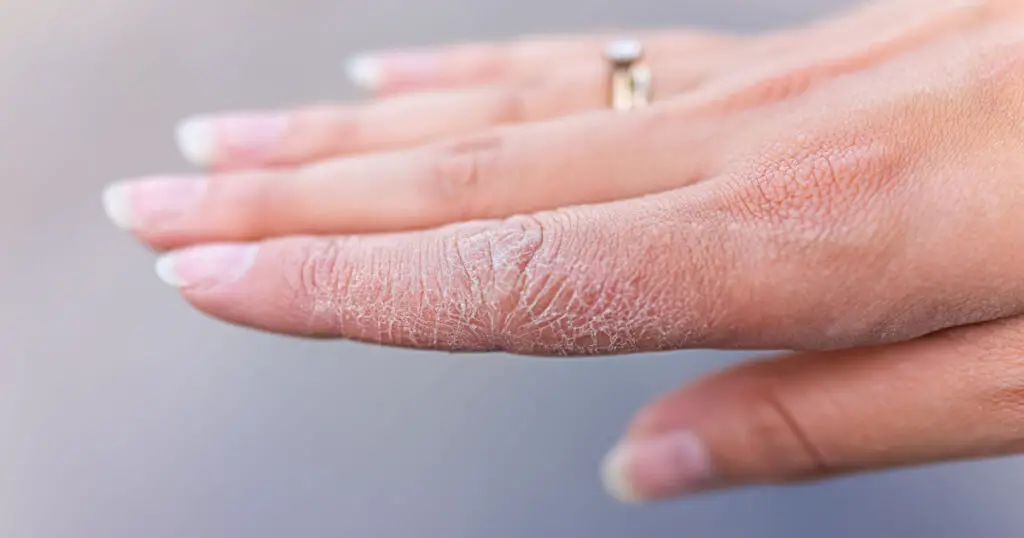
- Flaking
- Scaly, cracked skin
- Pain
People with contact dermatitis, atopic eczema, or hay fever are at a higher risk of developing dyshidrotic eczema. Sadly, it has a tendency to get infected, which delays the healing process.
Although there is no cure and no surefire way to prevent flare-ups from taking place, an effective skincare routine can bolster your skin’s resistance to inflammation.
The most conventional treatment for dyshidrotic eczema are creams, which likely include corticosteroid creams or ointment or a prescribed injection or pill.
Other treatments include:
- UV light treatments
- draining large blisters
- antihistamines
- various anti-itch creams
- immune-suppressing ointments, such as Protopic and Elidel
Besides these conventional methods, there are also natural ways of treating and soothing the condition. Generally, maintaining clean and moisturized skin is one of the most effective methods for managing eczema. The type of treatment and its frequency will depend on your specific symptoms, but these natural, at-home approaches enable you to feel confident about the products you use on your skin.
Cold Compresses
To reduce the inflammation of the skin, soak the affected area and apply cold compresses for 15 minutes. Repeat this process two to four times throughout the day and then apply moisturizer to the affected area for maximum effectiveness.
