
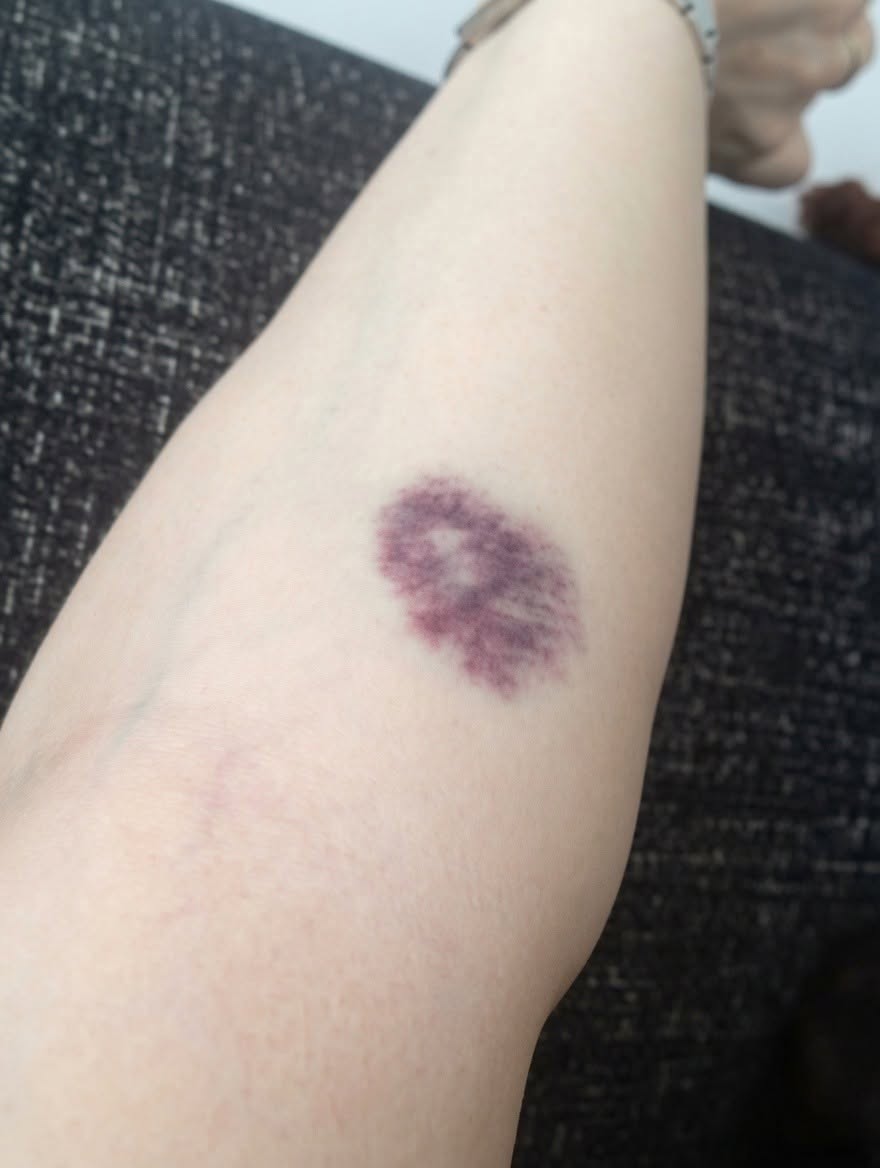
Pay attention if bruises are accompanied by other warning signs, including persistent fatigue, unexplained weight loss, frequent infections, prolonged bleeding from small cuts, nosebleeds, swollen lymph nodes, or tiny red or purple spots on the skin called petechiae. While these symptoms do not automatically indicate a serious disease, they deserve medical evaluation, particularly if they continue or worsen over time.
Keeping track of your bruises can also be helpful. Take note of when they appear, how long they last, whether they are painful, and whether you remember any injury. If bruises continue appearing without explanation or seem to become more frequent, schedule an appointment with your healthcare provider. A simple physical examination and routine blood tests can often identify common causes or determine whether further evaluation is needed.
Fortunately, most bruises require no treatment beyond allowing the body to heal naturally. Applying a cold compress during the first 24 hours after an injury may reduce swelling and discomfort. After a day or two, gentle warmth may help improve circulation and speed healing. Eating a balanced diet rich in fruits, vegetables, lean protein, and whole grains also supports healthy blood vessels and tissue repair.
The most important message is not to panic after discovering a bruise. The majority are completely harmless and result from everyday bumps that people may not even remember. At the same time, persistent, unexplained bruising should not be ignored. Early medical evaluation can identify treatable conditions before they become more serious and provide reassurance when nothing dangerous is found.
