
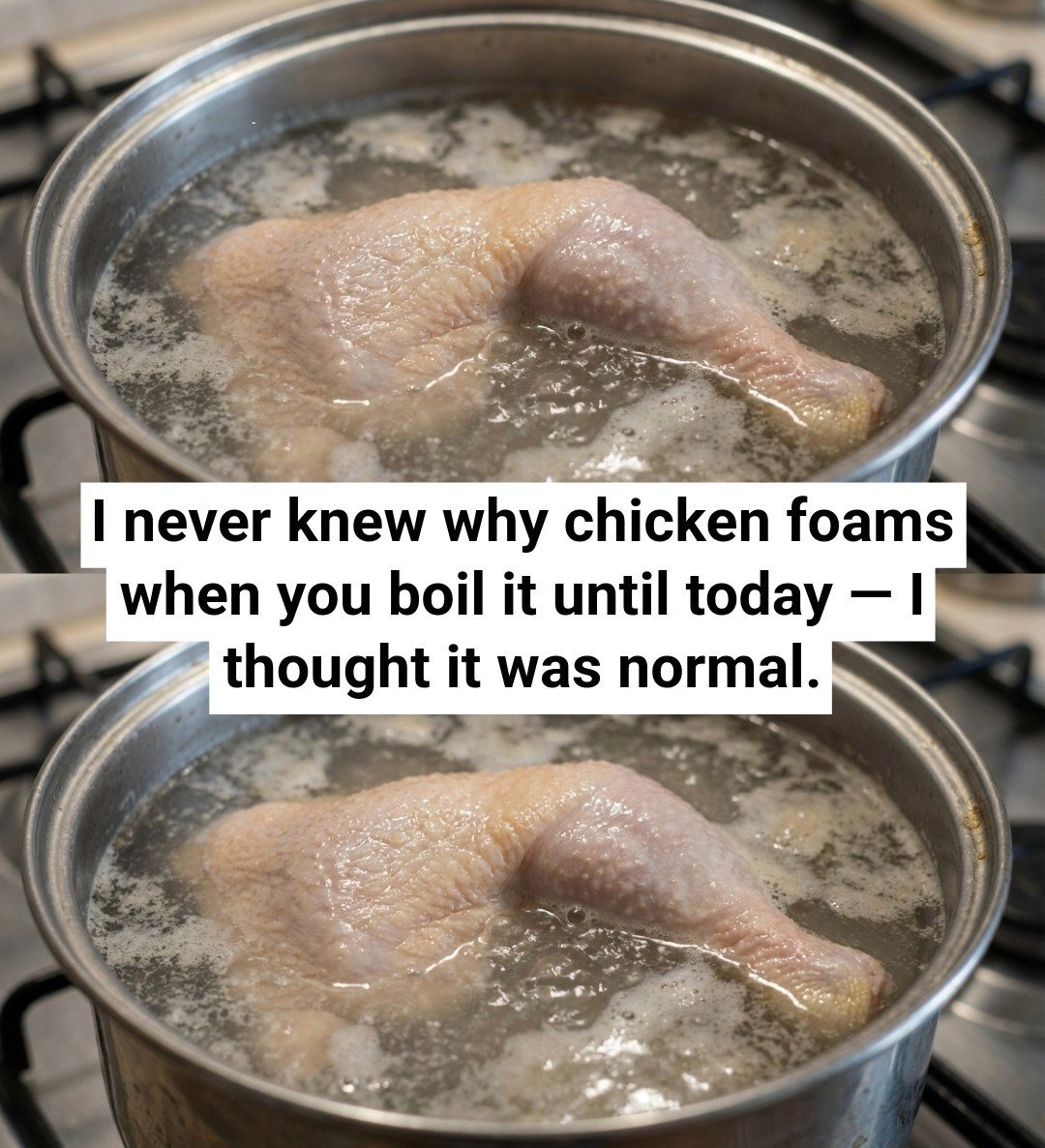
I place the chicken in a pot and bring it to a gentle boil over medium heat. If you begin boiling it at high heat, it will produce foam quickly and become difficult to handle.
As soon as I notice the foam forming, I use a fine-mesh strainer or a large spoon to remove it. Skimming the foam can be slightly laborious, but it is also somewhat rewarding.
Once the foam subsides, I reduce the heat to low and allow the chicken to simmer slowly.
If I’m simply boiling chicken to shred for tacos or salads, I do not take the time to skim the foam. However, for any recipe that involves a broth, I highly recommend removing the foam, as it will improve the appearance and flavor of the broth. Please do not think that foam is “chemicals” or “toxic.” It is simply a matter of aesthetics and taste.
Common Myths About Chicken Foam
Now I’d like to debunk a few common myths regarding chicken foam:
• Myth: Foam means there are chemicals in the chicken.
• No, it’s simply protein and fat.
• Myth: Foamy chicken is not safe to eat.
• False. Foam is completely harmless unless there are other signs of spoilage present.
• Myth: You must discard it.
• Absolutely not. Like many people, I also believed some of these things prior to understanding what I was dealing with.
How I Prepare Chicken Every Time I Cook Chicken Now
So here is where I’ve arrived: when I am preparing soup or stock, I always remove the foam to obtain the clear broth that I desire. When I am boiling chicken quickly so that I can shred it for tacos or pasta, I ignore the foam. Regardless, I no longer panic when I see foam.
Because chicken is composed of proteins, and heat causes them to rise to the surface, why does chicken foam when you cook it? That’s it. It is simply a natural aspect of cooking that you can either deal with or ignore, depending on the recipe you are preparing.
