
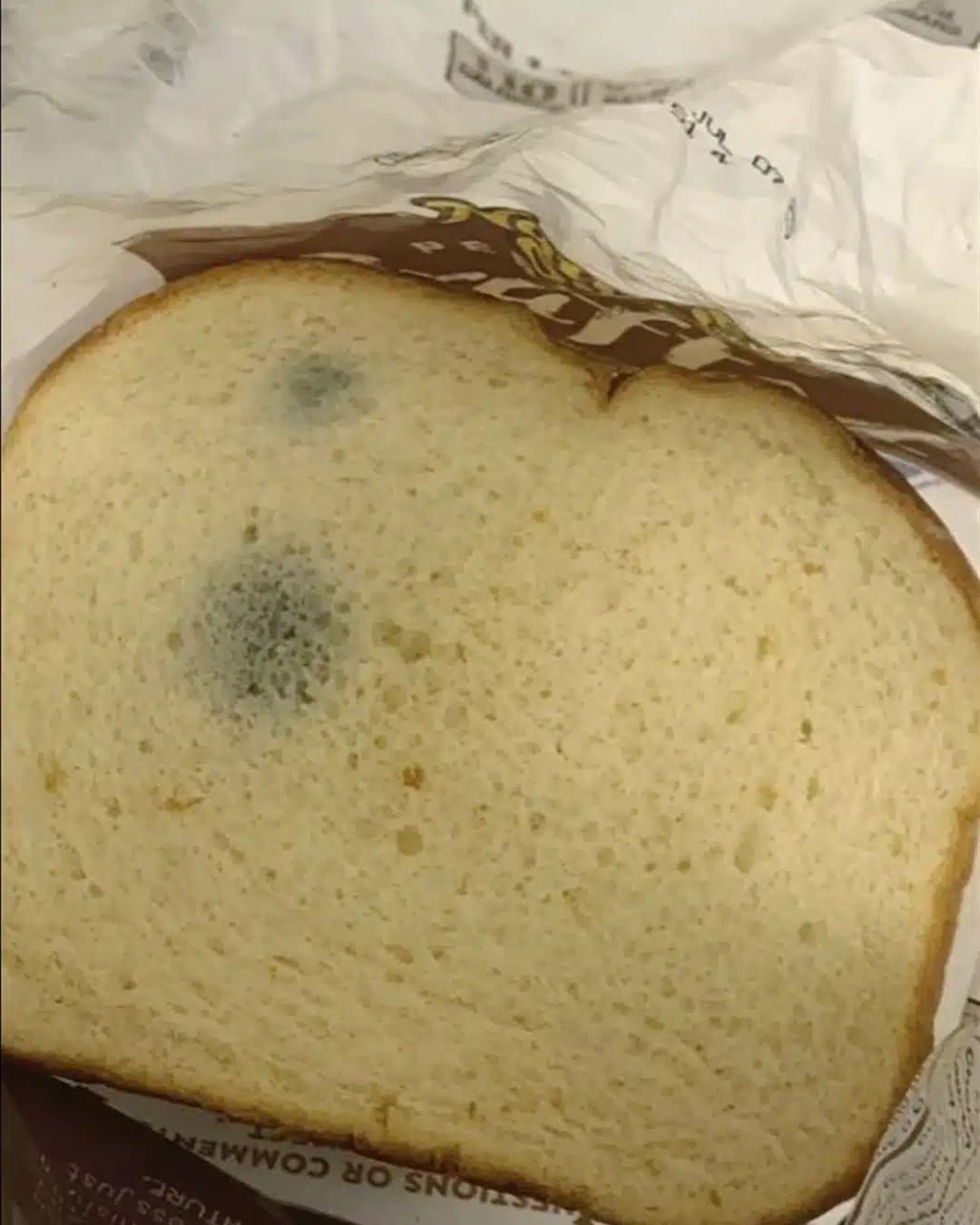
A forgotten piece of baguette, a slice covered in suspicious spots… Do you really have to throw it all away? Discover how to distinguish simply dry bread from a dangerous food, and transform your leftovers into delicious treats without wasting any.
Mold on bread: what these worrying stains are hiding
The photo above doesn’t lie: this loaf of bread has clearly gone beyond simply going stale. The blue-green stains indicate a well-established fungal colonization, infiltrating the crumb much deeper than you’d imagine. Unlike with Camembert cheese, it’s impossible to scrape the surface: the bread’s airy structure provides an ideal breeding ground for fungi. Even after removing the visible part, the risk of contamination remains. Our advice? Straight to the bin without hesitation – your digestive system will thank you.
Don’t confuse dryness with rot! Staleness simply results from the natural evaporation of moisture, transforming the starch into a crystalline structure. Goodbye softness, hello crunchy texture… but perfectly edible. No danger here, unless you spot any suspicious strands. The icing on the cake: this “veteran” bread becomes an unexpected ally in the kitchen.
The foolproof technique to revive a stale loaf of bread
Unexpected guests or a sudden craving for toast? Revive your baguette in three steps: wrap it in aluminum foil, bake at 175°C (convection setting) for 10-15 minutes. The magic of steam will work its wonders, restoring its crispness and tenderness just like the day it was made. Your toaster can also transform stale slices into the perfect accompaniment to soups or cheeses – zero-waste at its finest.
