
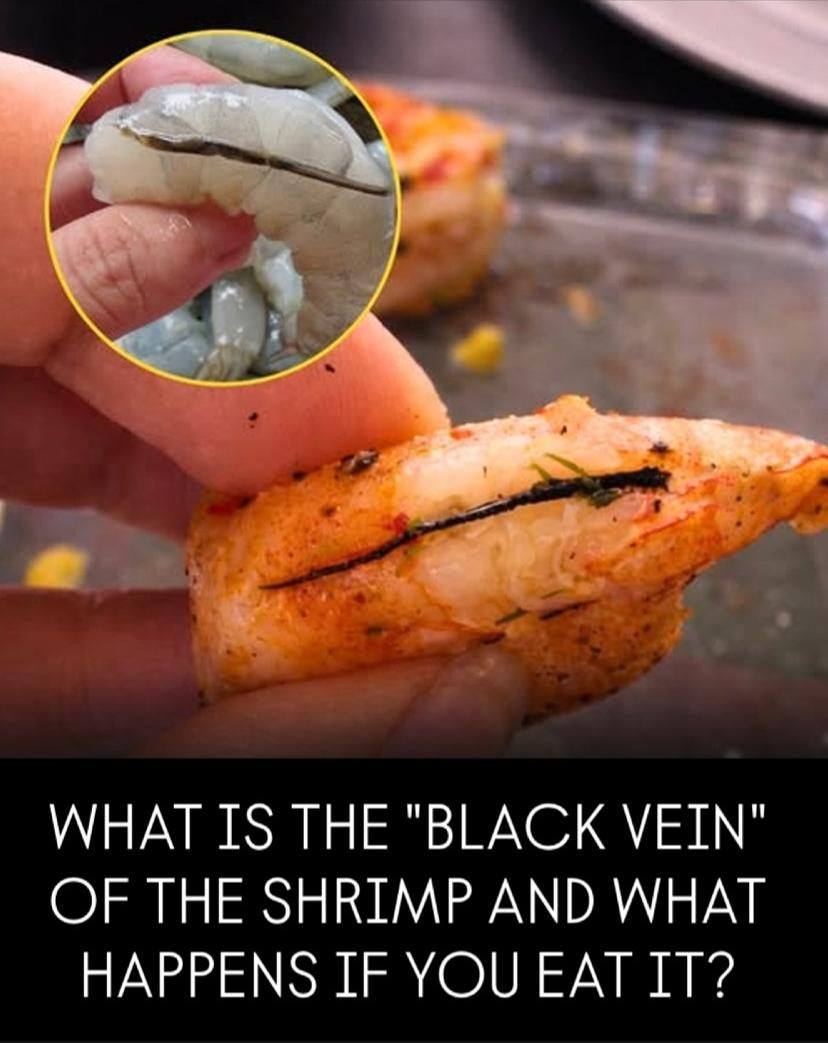
At first glance, shrimp is one of the most prized foods in world cuisine . Its delicate flavor and versatility make it a star ingredient in both simple recipes and sophisticated dishes. However, there’s a small but striking feature that often sparks questions, debates, and even myths in everyday cooking: the so-called “vein” of the shrimp . That dark line that appears along its back arouses curiosity and, in many cases, leads some to carefully remove it while others choose to ignore it completely.
Far from being a mere aesthetic whim, this detail holds relevant information about food preparation , hygiene , and culinary quality . Understanding what this “vein” really is, why it’s present, and what the implications of consuming it are allows for more informed decisions when cooking and enjoying this popular seafood.To begin, it’s important to clarify that the “vein” isn’t a vein in the traditional anatomical sense. It’s actually the shrimp’s digestive tract , specifically its intestine. This tube runs along the upper part of the body and can contain remnants of what the animal ingested before being caught, such as algae , plankton , and small particles from the marine environment. For this reason, its color typically varies from dark brown to black, depending on its contents.
