
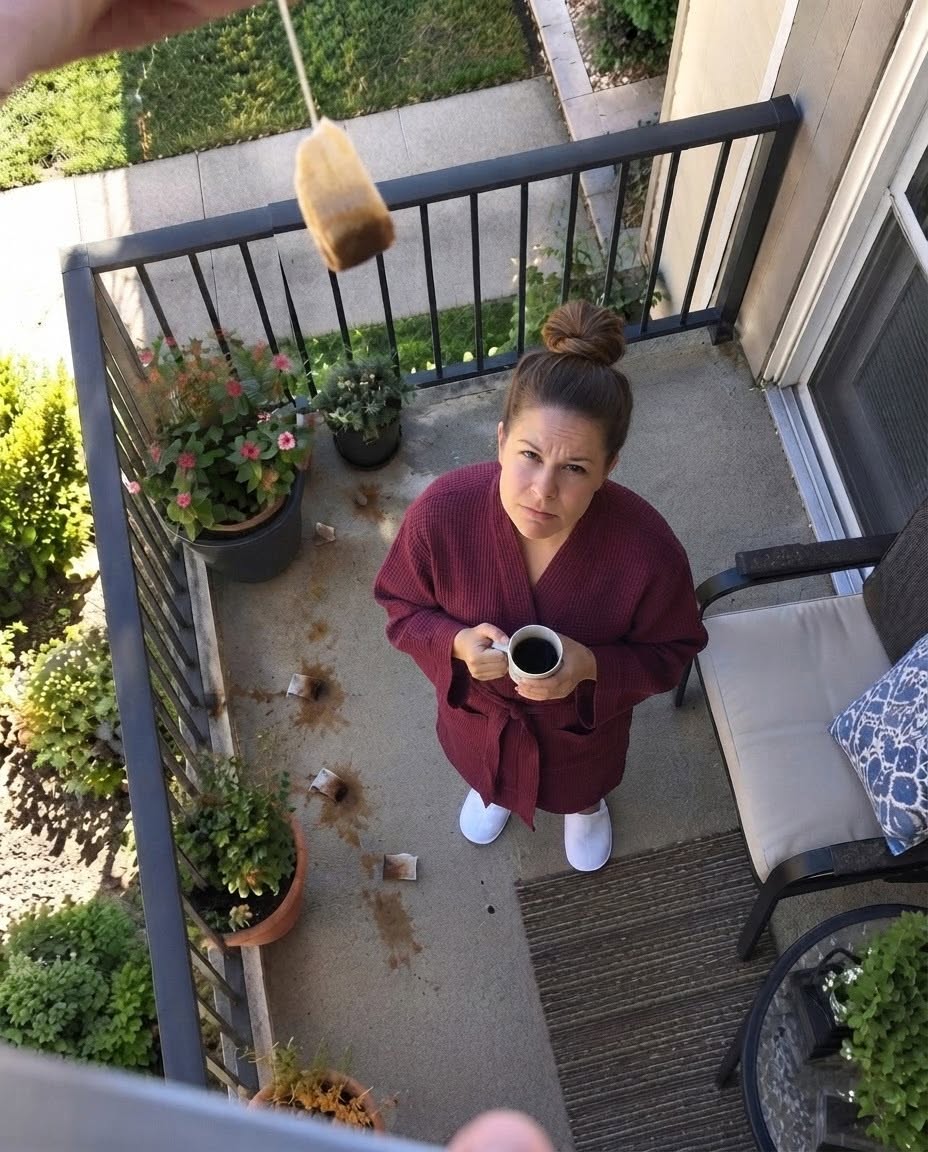
A Story About Patience, Principle, and the Art of the Perfect Response
Let me tell you something about eleven years.o
Eleven years is long enough to know which step on the third floor landing creaks in winter and which doesn’t. It’s long enough to know that the couple in 2A argues every Sunday morning and then laughs about it by afternoon, that the woman in 1C gets a grocery delivery every Thursday at half past ten, that the man in 5B practices what sounds like a recorder but might be a flute, badly, at intervals that suggest he has not improved in the time you’ve known him.
Eleven years is long enough to become part of a building’s rhythm. To be the kind of neighbor people trust with their spare keys and their package deliveries and the knowledge of where the maintenance request forms are kept, because you’ve lived there long enough to know and you’ve always been the kind of person who pays attention.
I am that person.
Margaret Collier, apartment 3B, eleven years in residence, the one who knows where the forms are.
I signed for his packages all last winter. All of them — the ones that arrived on cold Tuesday mornings when I was already running late and had to rearrange my entire entry hall to stack them somewhere logical so they’d be safe until he collected them. I watched Mrs. Okafor’s cat in 2C for ten days last spring when she went to visit her daughter, including the day the cat knocked a full vase of water onto my laptop and looked absolutely unrepentant about it. I have been the woman in 3B who is reliable and reasonable and who has never, in eleven years, been the source of a noise complaint, a dispute, or any reason for the building management to learn my name in a context other than rent.I tell you this not to present myself as a saint.
I am a woman who spent eleven years building a reputation for reasonableness and then watched a man with a mug and a dismissive laugh try to spend it down to nothing, one tea bag at a time.
This is the story of what I did about it.
He moved into 4B fourteen months ago.
His name, according to the buzzers, is D. Hartley, and the D stands for Daniel, which I know because he introduced himself in the lift on the third day, very briefly, with the friendly confidence of someone who has recently arrived somewhere and is still at the stage of finding everything charming.He was probably forty. Reasonably tall, the kind of face that settles into pleasantness without any particular effort. He carried his shopping in cloth bags and had a selection of houseplants visible through his open door on moving-in day that suggested a person who had either good intentions toward living things or a good eye for how intentions look.
I gave him a card. The building-management contact, the maintenance numbers, the quiet hours policy, the recycling schedule. Things that everyone needs when they move in and that nobody ever gives you because they assume you already know.
He thanked me genuinely.
I thought: this will be fine.
The tea bag situation began in the second month.
I noticed it first on a Wednesday morning in November — a grey, damp morning when the balcony was not a place I was likely to spend time, which is perhaps why it took me until I went out to bring in a plant that was looking poorly to find it sitting on the concrete beside the pot. A used tea bag. Still slightly wet, the string twisted around itself, the label identifying it as some kind of breakfast blend.
I thought: accident.
I genuinely thought it was an accident.
I picked it up with a piece of tissue, took it down to the bin in the recycling area, and said nothing to anyone. People drop things off balconies. Wind takes things. The man had only been in the building two months, and I was not the woman who runs upstairs over a single tea bag.
The second week of December I hung out two white bath towels on a still morning, went inside to make breakfast, and came back to find one of them had acquired a brown ring the size of a coffee cup, right in the center, with the evidence still sitting in the fabric fold. A tea bag that had landed, saturated, and been there long enough to mean it.I looked at the stain for a moment.
I thought about the towel. I thought about the money. I thought about whether it was worth going upstairs.
I went upstairs.
He answered the door in a t-shirt and the slightly unfocused look of someone not entirely awake, which I took into account. His expression when I explained the situation was exactly the right expression — genuinely startled, a little embarrassed, the specific quality of a person who has been caught doing something careless and is being decent about it.
“Oh, no. Was that me?”
“It’s been about six of them now. Usually mornings.”
“I’m so sorry — I just flick it over the rail when I’m half asleep, I don’t even think about it. I’ll stop, absolutely. I’m really sorry about your towel.”
He seemed sincere.
He seemed, specifically, like someone who had been doing a careless thing without thinking and had now been made aware of it and would stop, as careless people generally do when made aware.
I went back downstairs feeling, as I have felt occasionally when I’ve gone up to complain about something and been met with reasonableness, as though I had made rather too much of it.
The next morning at seven the tea bag came over the rail.
I heard it land from inside — a small, soft sound, barely anything, but I knew the sound by then the way you know sounds that have repeated enough to register.
I gave it three more weeks.
This is the part people don’t understand when I tell this story — the three weeks. They ask: why did you wait? Why didn’t you go straight back up?Because I’ve lived in this building for eleven years. Because the social mathematics of a shared building are real and long-term and complicated, and I have always understood that the way you handle small conflicts determines the quality of your life inside four walls for years to come. Because I genuinely wanted to give him the benefit of the doubt, because the alternative — assuming he was doing it on purpose, that it was deliberate rather than careless — required me to accept something about people that I prefer not to accept without evidence.
Three weeks of evidence.
Then one morning in early January I came out to sit with my coffee, which I do on mornings when it’s not too cold, because the balcony is one of the reasons I chose 3B and I see no reason to surrender it to weather or to neighbors. I sat in the chair I had bought specifically for that balcony, in the cushion cover I had ordered to match it, and I settled in with my coffee and my book and the particular peace of a morning that is mine before the day makes its claims.
The tea bag landed on the cushion.
I watched it land.
It sat there, saturated, and I watched it and did not immediately remove it because I was curious — not pleasantly curious, more the grim curiosity of a person confirming a hypothesis — about what it would do.It did what wet tea does to pale upholstery.
It stained through.
I took the cushion cover off that evening and soaked it for forty minutes and it did not come out.
I went upstairs.
The second conversation was different from the first.
The difference was not dramatic — he didn’t shout, I didn’t shout. The difference was in the quality of his attention, or more precisely the absence of it. He leaned against his door frame and looked at me with the mild expression of someone who has already decided how this conversation ends.
“You’re still doing it,” I said.
“It’s a tea bag.”
“It stains. I’ve thrown out a towel, and now a cushion cover.”
He looked at me for a second with that mild expression.
“You live underneath,” he said. “That’s how buildings work.”
And then he smiled. Not the friendly unfocused smile from the first conversation. A different kind — the kind that acknowledges clearly that he is aware this is not a reasonable position, and has decided to take it anyway, because what am I going to do about it.“You’re lucky it’s tea bags and not something else.”
“Excuse me?”
“I’m just saying. Be glad it’s tea.”
And then he shut the door.
I stood on that landing for a full minute.
I want to be honest about what I felt, because the feeling is important to the story.
I was not angry in the simple way. I was angry in the complicated way — the way that includes, mixed in with the anger, a very clear-eyed understanding of exactly what was happening. He had done the calculation. He had looked at me — the woman downstairs, reasonable, eleven years of never complaining, signed for his packages — and he had decided I was the kind of person who would absorb this. Who would keep knocking on his door and being reasonable and eventually accept that this was simply a feature of living in 3B, the same way the couple in 2A argues on Sunday mornings.
He wanted me shouting.
That was the thing I understood most clearly, standing on the landing outside 4B at nine on a January evening. He wanted me to lose my composure, to knock harder next time, to become the person he could describe to mutual acquaintances as the woman downstairs who lost her mind over tea bags. He wanted to provide the story. He wanted me to provide the material.
So I didn’t give it to him.
I walked back downstairs.
I made myself a cup of tea — I see the irony — and I sat at my kitchen table and I thought about what was actually available to me.
Ezoic
I decided I would give it one more morning.
One more morning, because I am not a person who acts in anger, and because the gap between my second knock and whatever came next needed to be clean and considered. I decided that if nothing came over the rail in the morning, I would let all of it go. I would accept that the second conversation had landed differently than the first and that sometimes people surprise you.
At 7:04 the next morning, the bag came over the rail and landed by my plant pots.
I stood in my robe and looked at it for a long time.
I finished my coffee.
By the time I had finished my coffee, I knew exactly what I was going to do.
Here is what I know about myself that is relevant.
I spent twenty-two years working as a records manager for a firm of solicitors before I took early retirement eighteen months ago. Records management sounds dry when you describe it at parties, and I have watched many pairs of eyes glaze politely at the words, but what it actually is is this: the precise, systematic organization of information into structures that can be reliably retrieved and used. It is about knowing where things are, knowing what they mean, knowing how the pieces connect, and knowing exactly what you need before you need it.
I am very good at this.
I am also good at research.
I spent one afternoon and most of an evening at my kitchen table, with my laptop and a cup of actual tea, and I mapped out a response.
Not a revenge. I want to be clear about that distinction, because revenge is emotional and disproportionate and ultimately about the feeling rather than the outcome. What I planned was a response. Proportionate. Documented. Using exactly the tools available to me in exactly the order that made them most effective.
I was going to teach D. Hartley a lesson about the building he lived in.
Specifically, about the building he lived in and what the lease said about it.
The lease.
I had a copy of my own, obviously, and I knew the building well enough to know that the standard tenancy agreement for all units in this block had not significantly changed in the eleven years I had been here, because I had been present for the management company changeover eight years ago and had read both agreements carefully. I knew the relevant clauses the way I know the maintenance request process and the recycling schedule — because I pay attention, and because information is the thing that is useful when you need it.
The lease said a number of things that D. Hartley might find interesting.
It said that tenants were responsible for ensuring that their use of the property did not cause nuisance, damage, or disturbance to neighboring tenants. It said that balconies were classified as part of the private dwelling space and that disposal of waste via balcony rail was explicitly prohibited — not in those exact words, but in clear enough language that any reasonable reading arrived there. It said that damage caused to neighboring property through tenant negligence was the financial responsibility of the tenant at fault.
It also said that complaints could be submitted to the building management company in writing and that three documented complaints about the same issue in a ninety-day period triggered a formal review process.
I did not know this last part off the top of my head.
I looked it up.
Then I looked up the management company’s formal complaint submission process, which was not advertised prominently but was available on their website if you navigated to the right section, which I did.
Then I did one more thing.
I went back through eleven months of my phone’s camera roll.
I had, without any particular plan, taken photographs of several of the tea bags when they landed. Not all of them — I had not been thinking systematically in those early weeks. But I had photographed the towel. I had photographed the cushion cover. I had photographed the bag that had come over on the morning after the first conversation, because something in me had registered, even then, that documentation was wise.
Seven photographs total.
I wrote down the dates and times I remembered for the ones I hadn’t photographed, and I was careful to note only what I was certain of and not what I was reconstructing from general impression. Then I wrote a letter.
The letter was three pages long.
It was precise, chronological, and entirely without emotional language. It described the incidents. It referenced the relevant lease clauses. It attached the photographic evidence. It noted that I had attempted to resolve the matter directly on two occasions and had been met, on the second occasion, with a response that made direct resolution clearly non-viable.
It was, if I say so myself, an excellent letter. The kind of letter that requires no shouting because the information does the work.I submitted it to the management company’s formal complaint portal at half past nine on a Tuesday evening.
And then I set my alarm for six-thirty.
I was out on my balcony before seven.
